
What Is a Parking Barrier Gate and How Does It Work?
Release time:
2026-11-02
AI Summary
Bottom line: the Baroxon® barrier and gate accessory handles OEM replacement and field retrofit of existing lanes at a 15 s cycle, IP54 rated.
What Is a Parking Barrier Gate and How Does It Work?
A parking barrier gate such as the BAROXON® boom barrier gates is a core part of any vehicle access control system for parking lots and facilities. It is far more than a pole that goes up and down; it is an integrated system that combines a mechanical drive unit, a motor, a controller, an opening command device, and sensors that help manage vehicle flow. When connected to an RFID system or an ANPR/LPR license plate recognition camera, it becomes part of a complete parking management and access control solution.
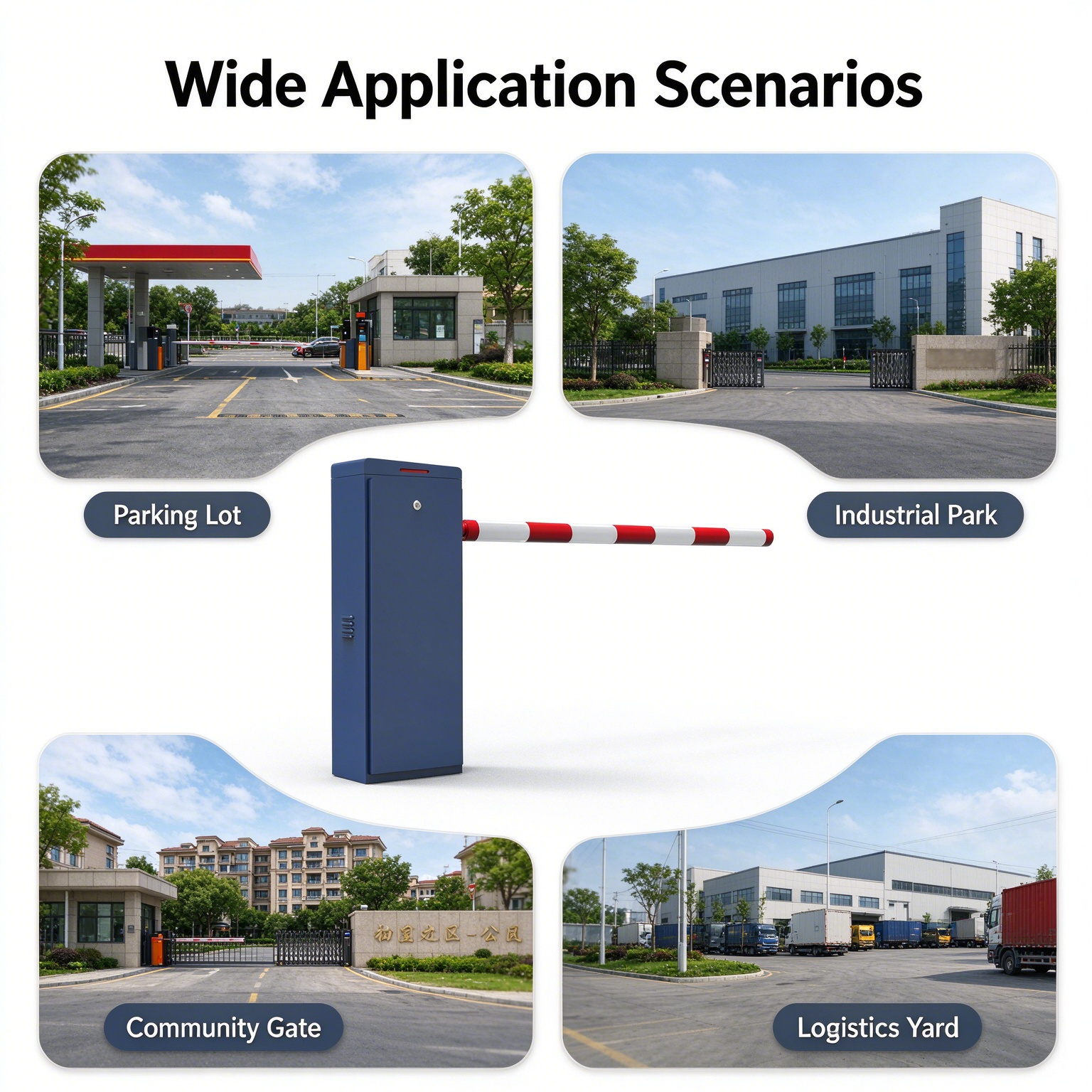
In the UAE, these systems are used at the entrances of residential towers, gated communities, shopping malls, hotels, offices, factories, warehouses, and transport facilities. The system design depends on the site type, vehicle volume, the method used to verify access rights, and the required level of automation.
1. What Is a Parking Barrier Gate?
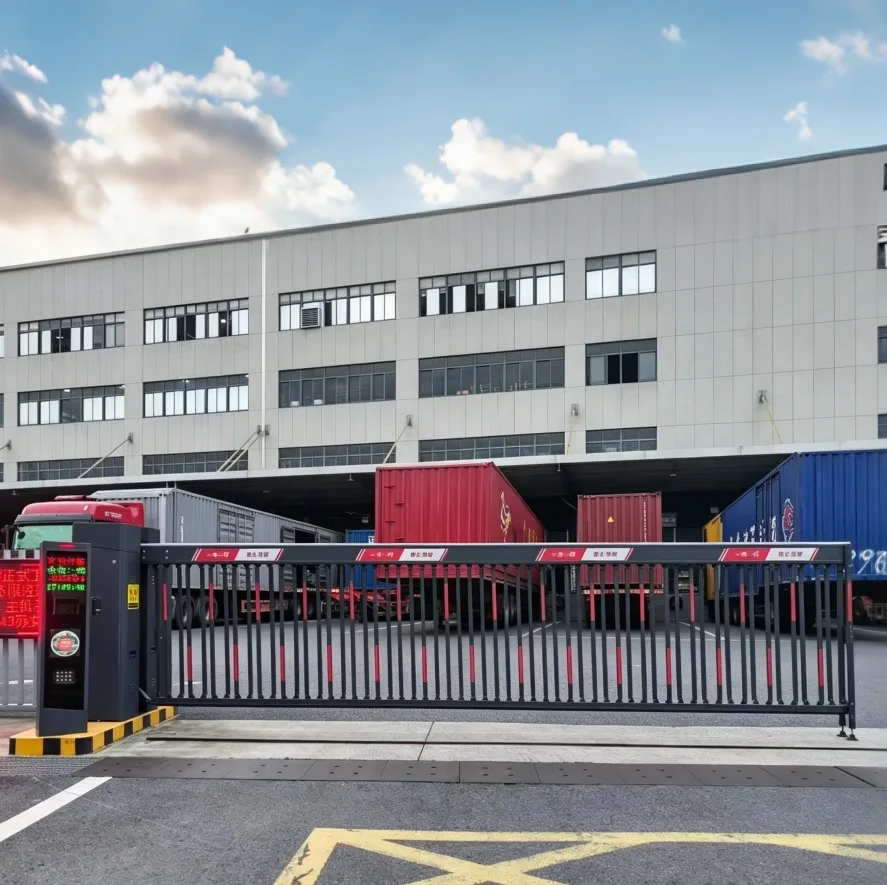
A parking barrier gate (also called a boom barrier gate) is an automated device that controls vehicle passage through a designated lane. It usually consists of a cabinet housing the motor, the transmission mechanism, and the controller, plus a horizontal barrier arm that moves between an open and a closed position. When a vehicle is authorized to pass, the arm rises; after the vehicle clears the movement zone, the arm returns to the closed position based on system settings and detection signals.
The term "barrier arm" is also commonly used for this type of gate, while "parking system" may refer to a broader solution that includes the barrier, cameras, readers, sensors, and parking management software. It is important to distinguish the barrier device itself from the integrated system that manages access permissions and records vehicle movements.
2. What Are the Main Components of a Parking Barrier?
Barrier Cabinet and Housing
The cabinet houses the drive assembly and protects the mechanical and electrical components. It should be mounted on a suitable foundation with enough space for maintenance, opening the cover, and accessing the wiring. The cabinet material and finish should suit indoor or outdoor installation conditions.
Motor and Transmission Mechanism
The motor provides the power needed to move the arm, while the transmission transfers that power to the arm and controls its motion. The motor design and transmission differ by model, arm length, operating speed, and expected number of open/close cycles.
BAROXON offers solutions using brushless DC (BLDC) motors and other drive configurations for vehicle barriers. Motor efficiency, smooth motion, and the ability to withstand repeated cycles are key points to compare when evaluating models.
Barrier Arm
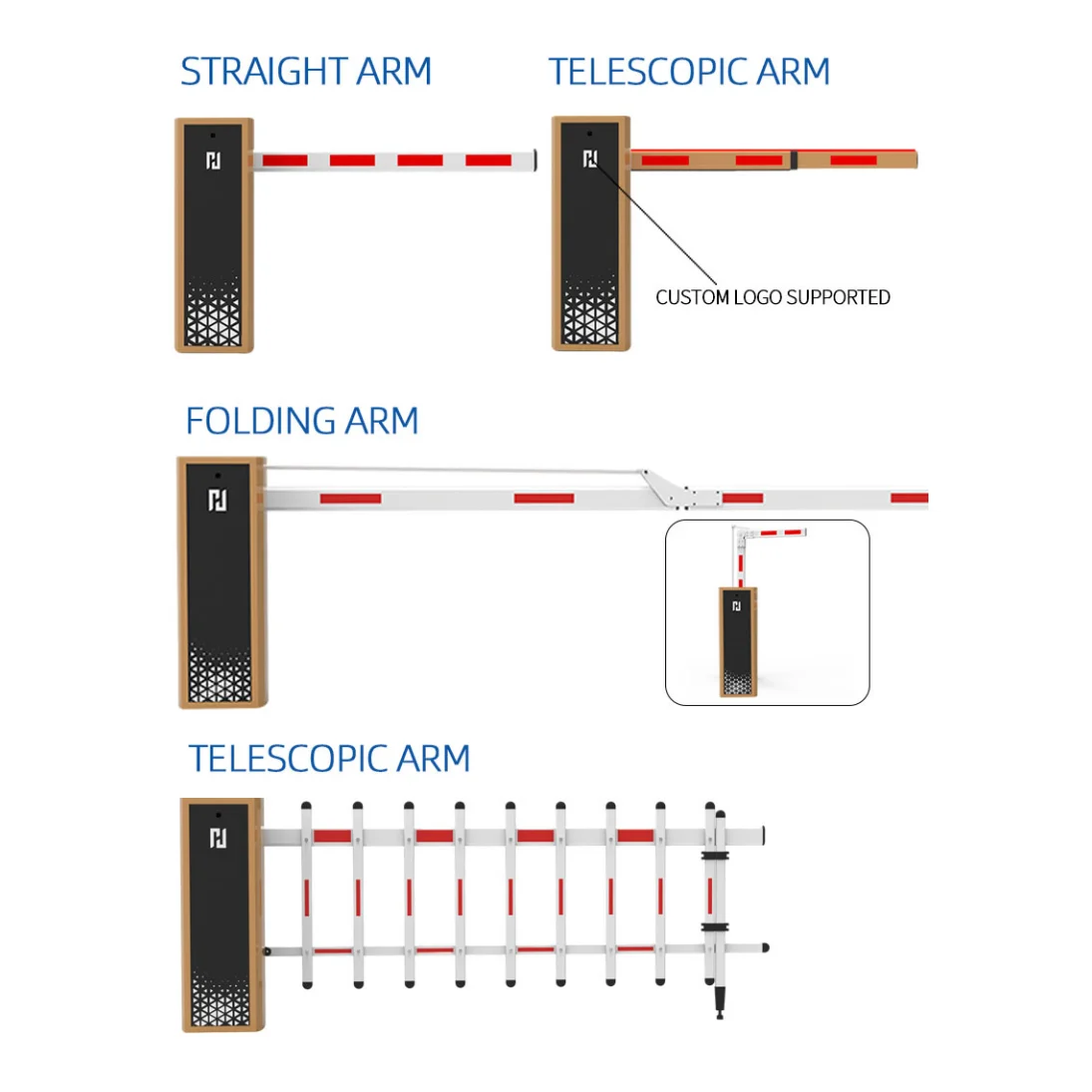
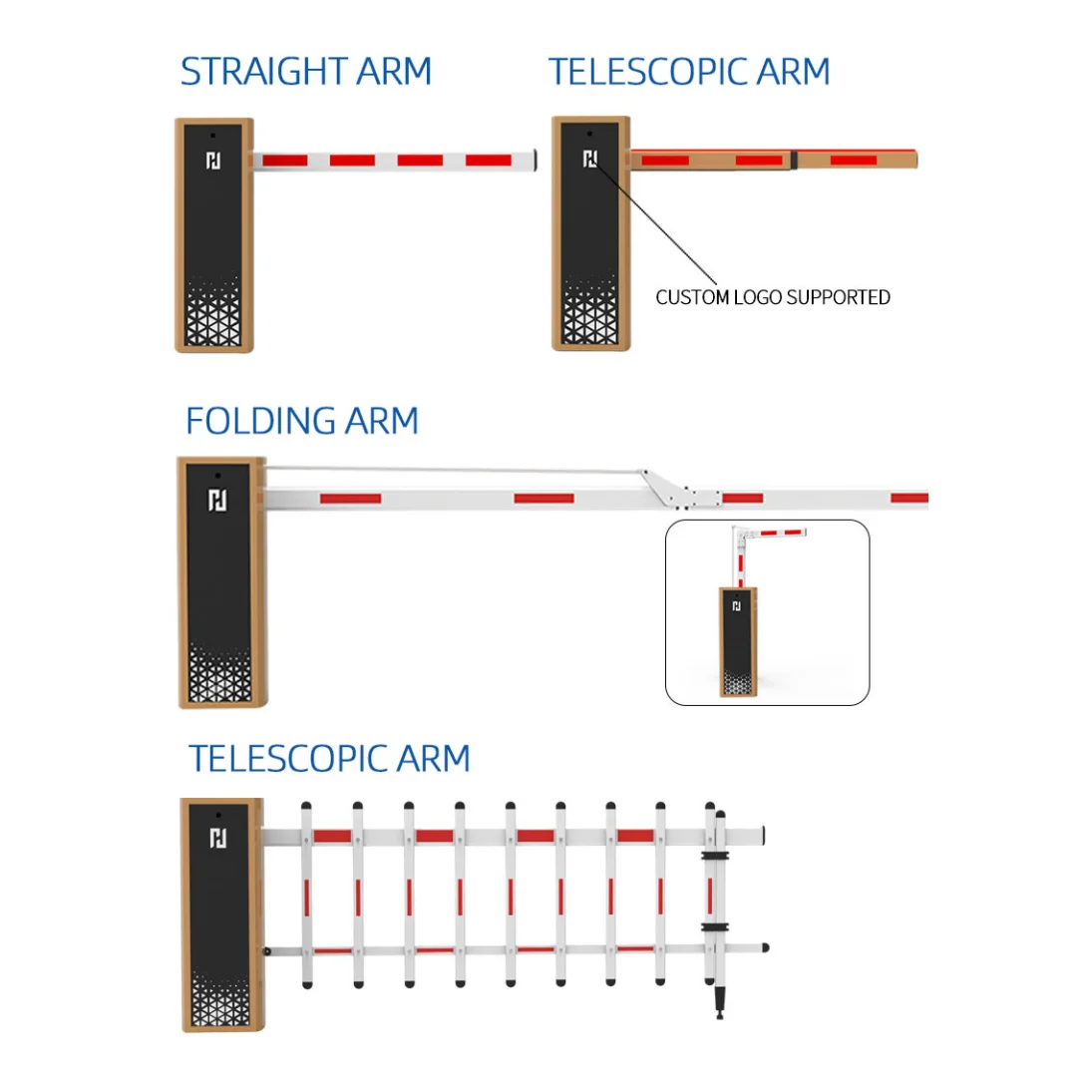
The arm is the moving part that physically closes the lane. It can be straight or folding, depending on the entrance height and available space. The arm length, weight, and balance must match the drive unit, and its movement path must not conflict with vehicles, pedestrians, or surrounding equipment.
Control Unit
The control unit receives operating signals from a remote control, an RFID reader, a ticketing system, an ANPR/LPR camera, or a building management system. After validating the signal according to the programmed logic, it sends motion commands to the motor and handles limit signals and connected sensors.
Sensors and Protection
The system may include a ground loop sensor, radar, or other detection means to monitor the presence of a vehicle or obstacle. The type, number, and placement of sensors depend on the lane design, risk assessment, and the safety functions supported by the model.
3. How Does a Parking Barrier Gate Work Step by Step?
The exact operation varies with the control unit and the vehicle verification method, but the typical sequence includes the following stages:
- Vehicle approaches: The vehicle reaches the designated entry point and stops at the reading or verification position.
- Verification data is sent: The system reads an RFID card, a QR code, or a ticket, or an ANPR/LPR camera captures the license plate.
- Access validation: The control software compares the vehicle or card data against the access rules and the authorized vehicle list.
- Open command issued: Once approved, the control unit sends a signal to the barrier operator to start raising the arm.
- Vehicle passes: The vehicle crosses the lane while detection devices monitor the arm movement zone according to the system design.
- Path clearance confirmed: The detection system determines whether the vehicle has left the danger zone, based on sensor settings and control logic.
- Arm closes: After the closing conditions are met, the operator returns the arm to the closed position to prepare the lane for the next vehicle.
4. How Does the Barrier Receive the Open Command?
Remote Control Operation
A remote control sends an open or close command to the barrier unit and suits some small entrances or sites where a security guard manages vehicle flow. You should consider remote authorization, the number of users, and how lost or replaced devices are managed.
RFID Card Operation
With RFID, the reader reads a card or tag associated with a vehicle or user, then sends the read result to the control unit or parking management platform, which decides whether to allow or deny access based on registered permissions.
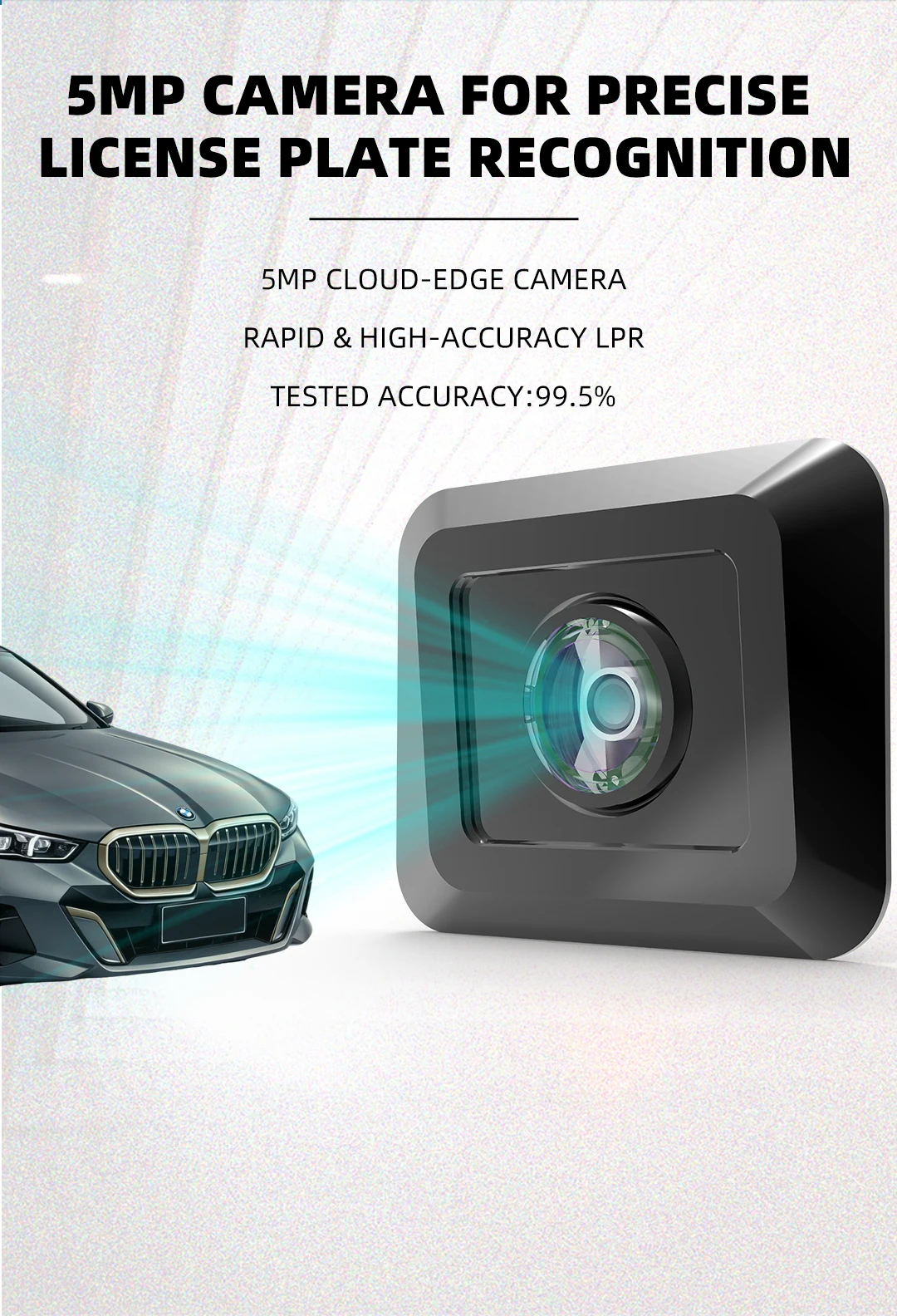
ANPR/LPR License Plate Recognition
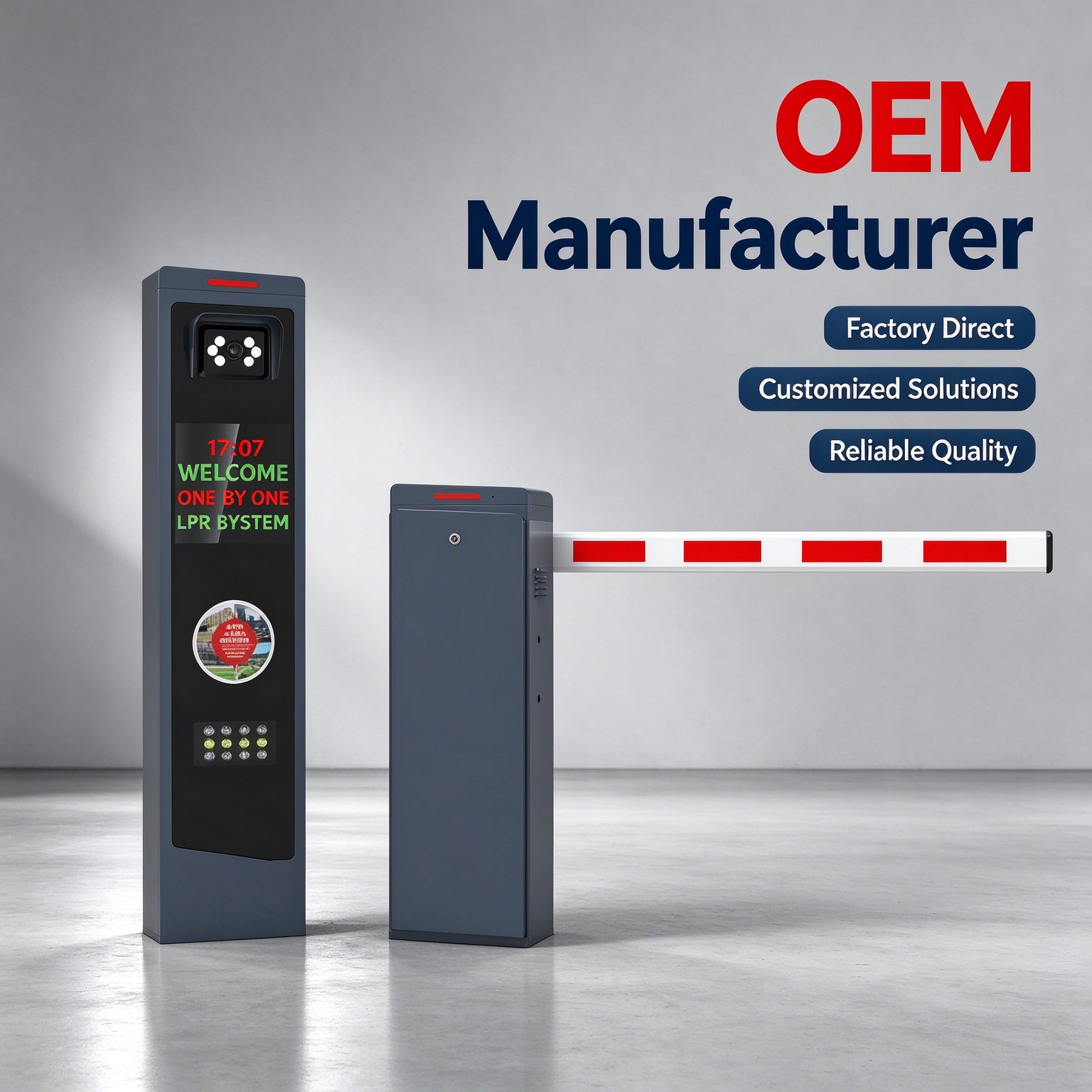
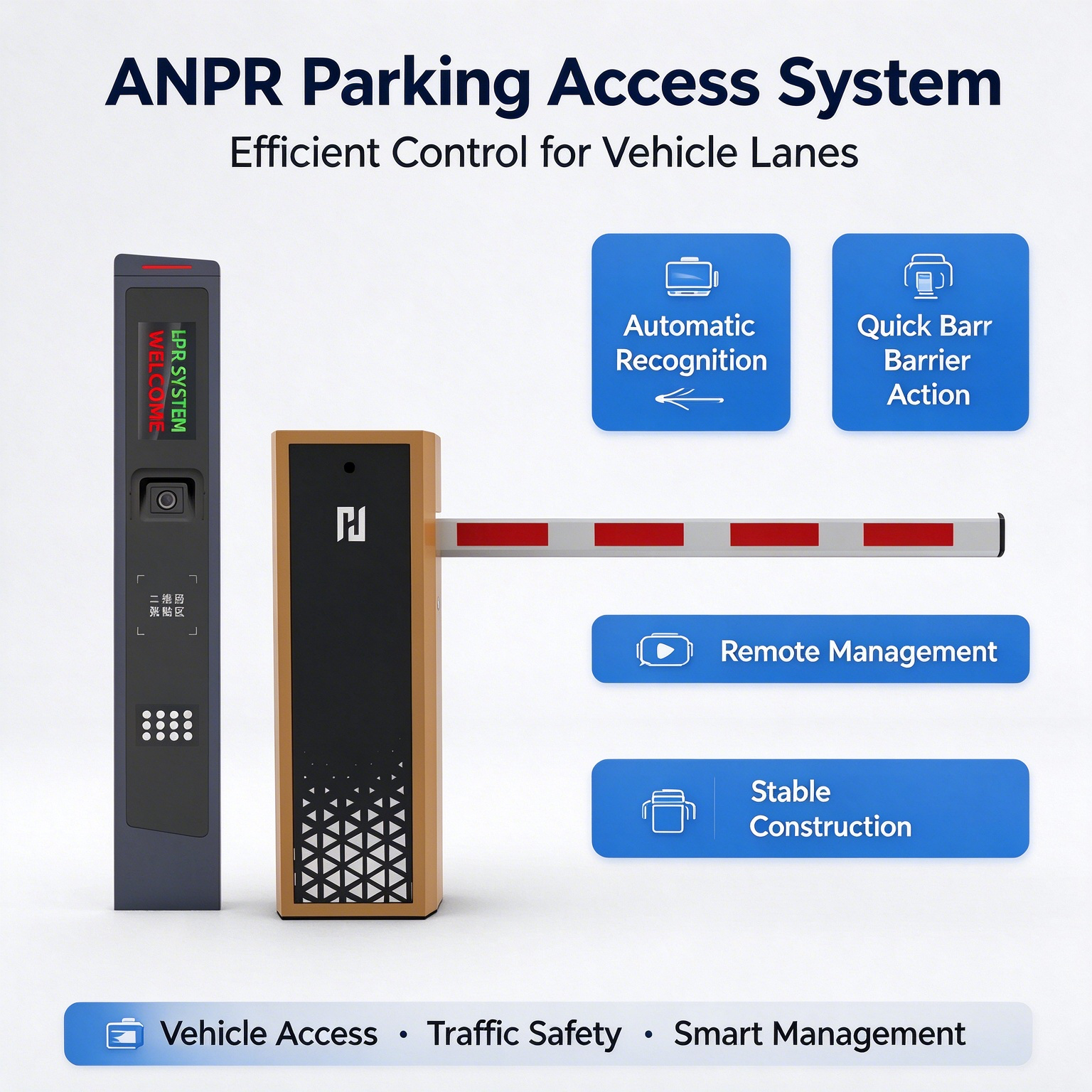
An ANPR/LPR camera captures an image of the license plate and analyzes it to extract the plate number. The number is then compared against the authorized vehicle list or system rules. If access conditions are met, the system sends an open signal to the barrier. Recognition accuracy depends on camera angle, lighting, plate cleanliness, vehicle speed, and setup quality.
Ticket or QR Operation
In visitor parking and shopping malls, a ticket or QR code can serve as the verification method. Whether the barrier opens depends on the validity of the ticket or code, and the system may connect to parking duration or fee calculation software if the project requires it.
5. What Role Do Sensors Play in Operating a Parking Barrier?
Sensors do more than detect whether a vehicle is present; they also help coordinate the timing of the arm movement and reduce the chance of closing while a vehicle is still in the movement zone. Detection devices should be chosen according to the lane shape, the surrounding environment, and the barrier installation method.
Ground Loop Sensor
The ground loop sensor is usually installed inside the road surface and detects vehicles as they pass over the loop area. It can send a vehicle-presence signal to the control unit. Installation requires civil works and proper planning of the loop and cable positions.
Radar Sensor
A radar sensor can monitor a defined area in front of or below the barrier depending on the installation method and model. BAROXON offers 79 GHz radar solutions for vehicle detection and safety applications. The detection range, coverage angle, and installation requirements should be taken from the specific product documentation.
Anti-Collision Protection
Some barrier configurations can stop or reverse the arm when an obstacle is detected, but the response depends on the control unit, sensors, and product settings. The safety function should therefore be tested on site, and a single sensor should not be treated as complete safety assurance.
6. What Types of Parking Barrier Gates Exist?
Straight-Arm Barrier
It uses a straight arm that rises to open the lane and lowers to close it. It is used at commercial, residential, and office parking entrances where vertical clearance is sufficient. The arm length must match the lane width and the operator capacity.
Folding-Arm Barrier
It uses a hinged arm that folds when opening, making it suitable for entrances with limited height or overhead obstructions. The folding space and movement direction should be confirmed before installation.
High-Speed Barrier
It is used where fast open/close cycles are required, such as transport hubs, high-traffic commercial parking, and some logistics entrances. BAROXON offers configurations with adjustable operating speeds across ranges that vary by model; the cycle time should be taken from the specific product datasheet.
Heavy-Duty Barrier
It is designed for sites with frequent operation or large vehicle traffic, such as factories, warehouses, and weighbridge areas. The motor capacity, arm length, daily duty cycle, housing, and protection features should be evaluated.
7. How Does the Barrier Integrate with a Parking Management System?
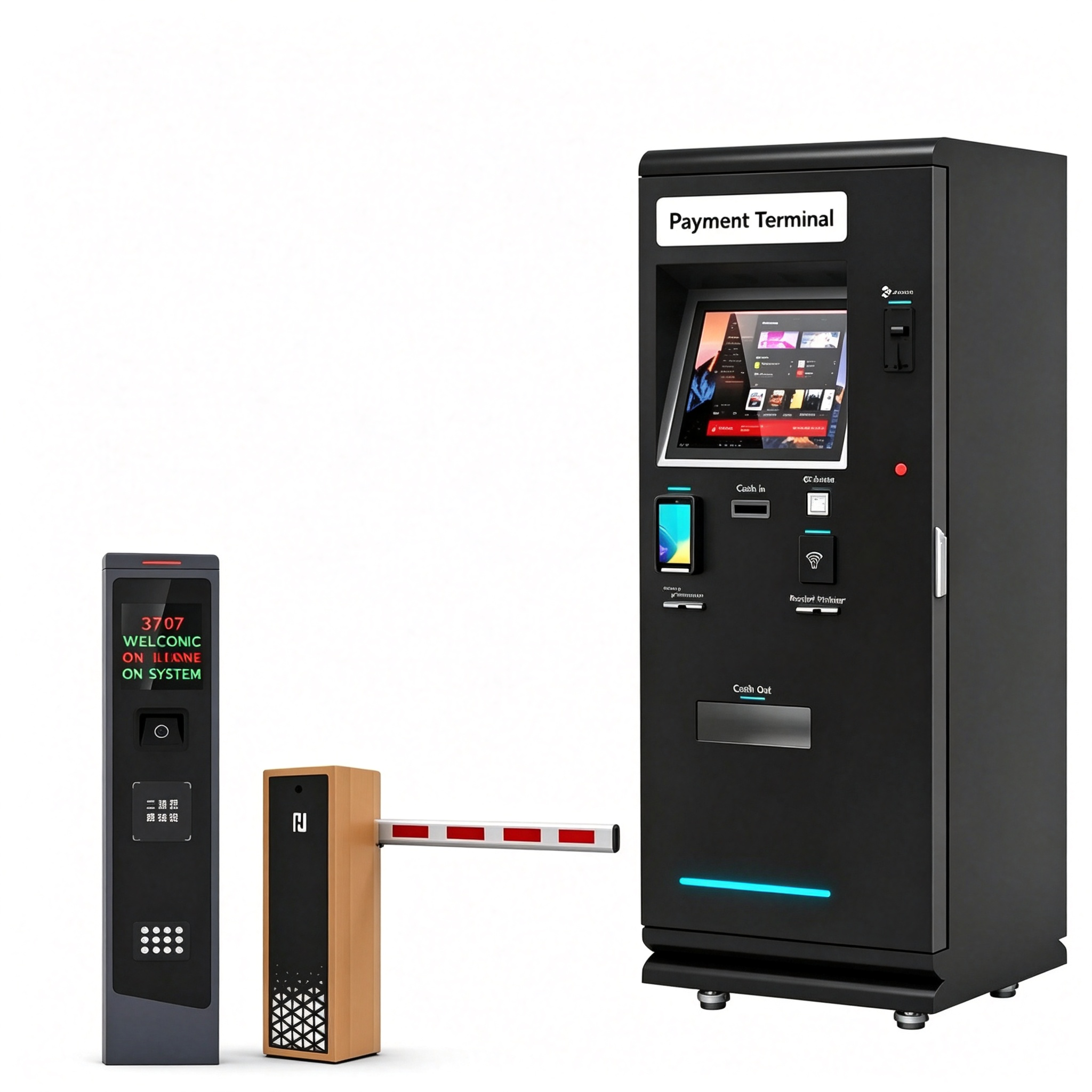
In an integrated system, the barrier does not work in isolation. The control unit may connect to a license plate reading camera, an RFID reader, a radar sensor, a ticket issuing unit, and parking management software. Verification data moves between these elements according to the communication interfaces and permission rules defined for the project.
For example, a residential community can pre-register residents' plate numbers and issue temporary permits for visitors. When a registered vehicle arrives, the camera recognizes the plate, the system validates the permission, and then sends the open command. Entry and exit records can be stored per the site management policy for later review.
In a shopping mall, the system may rely on tickets, QR codes, or plate recognition, linking entry and exit data to parking management software. In a warehouse or industrial zone, RFID may suit fleet vehicle management and linking access to operation or loading records.
8. Where Are Parking Barrier Gates Used in the UAE?
- Residential towers and communities: Organizing resident and visitor access, managing vehicle lists and guest permits.
- Malls and hotels: Managing visitor flow and linking the barrier to ticketing or plate recognition.
- Offices and business parks: Separating staff and visitor entrances and linking permissions to access records.
- Factories and industrial zones: Controlling staff and truck vehicles and integrating RFID and radar when needed.
- Warehouses and logistics centers: Organizing fleets, delivery vehicles, and loading zones.
- Airports, transport stations, and ports: Managing high-traffic lanes and separating vehicle and pedestrian flows.
- Hospitals, schools, and government facilities: Managing staff and visitor parking and setting priority vehicle lanes.
9. How Does BAROXON Provide Barrier and Parking Control Solutions?
On its site for the UAE and Gulf markets, BAROXON presents a range of automatic barrier gates, parking systems, and license plate recognition solutions. Product categories include barrier arms, high-speed barriers, RFID systems, ANPR/LPR systems, radar sensors, and pedestrian access control gates.
The showcased configurations include brushless DC motors, high-cycle solutions, obstacle detection features, LED arm lighting, and integration with plate reading cameras. Application scenarios cover residential towers, offices, commercial centers, factories, warehouses, and transport hubs.
Choosing the right product depends on arm length, duty rate, motor type, vehicle verification method, safety devices, and installation environment. The model datasheet, available interfaces, and project requirements should be reviewed before finalizing any specification.
10. What Should You Check Before Installing an Automatic Barrier Gate?
- Measure the lane width and determine the appropriate arm length.
- Measure the entrance height and verify the arm movement space.
- Define the cabinet, foundation, and cable routing positions.
- Review the power source and electrical protection requirements.
- Choose the verification method: remote, RFID, QR, ticket, or ANPR/LPR.
- Select suitable sensors and test the anti-closing-on-vehicle logic.
- Confirm the control unit is compatible with third-party devices.
- Set the open/close speed according to site traffic and safety needs.
- Test repeated operation, emergency functions, and manual release if available.
- Prepare a maintenance, training, and spare parts plan.
Frequently Asked Questions About Parking Barrier Gates
What Is the Difference Between a Parking Barrier Gate and a Boom Barrier Gate?
The two terms are often used to describe an automated barrier with a moving arm that controls vehicle passage. The naming may differ by market or supplier, but they usually refer to the same category of vehicle entrance control equipment.
Does a Parking Barrier Operate Automatically Without a Security Guard?
It can operate automatically when connected to a verification method such as RFID, ANPR/LPR, tickets, or QR, with appropriate access rules set. However, the site may still need operational supervision and procedures for exceptional cases.
Can the Barrier Be Opened Using a License Plate?
Yes, if the barrier is compatible with an ANPR/LPR camera and access management software. The system recognizes the plate number, compares it to authorized vehicle data, and sends an open command when access conditions are met.
Why Does a Parking Barrier Need a Sensor?
A sensor helps detect the presence of a vehicle or obstacle in a defined area and can help coordinate the arm closing timing. The protection level depends on the sensor type, placement, control unit settings, and on-site testing.
Can One Barrier Be Linked to More Than One Verification Method?
Some system configurations support more than one method, such as RFID for staff, ANPR/LPR for registered vehicles, and QR for visitors. You should confirm that the control unit, software, and communication interfaces are compatible with the required configuration.
What Happens If the System Does Not Recognize the License Plate?
The procedure depends on the site policy. The vehicle can be directed to an assisted lane or manual verification, or use an alternative method such as a card or ticket. These procedures should be defined before the system goes live to avoid disrupting traffic.
Can a Parking Barrier Be Used in Outdoor Areas in the UAE?
Yes, provided a model suited to the site conditions is selected and the protection rating, operating temperature, housing material, and wiring protection are reviewed. The technical values should be taken from the selected product datasheet.
Conclusion
A parking barrier gate is an automated system that controls vehicle passage through a moving arm, a motor, a control unit, and detection devices. The process begins with vehicle verification, then an open command, monitoring of the passage, and arm closing after the movement zone is clear according to the safety logic. When the barrier is integrated with RFID, ANPR/LPR, radar, and parking management software, it can serve as part of a complete solution for residential communities, commercial centers, industrial facilities, and transport projects across the UAE.
To compare models and get a recommendation for your site, visit BAROXON® boom barrier gates or contact the support team to request a quote.
Latest News
Baroxon® | Leading Boom Barrier Manufacturer
Advanced Security Access Control and Intelligent Parking Solutions.
Company Strength
Adequate Inventory
Fast Shipping
Our Products
CONTACT US
Address: No. 2 Wanshou Road, International Innovation Industrial Park, Jinan, Shandong, China


© COPYRIGHT 2025 Baroxon® | Leading Boom Barrier Manufacturer

Contact Us
Our passion is to bring your ideas to life. Work with our design team to create a one-of-a-kind custom finish or cladding system to create a truly unique space. Together we can make your story stand out. If you need something to request a sample, request pricing, or request a demo, please fill out the contact form below. Explain your request in as much detail as you can and a representative will contact you within 1 business day.