
How to Reduce Vehicle Queues at a Car Park Entrance
Release time:
2026-11-02
AI Summary
Bottom line: the Baroxon® vehicle detection sensor handles loop replacement and safety detection on barrier lanes at a 0.05 s cycle, IP67 rated.
How to Reduce Vehicle Queues at a Car Park Entrance
Introduction: Why Do Vehicle Queues Form at a Car Park Entrance?
Vehicle queues appear when cars reach the entrance faster than the entry point can process them. The cause may be a slow barrier, a reader that takes too long to identify a card, a camera that cannot capture the plate clearly, repeated manual procedures for visitors, or poor planning of the lanes and the waiting area.
In the UAE the problem can intensify during peak hours in residential communities, office buildings, shopping centres and logistics facilities. Fitting a faster barrier is not always enough; the whole process must be improved, from the vehicle approaching to passing through safely, while keeping the access validation in place.
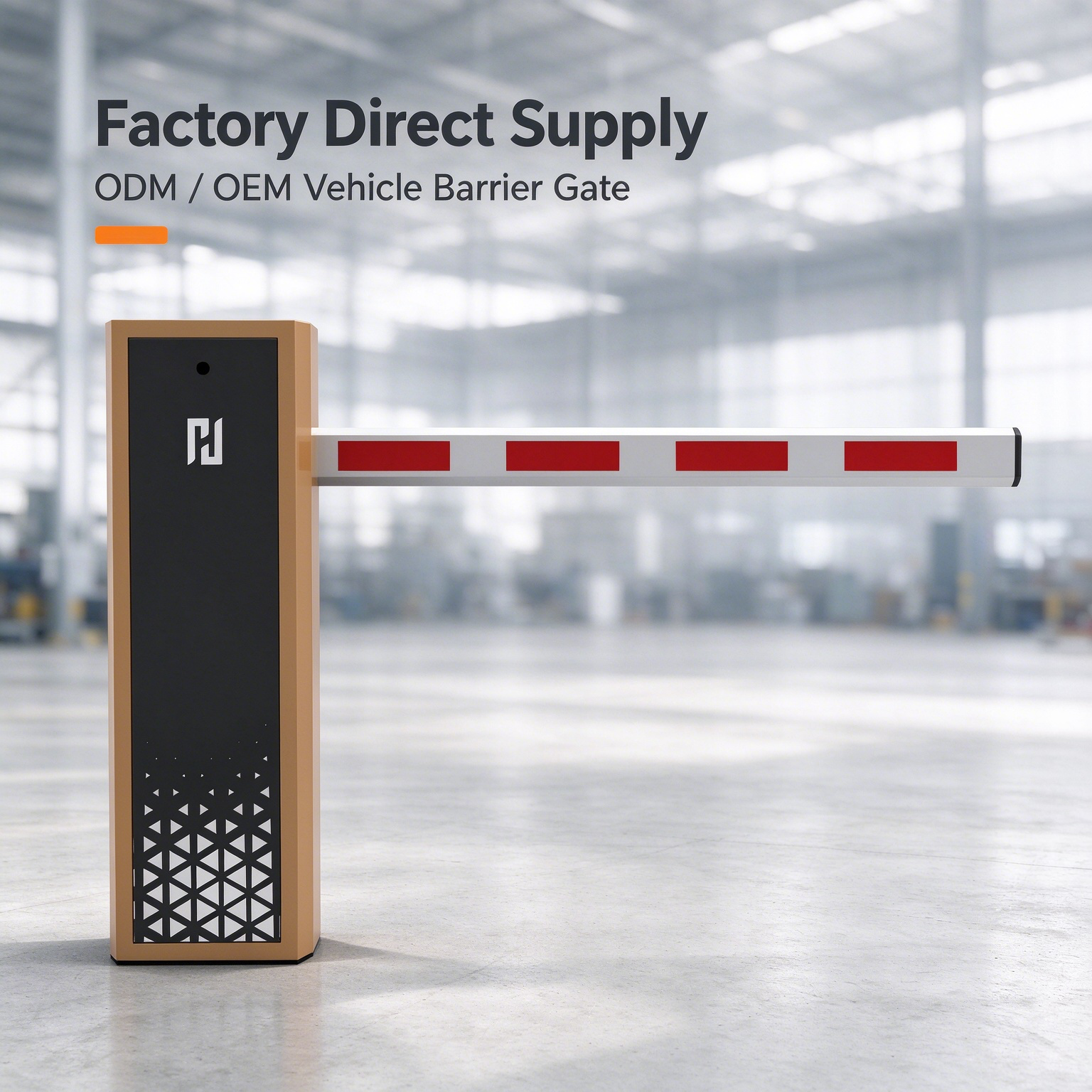
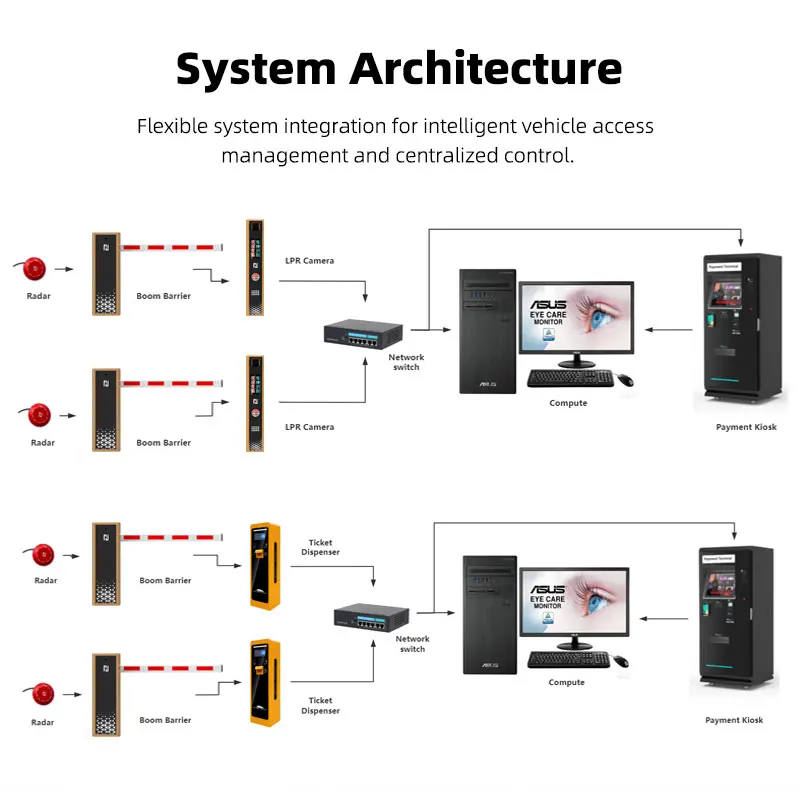
BAROXON solutions combine automatic barrier arms, high-speed barriers, ANPR/LPR vehicle plate recognition, RFID control and radar sensors. These components can be selected and integrated to suit the project and the vehicle flow.
1. Start by Measuring the Cause of the Congestion Before Changing Equipment
1.1 Measure the Vehicle Arrival Rate and Processing Time
Record the number of vehicles arriving at the entrance over regular intervals, such as every 15 minutes, and compare that with the number the entry point can actually pass in the same period.
Also observe the time from the vehicle stopping at the reading point to the barrier receiving the open command, and then the time needed for the vehicle to pass and clear the lane for the next car.
If the delay occurs before the arm opens, check the card or plate reading, the communication between devices and the control platform. If the delay occurs after the open command, review the barrier speed, the arm length, the vehicle clearance space and the automatic closing settings.
1.2 Classify Vehicles by User Type
Separate the data for residents, staff, visitors, suppliers, delivery vehicles and lorries. Each group may need a different validation method; treating every vehicle as a visitor that must stop and register creates unnecessary delay for frequent users.
2. Improve the Lane Layout and the Waiting Area
2.1 Separate Entry from Exit Where the Site Allows
At busy entrances, dedicating one lane to entry and another to exit helps reduce conflict between vehicles. If space allows only a shared lane, set clear priority rules and use visual signals and traffic management to prevent two opposing vehicles entering the barrier zone at the same time.
2.2 Create a Waiting Area That Does Not Block the Public Road
Queue length is not always caused by the barrier alone; the vehicle storage area before the gate may be too short, so waiting cars reach the street or an internal junction.
Measure the space available in front of the barrier, mark a clear stopping position, and confirm that the pedestrian route, emergency access and building exits remain clear.
2.3 Position the Reading Devices Correctly for the Driver
Place the RFID reader or ANPR/LPR camera where the driver can see the device and stop at the correct point without reversing or changing lane.
Consider vehicle heights, camera angle, lighting and reflections, and use guide signs that show the driver where to stop and what to do.
3. Use ANPR/LPR to Speed Up Registered Vehicle Entry
ANPR/LPR technology reads the vehicle plate and compares it with the list of authorised vehicles. When validation succeeds, the control platform can send an open signal to a compatible barrier, reducing the need to hand over a card or enter data manually on every visit.
For residential communities and offices, permanent vehicle lists can be set up and linked to user permits. Visitors can be given advance authorisation, a QR code or a ticket according to the approved car park management system. Separating known vehicles from the cases that need manual review helps reduce stops for registered cars.
For the best result, verify plate clarity in day and night conditions, and check the camera angle, distance and vehicle approach speed. A fallback procedure must also be defined when a plate cannot be read, such as an RFID card, a visitor QR code or staff assistance, so that the vehicle does not stop in the main lane.
4. Use RFID for Fast Passage of Frequent Users and Fleets
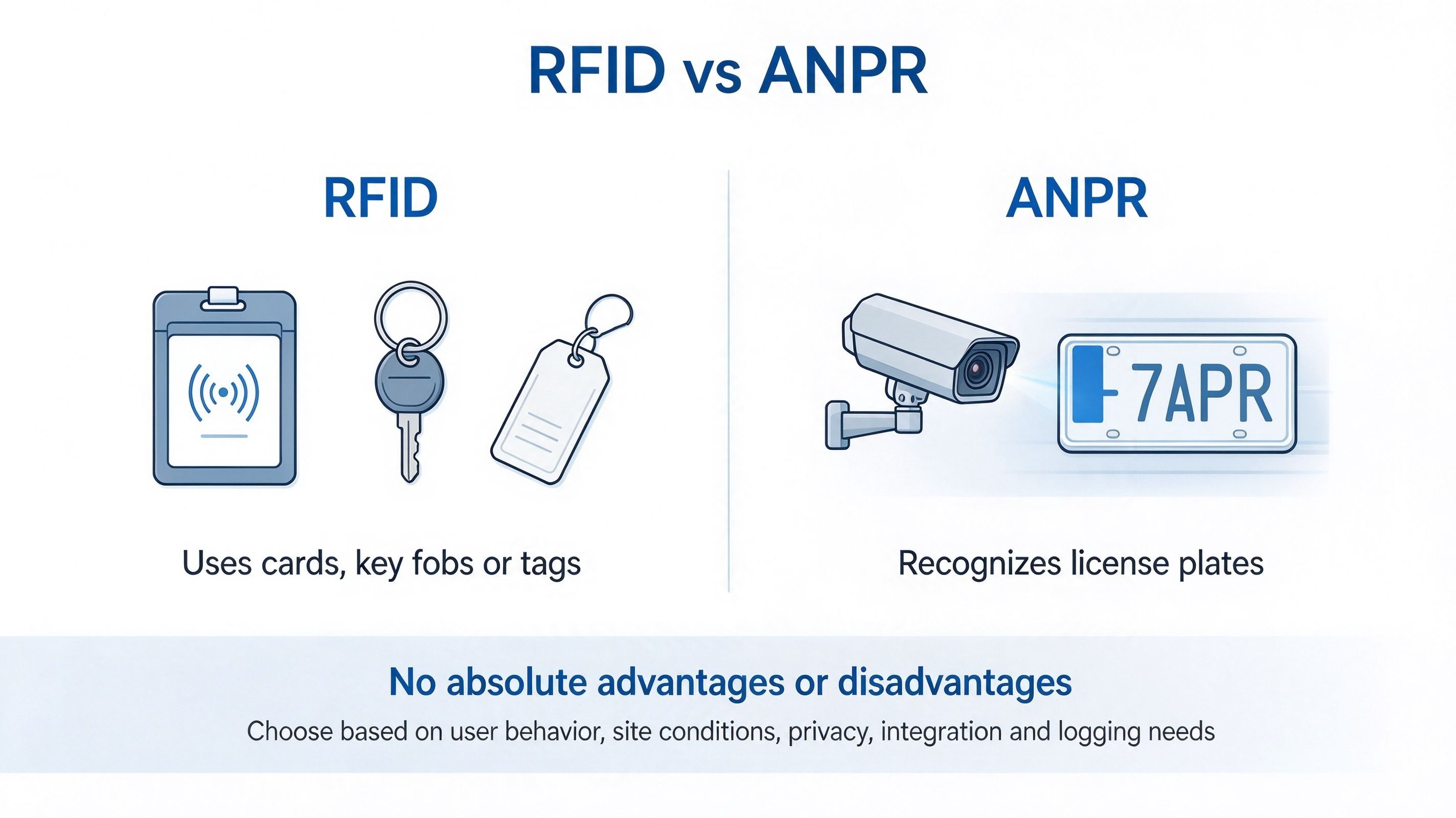
RFID can suit vehicles that pass regularly, such as resident, staff and company fleet vehicles, through RFID-enabled barrier solutions. With the reader correctly positioned and credentials registered in advance, the system can validate the card or tag without manual registration at every passage.
Compatible RFID solutions support different identification media, which may include cards, long-range UHF readers or other credentials depending on the configuration. The reader type, communication method and actual reading environment must be confirmed before purchase, because range and performance are affected by the device model and its mounting position.
In logistics facilities and industrial zones, RFID data can be linked to fleet information, shipping orders or weighbridge procedures. This reduces repeated data entry and helps manage lorry movement according to authorisation and the sequence of operations on site.
5. Choose a Fast Barrier That Matches the Traffic Rate
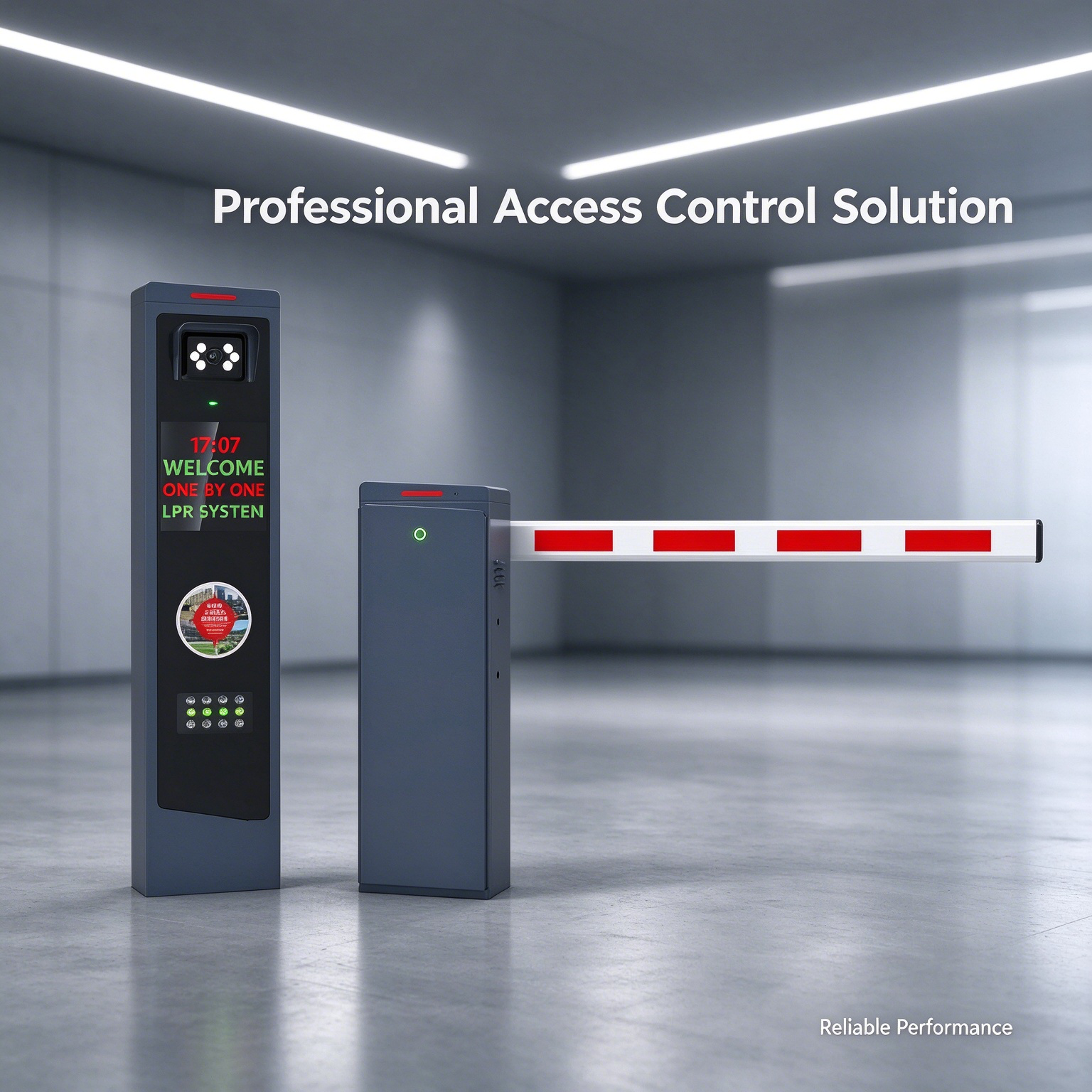
If arm lifting time is the bottleneck, consider a high-speed barrier or a model with an adjustable opening time. The high-speed barrier gate range offers different operating ranges according to model and configuration, so the data sheet of the specific product must be reviewed rather than assuming every barrier runs at the same speed.
Do not choose maximum speed alone. Opening and closing speed should be balanced against arm length and weight, duty cycle, noise level and safety requirements. Speeding up the arm without adjusting vehicle detection or closing timing can create collision risk or cause frequent system stoppages.
At sites with continuous flow, such as shopping centres, transport hubs and logistics facilities, assess the motor’s continuous operation capability and the permitted duty cycle. At residential entrances, quiet operation, reliability and visitor control may matter more than the fastest available opening time.
6. Use Radar Sensors and Vehicle Detection Correctly
Radar sensors or inductive ground loop detectors help detect whether a vehicle is in the barrier zone and can be used within the control and safety logic to prevent the arm closing on a car. BAROXON solutions include 79 GHz radar sensors, but the sensor must be compatible with the controller and the detection zone must be set according to the lane geometry.
Set the detection zone so that it picks up the vehicle at the required position and does not respond undesirably to pedestrians or vehicles in adjacent lanes. Test the sensor at different times and with the vehicle types actually present, then document the final settings.
Sensors are not a substitute for lane organisation, pedestrian separation or other safety measures. A sensor is one part of a complete system that includes the barrier, the controller, visual signals and the site operating procedure.
7. Simplify Visitor and Unregistered Vehicle Entry
Some queues are caused by repeated enquiries or visitor data entry at the barrier. This delay can be reduced by pre-registering the visit, sending a permit or QR code before the visitor arrives, and defining a clear route for cases that need reception or security approval.
Where space allows, assign a side point or a short waiting area for vehicles that need manual review. In this way one incomplete case does not block the registered vehicles behind it.
Provide clear visitor instructions in languages suited to the site users, showing the documents or access code required and where to stop. Security and reception staff should also be trained to use the system and to handle reading failures quickly and consistently.
8. Monitor Performance and Keep Improving the System
Once the system is running, track indicators such as average vehicle waiting time, vehicles per hour, first-attempt success rate for plate or card reading, the number of manual interventions, and the number of unexpected barrier openings or stoppages.
Compare the indicators before and after the change during similar time periods. If the barrier opening time has improved but queues remain long, the problem may lie in visitor procedures, waiting area capacity or lane allocation rather than the motor.
Review system logs regularly, clean camera lenses and sensors, and inspect the arm, fixings and connections according to the manufacturer instructions. Confirm that system settings reflect changes in user numbers, permit rules or site traffic flow.
9. Example Configurations by Site Type
| Site Type | Likely Cause of Queuing | Configuration to Assess |
|---|---|---|
| Residential community | Residents and visitors entering through one lane | ANPR/LPR for registered vehicles, visitor permits, automatic barrier, and a lane for manual review |
| Office building | Staff arriving at the same time | RFID or ANPR/LPR for staff, separate visitor lane where possible |
| Shopping centre | High visitor numbers and rapid vehicle turnover | Ticketing or LPR, barriers sized for the traffic volume, and clear lane guidance |
| Warehouse or logistics zone | Lorry movement and fleet data verification | RFID for approved vehicles, radar vehicle detection, and gate procedures linked to the workflow |
| Transport facility or high-flow gate | High traffic density and a need for fast response | High-speed barrier compatible with safety requirements, plus lane organisation and status signals |
These configurations are selection directions, not final specifications. The final configuration must be defined after a site survey and confirmation of device compatibility and model data.
10. Common Mistakes When Trying to Reduce Queuing
- Buying a faster barrier without analysing the process: The delay may remain in card or plate validation, or in visitor registration.
- Using one lane for all user types without organisation: Registered vehicles may be stuck behind visitors or lorries needing extra checks.
- Mounting the camera or reader in the wrong position: This causes repeated reading attempts or drivers stopping in the wrong place.
- Neglecting the waiting area: Queues may spill onto the public road even if barrier performance improves.
- Not testing sensors against real site traffic: False triggers or unsuitable detection zones may appear.
- No fallback plan for reading or communication failure: Vehicles may stop in the main lane waiting for staff intervention.
Frequently Asked Questions
What is the fastest way to reduce car queues at a car park entrance?
Start by identifying where the delay occurs: plate or card reading, visitor procedures, arm movement or insufficient lane space. Then address that specific cause, for example by enabling ANPR/LPR for registered vehicles, RFID for frequent users, improving the lane layout, or choosing a faster barrier that meets the site requirements.
Can an ANPR/LPR system reduce waiting time?
It can reduce manual validation steps for registered vehicles, because the system can compare the plate with the permit list and send an open command to a compatible barrier. The result depends on plate clarity, lighting, camera angle, communication and permit management rules.
Is RFID better than ANPR/LPR for vehicle flow?
No single technology is best at every site. RFID can be practical for frequent users or vehicle fleets, while ANPR/LPR provides validation based on the vehicle plate and can suit vehicle list and visitor management. The two can be combined where the platform and devices support it.
Does fitting a high-speed barrier guarantee that queues disappear?
No. A high-speed barrier speeds up arm movement, but it does not by itself solve slow registration, failed plate reading, a narrow waiting area or poor lane allocation. The whole process must be improved and system performance reviewed after commissioning.
How can visitors be handled without disrupting residents or staff?
Use pre-registration, QR permits or a ticketing system, and define a separate lane or side review point for cases that need approval. Keep a fast route for registered vehicles according to the approved access rules.
What role does a radar sensor play in reducing congestion?
Radar helps detect whether a vehicle is in a defined zone, can support the control and safety logic, and in some scenarios reduces the need for manual intervention. It does not replace correct sensor positioning, parameter adjustment and testing with real vehicles.
Which data should be monitored after improving the entrance?
Monitor average waiting time, vehicles per hour, first-attempt reading success rate, the number of manual interventions and the reasons for barrier stoppages. These indicators show whether the improvement has actually addressed the root cause of the queuing.
Conclusion
Reducing vehicle queues at a car park entrance in the UAE requires combining lane planning, clear access procedures, suitable validation technology and barrier equipment matched to the traffic volume.
ANPR/LPR, RFID, high-speed barriers and radar sensors can help improve entry flow within a well-considered configuration, but the result depends on site design, integration quality, user management and ongoing maintenance.
Latest News
Baroxon® | Leading Boom Barrier Manufacturer
Advanced Security Access Control and Intelligent Parking Solutions.
Company Strength
Adequate Inventory
Fast Shipping
Our Products
CONTACT US
Address: No. 2 Wanshou Road, International Innovation Industrial Park, Jinan, Shandong, China


© COPYRIGHT 2025 Baroxon® | Leading Boom Barrier Manufacturer

Contact Us
Our passion is to bring your ideas to life. Work with our design team to create a one-of-a-kind custom finish or cladding system to create a truly unique space. Together we can make your story stand out. If you need something to request a sample, request pricing, or request a demo, please fill out the contact form below. Explain your request in as much detail as you can and a representative will contact you within 1 business day.