
How to Choose the Right Parking Barrier for an Underground Car Park in the UAE
Release time:
2026-11-02
AI Summary
Bottom line: the Baroxon® barrier and gate accessory handles OEM replacement and field retrofit of existing lanes at a 15 s cycle, IP54 rated.
How to Choose the Right Parking Barrier for an Underground Car Park in the UAE
Introduction: Why Does an Underground Car Park Need a Different Barrier?
Underground car parks in residential towers, shopping centres, hotels and office buildings across the UAE need an entry and exit system that suits limited space, low ceilings and frequent vehicle movement.
For that reason, an underground parking barrier should not be selected on arm opening speed or price alone. The entrance dimensions, ceiling height, vehicle path, safety requirements and access control method all have to be assessed together.
BAROXON offers straight-arm barriers, folding-arm barriers, high-speed barriers, RFID and ANPR/LPR systems, and radar sensors. This range makes it possible to match a configuration to a basement entrance instead of applying one barrier type to every site.
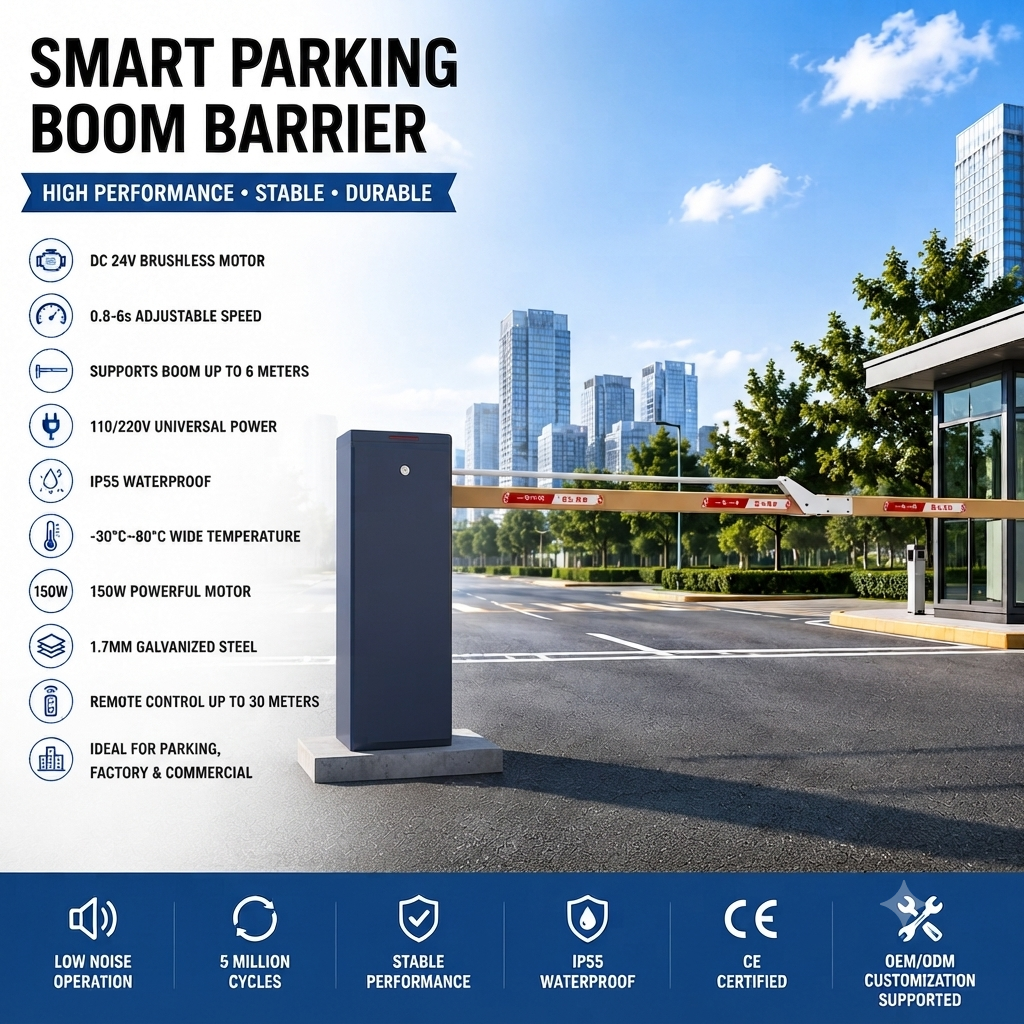
1. Start by Measuring the Clear Height at the Entrance
The first step is to measure the clear height available from ground level to the lowest obstruction above the vehicle path, including the ceiling, pipes, ventilation ducts, light fittings and signage.
Do not rely on the architectural entrance height alone. Mechanical and electrical services often reduce the space actually available for the barrier arm and for vehicles.
Where the entrance is low, or where a straight arm would clash with the ceiling or overhead services, a folding-arm barrier may be the better option. A hinged arm is divided into sections that move in a way that can operate within less vertical space than a long straight arm in some installation layouts. The movement diagram and the actual product dimensions must still be reviewed before the model is approved.
Do not assume that every folding barrier suits every basement. Ask the supplier for a drawing showing the arm height when open, the hinge point, the clearance required and the position of the barrier base, then compare those figures with the site measurements.
2. Check the Lane Width, Turning Circle and Basement Ramp
Entrance design below ground is not only about height. Measure the lane width, the approach angle, the vehicle turning radius, the ramp gradient, and the distance available before and after the stop line. Vehicles may need extra room to manoeuvre, particularly at narrow entrances or on curved ramps.
The barrier arm should be positioned so that it does not obstruct vehicles driving up or down the ramp and does not block visibility at bends. There must also be enough space for a vehicle to stop before the arm without queuing back onto the public road or blocking traffic coming from inside.
If the lane width or entrance shape is unusual, ask the project engineer to prepare a layout showing the cabinet position, arm length, opening direction, sensor locations and the path of the largest design vehicle.
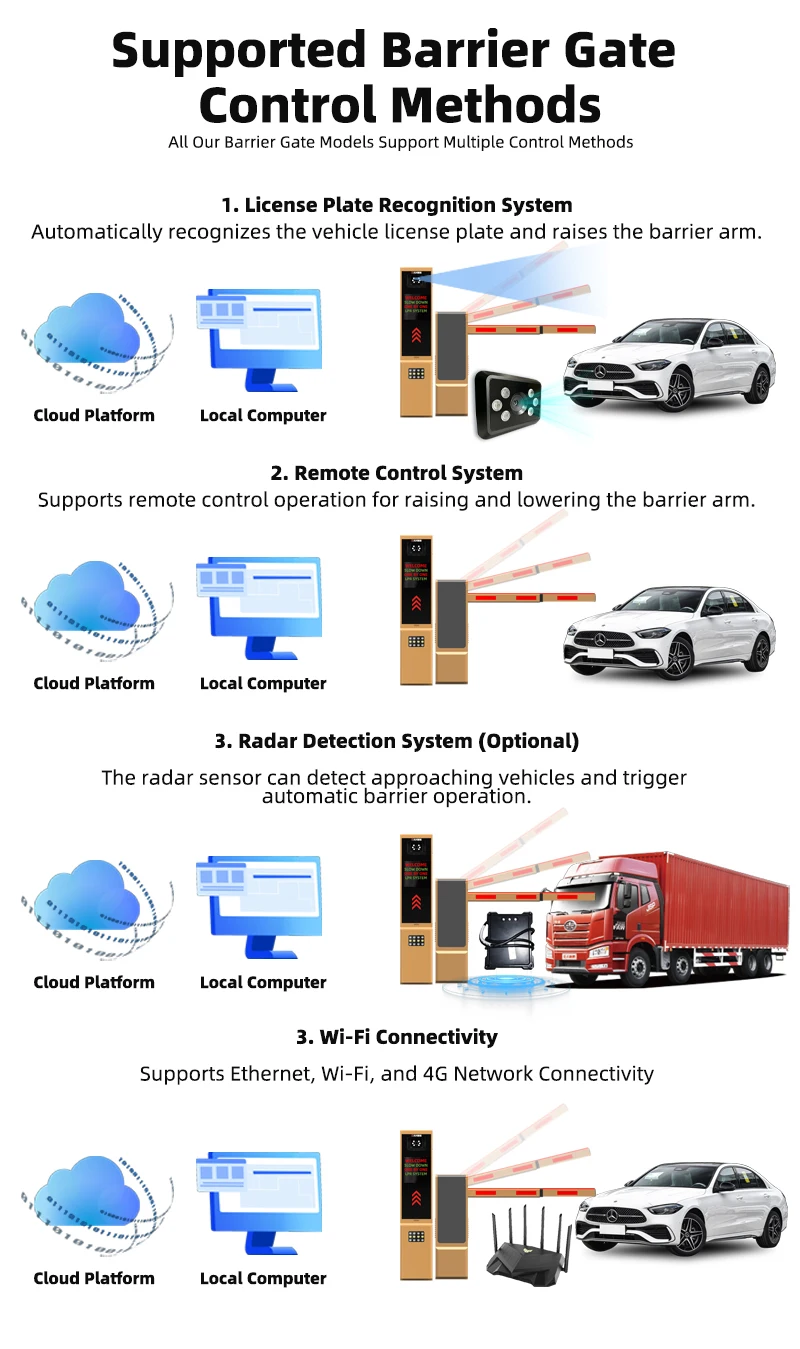
3. Choose the Arm Type According to Space Constraints
A straight arm is normally used where sufficient height and movement space are available and the entrance is clear of overhead obstructions. It suits many commercial and residential car park entrances that allow the arm to travel through its full vertical arc.
A folding arm deserves consideration when the ceiling is low or overhead services limit the arm height. Folding-arm barriers provide a different opening path that can be assessed against the real entrance dimensions, although it is still necessary to confirm whether the hinge needs additional side or forward space.
At entrances that need a specialist solution, a custom arm arrangement or a different mounting position may be required. Do not choose a longer or faster arm simply because it appears more advanced. Geometric fit and safe operation matter more than marketing specifications.
4. Match the Opening Speed to the Traffic Volume
A small residential car park entrance has different requirements from a commercial tower or hotel entrance that handles heavy traffic at peak times. Review the expected number of vehicles per hour, the peak periods, the ratio of visitors to residents or staff, and the number of entry and exit lanes.
BAROXON offers standard barriers and a high-speed barrier gate range, with opening speeds that vary by model and configuration. Some products list specific options such as 0.6 seconds, 0.9 seconds and an adjustable 1.5 to 6 seconds. These figures relate to particular products and configurations and are not a guarantee that every barrier achieves the same speed.
In an underground car park, higher speed does not always mean better performance. Opening and closing speed has to be balanced against the time the system needs to identify the vehicle, the stopping distance, pedestrian movement and the safety of the vehicle passing under the arm. A moderate setting may be more appropriate at entrances with limited visibility or mixed traffic.
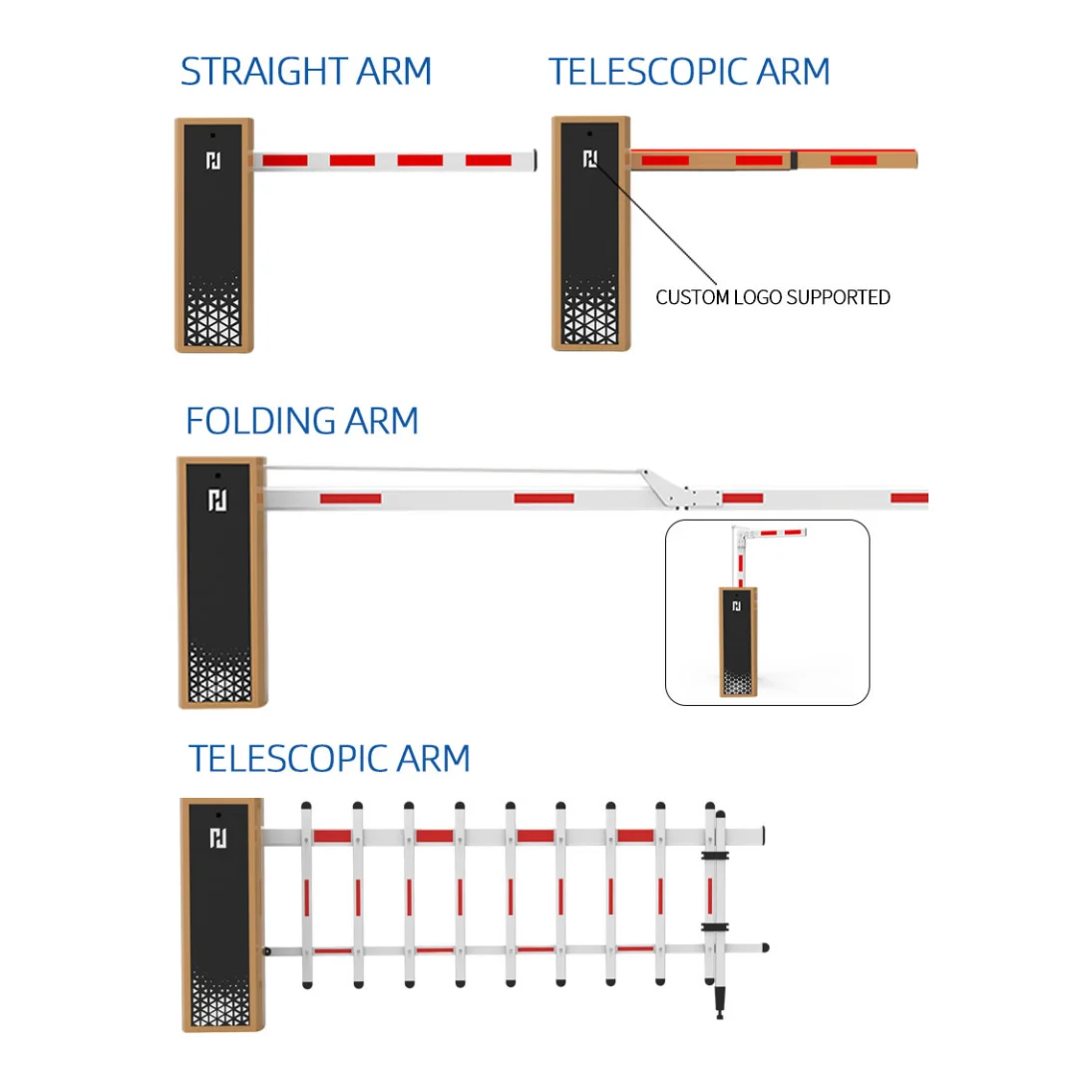
5. Make Safety the Priority: Radar, Detection Loops and Control
Visibility at underground entrances can be limited by ramps, columns, bends and lighting. A suitable method is therefore needed to detect vehicles and objects in the barrier arm zone and to prevent the arm from closing when the lane is not clear.
BAROXON solutions support radar sensors and vehicle detectors, and some configurations can include 79 GHz microwave radar or radar sensors in the 77–81 GHz band. The sensor should be selected according to the detection range required, the mounting angle, the ceiling height, and the likelihood of adjacent vehicles or pedestrian movement.
Radar, inductive loop detectors or other detection methods may be used depending on the site design and the controller. No single sensor should be treated as an automatic substitute for every safety measure. The anti-close logic, reopen function, manual operation and warning signals must all be tested against the site risk assessment.
Pedestrian routes should also be separated from vehicle routes wherever possible, with clear floor markings and signage, and the arm should not sweep across a pedestrian waiting area. Where an entrance is shared, dedicated pedestrian barriers or gates should be considered rather than relying on the vehicle barrier alone.
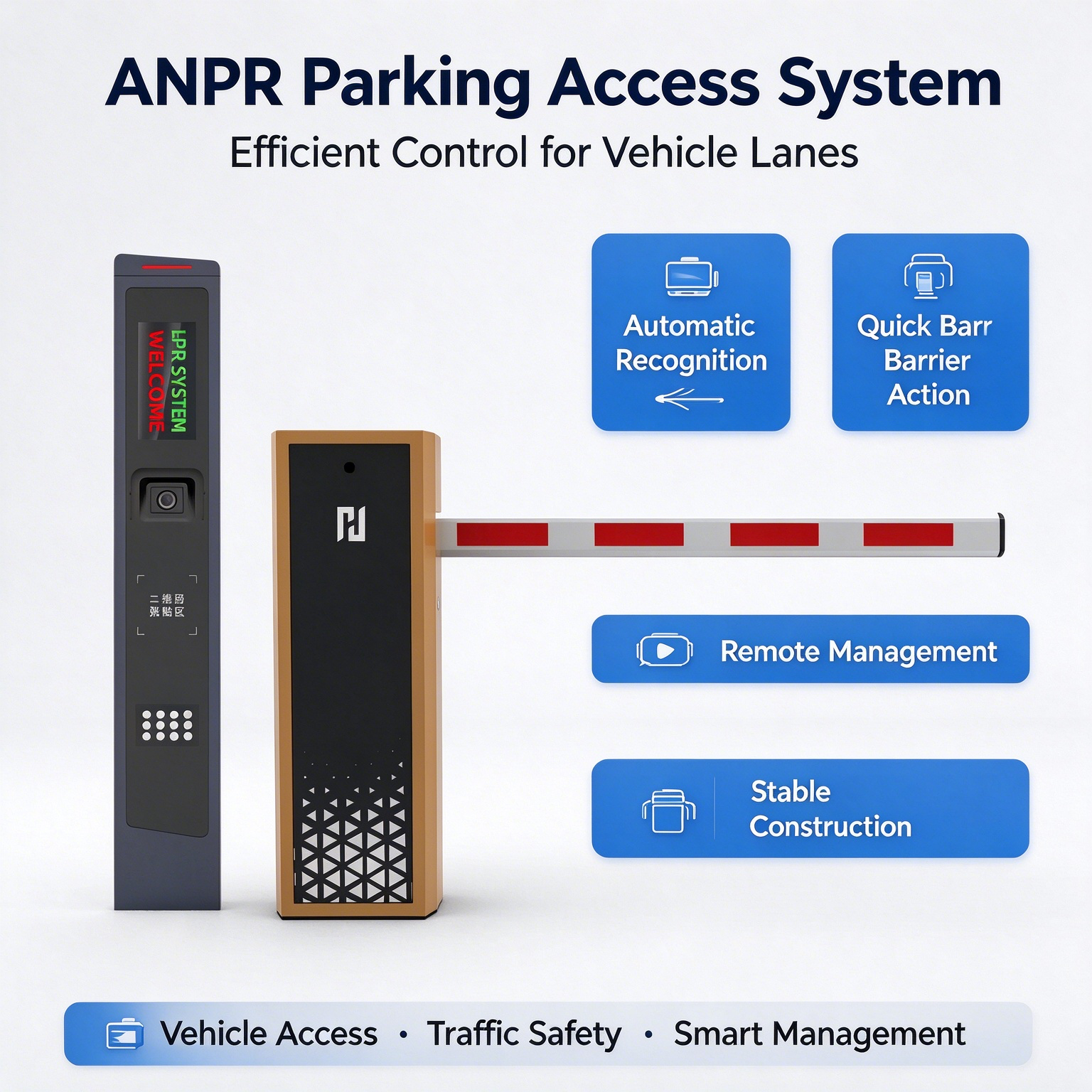
6. Choose the Access Control Method: RFID or ANPR/LPR?
RFID cards, tags or proximity devices are a practical choice for car parks used regularly by residents or staff. An RFID reader can be connected to the controller to open the barrier once the card or credential has been validated.
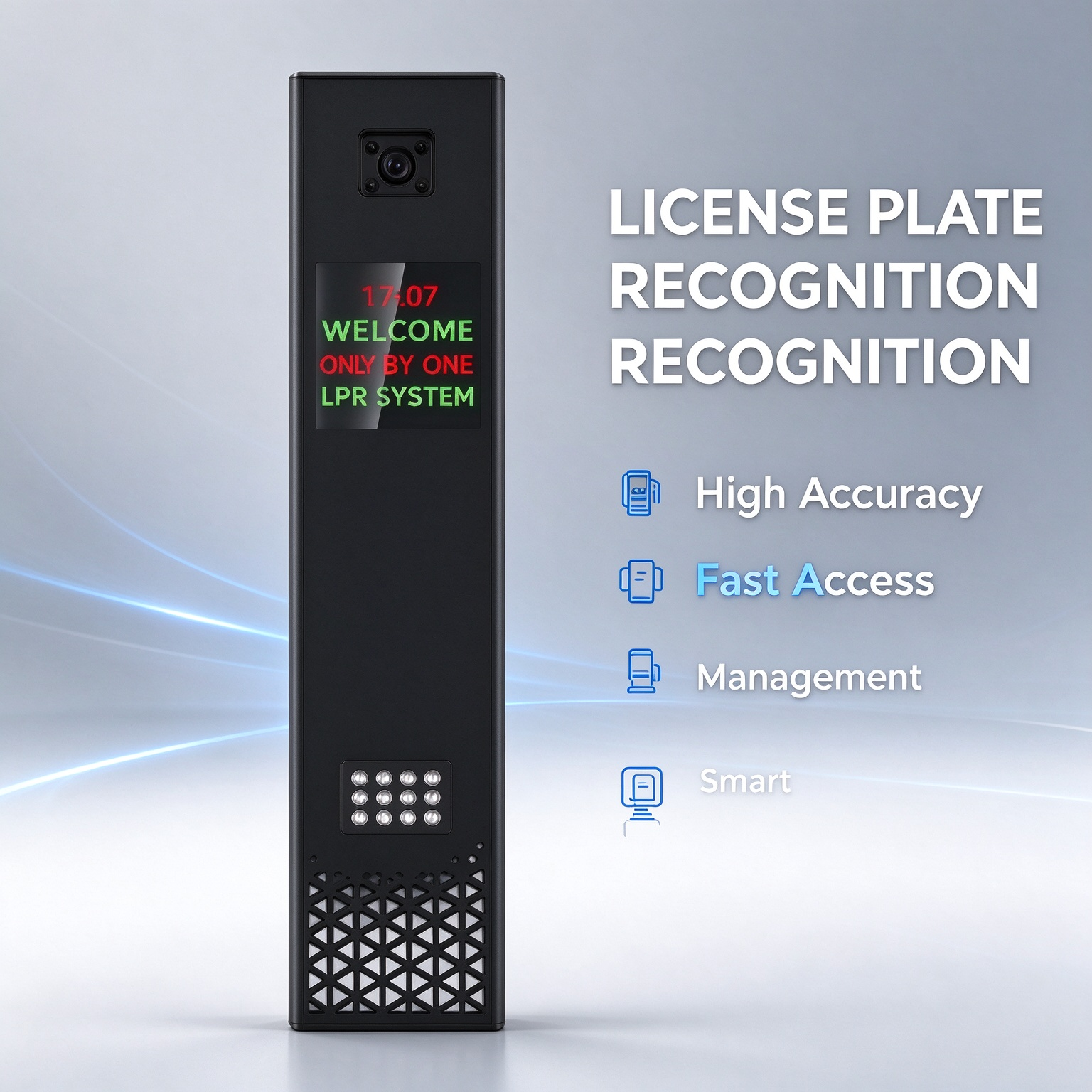
An ANPR/LPR system uses a camera and software to recognise the vehicle plate and can be linked to an automatic barrier to admit registered or authorised vehicles. This option suits operators who want to reduce dependence on physical cards and record entries and exits electronically.
RFID and ANPR/LPR can also be combined, or QR codes and tickets used for visitors, in line with the car park management policy. Before purchase, confirm compatibility between the camera, reader, controller and software, the way opening signals and access records are exchanged, and how unread plates or unregistered vehicles will be handled.
7. Review the Motor, Duty Cycle and Maintenance Requirements
The motor and transmission must suit the arm length, its weight and the expected frequency of use. In multi-storey buildings operating around the clock, the number of operating cycles per day can be an important factor when comparing models.
Some BAROXON products use brushless DC motors, and the company states continuous operation or approximately 5,000 cycles per day in certain configurations. These values should be treated as specifications for particular models or configurations; request the technical data sheet for the proposed model to verify its actual duty rating.
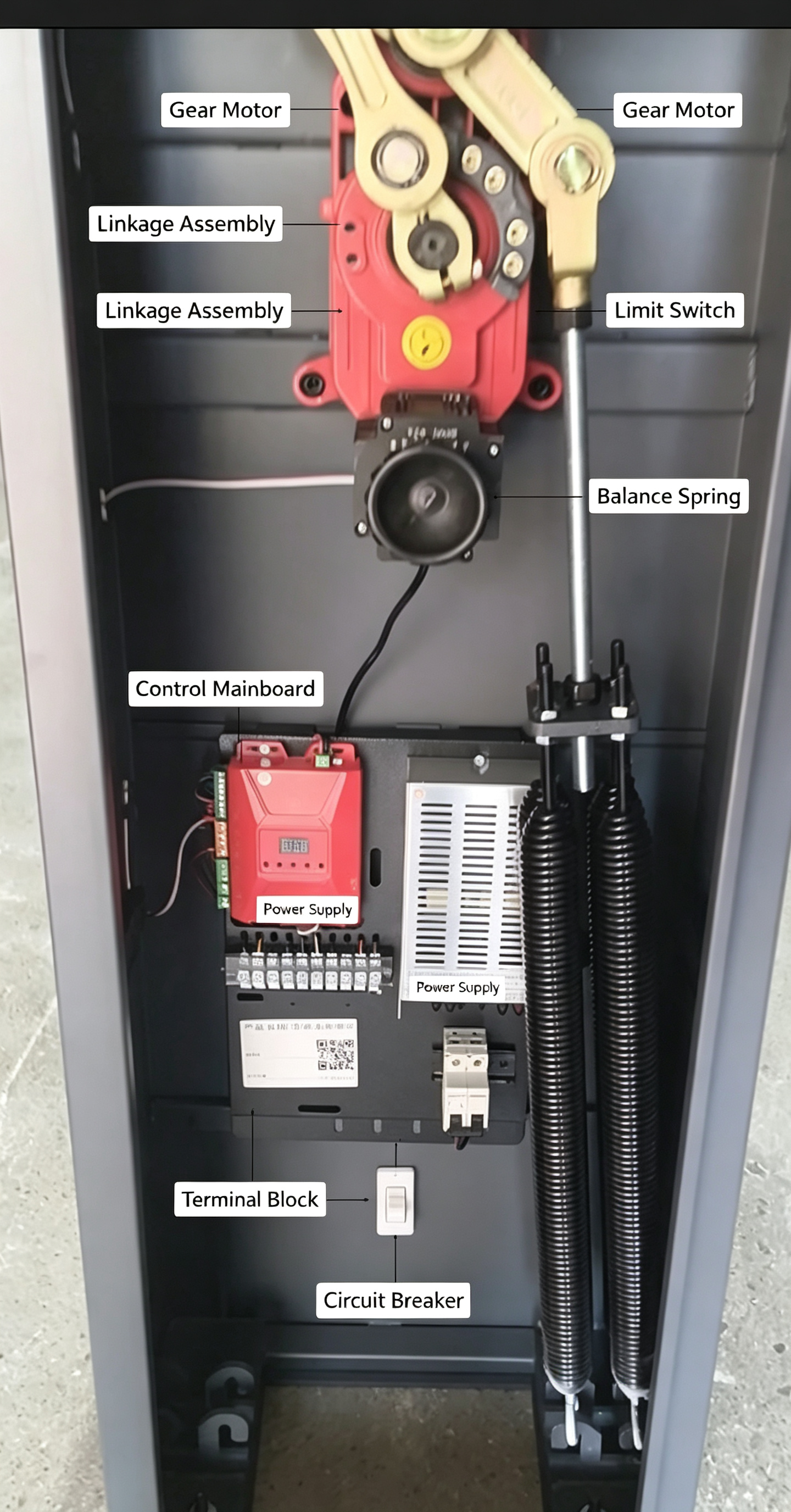
Also ask about access to the control board, spare parts availability, manual arm release procedures during a power failure, and whether a backup battery is supported on the model. A maintenance schedule is advisable, covering the base fixings, arm, hinge, sensors, limit switches and electrical connections.
8. Consider the Basement Environment: Dust, Humidity and Ventilation
Although an underground car park is protected from direct sun and rain, it can still be exposed to dust, humidity, cleaning water and condensation, and temperature and ventilation may vary between areas. The enclosure and electrical components should therefore be selected with an appropriate protection rating for the actual site conditions.
Some BAROXON outdoor barriers offer protection options such as IP54, IP65 and IP66 depending on the model. Do not assume these ratings are available on every product or that the highest rating is automatically required inside a basement. Confirm the protection rating of the specific model and check ventilation, drainage and the site cleaning method.
9. Plan the Installation, Cabling and Building System Integration
Before the barrier is installed, coordinate with the electrical contractor, the low-voltage contractor and building management to define the power source, cable routes, camera and reader positions, network connection points and the controller location. Cables must be protected from damage and kept out of the vehicle running path.
If the car park forms part of a smart building, check whether it can connect to the parking management system, the building management system or the security platform, according to the communication interfaces available on the model. Request wiring diagrams, a signal list and integration protocols before the final design is approved.
10. Ask for a Site Test Before Approving the Solution
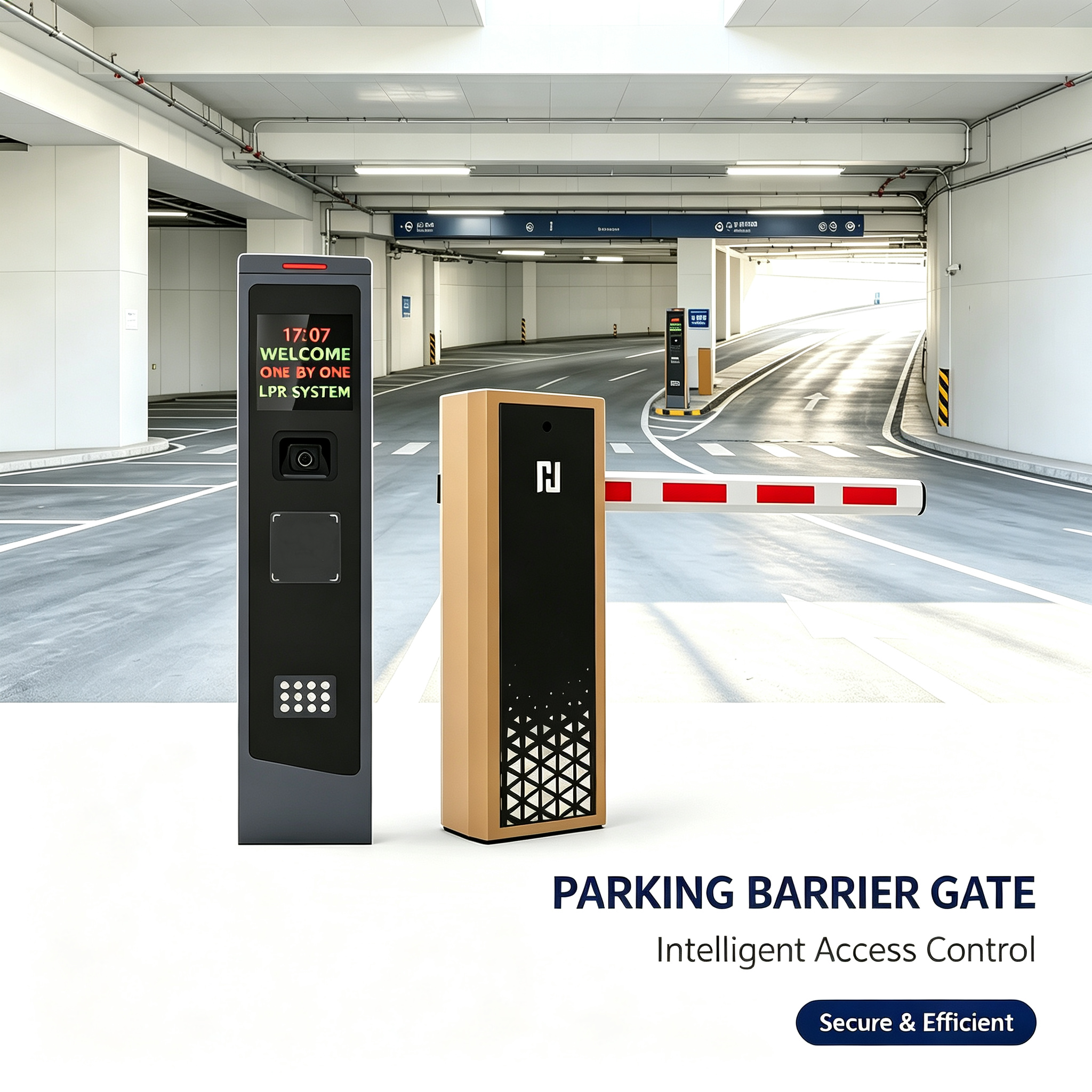
Before the final purchase order is issued, a technical site review or a trial test is advisable where the project allows it. Testing should cover arm opening and closing, vehicle detection, prevention of closing when an obstruction is present, RFID card or plate recognition, and operation under the actual lighting conditions.
Ask the supplier for the installation drawing, the model data sheet, operating and maintenance instructions, warranty terms, a spare parts list and a technical support plan. The integration responsibility between the barrier supplier, the plate recognition supplier and the site contractor should also be clearly defined.
Quick Comparison: Straight Arm or Folding Arm?
| Selection Criterion | Straight Arm | Folding Arm |
|---|---|---|
| Available height | Requires sufficient vertical clearance for the opening path | Worth assessing where vertical clearance is limited |
| Movement design | Straight lifting motion | Hinged motion that requires review of the folding path |
| Typical use | Open, unobstructed entrances | Basement entrances and low-ceiling facilities |
| Check point | No obstruction above the arm path | No conflict between the hinge or folded sections and the ceiling or vehicles |
| Final decision | After site measurement | After reviewing the model engineering drawing |
Which Solution Suits an Underground Car Park in the UAE?
For a low-ceiling basement entrance, start by assessing a folding-arm barrier and verify the actual opening dimensions. If the entrance is wide and the height is sufficient, a straight barrier may be the simpler choice.
For car parks with heavy traffic, compare standard and high-speed models according to peak vehicle numbers rather than opening time alone. Where the car park mainly serves residents and staff, RFID may be suitable for managing registered vehicles; commercial or multi-user car parks may benefit from ANPR/LPR, or a system combining plate recognition with tickets or QR codes.
In every case, the vehicle detection method must be combined with reliable safety logic. To select the right model, send the clear entrance height, lane width, a photograph or drawing of the ramp, the expected vehicle volume and the required access control method to the technical team for review.
Checklist Before Buying an Underground Car Park Barrier
- Measure the clear height to the lowest obstruction above the arm path.
- Measure the lane width, ramp gradient and turning radius.
- Define the arm length, opening direction and barrier base position.
- Confirm whether a straight or folding arm suits the available space.
- Estimate the number of vehicles per hour and the peak traffic flow.
- Decide on the identification method: RFID, ANPR/LPR, QR or tickets.
- Select the detection sensor type and the anti-close logic for a vehicle present.
- Verify the protection rating, ventilation and humidity at the installation point.
- Review the power, cabling and network connection requirements.
- Request the technical data sheet and engineering drawing for the chosen model.
- Agree testing, commissioning, training, warranty and spare parts arrangements.
Frequently Asked Questions
Is a folding barrier always the best choice for an underground car park?
No. A folding barrier is worth assessing where height is limited, but it is not automatically the best option for every entrance. Arm dimensions, the folding path and the hinge position must be compared with the ceiling, ramp and vehicles.
What information should be sent to the supplier to select a barrier?
Send the clear height, entrance width, site photographs, a ramp drawing if available, the expected vehicle volume, the user type and the required identification method. This information helps the supplier propose a workable configuration instead of a generic recommendation.
Can a BAROXON barrier be integrated with a vehicle plate recognition system?
BAROXON describes barrier solutions integrated with ANPR/LPR and RFID systems. Camera, software, controller and signal compatibility should still be verified before purchase, because integration requirements differ from project to project.
Do I need a radar sensor inside an underground car park?
That depends on the lane geometry, the risk assessment and the detection system adopted. Radar or a loop detector can help detect vehicles, but the complete safety system must be designed and tested, including anti-close, reopen and warning functions.
Does a faster opening speed always reduce congestion?
Not necessarily. Vehicle passage time depends on identification, access validation, stopping distance, vehicle acceleration and the movement of other vehicles. The full cycle time and vehicle throughput should be assessed, not only the arm lifting speed.
Conclusion
Choosing the right parking barrier for a basement in the UAE starts with site measurements, followed by the arm type, operating speed, safety, vehicle identification method, and maintenance and integration requirements.
Begin with the clear height and the vehicle path. Where the ceiling is low, assess a folding arm; where clearance is sufficient, a straight arm may be suitable. Then select the control system and sensors according to traffic flow and the risk assessment.
The BAROXON product range covers straight-arm and folding-arm barriers, high-speed barriers, RFID and ANPR/LPR solutions and radar sensors. Project teams can submit entrance drawings and site data to confirm the most suitable model and configuration for a particular underground car park.
Latest News
Baroxon® | Leading Boom Barrier Manufacturer
Advanced Security Access Control and Intelligent Parking Solutions.
Company Strength
Adequate Inventory
Fast Shipping
Our Products
CONTACT US
Address: No. 2 Wanshou Road, International Innovation Industrial Park, Jinan, Shandong, China


© COPYRIGHT 2025 Baroxon® | Leading Boom Barrier Manufacturer

Contact Us
Our passion is to bring your ideas to life. Work with our design team to create a one-of-a-kind custom finish or cladding system to create a truly unique space. Together we can make your story stand out. If you need something to request a sample, request pricing, or request a demo, please fill out the contact form below. Explain your request in as much detail as you can and a representative will contact you within 1 business day.