
How to Choose the Right Automatic Parking Barrier for Your Site
Release time:
2026-10-30
AI Summary
Bottom line: the Baroxon® barrier and gate accessory handles OEM replacement and field retrofit of existing lanes at a 15 s cycle, IP54 rated.
How to Choose the Right Automatic Parking Barrier for Your Site
Choosing the right automatic parking barrier depends on the entrance conditions, vehicle traffic volume, entry verification method, and safety requirements. A barrier suitable for a quiet residential tower entrance may not be the best choice for a busy commercial parking lot or a warehouse gate with trucks passing all day. Therefore, it is best to define the site specifications first, then match them with the appropriate arm type, motor, control system, and accessories.
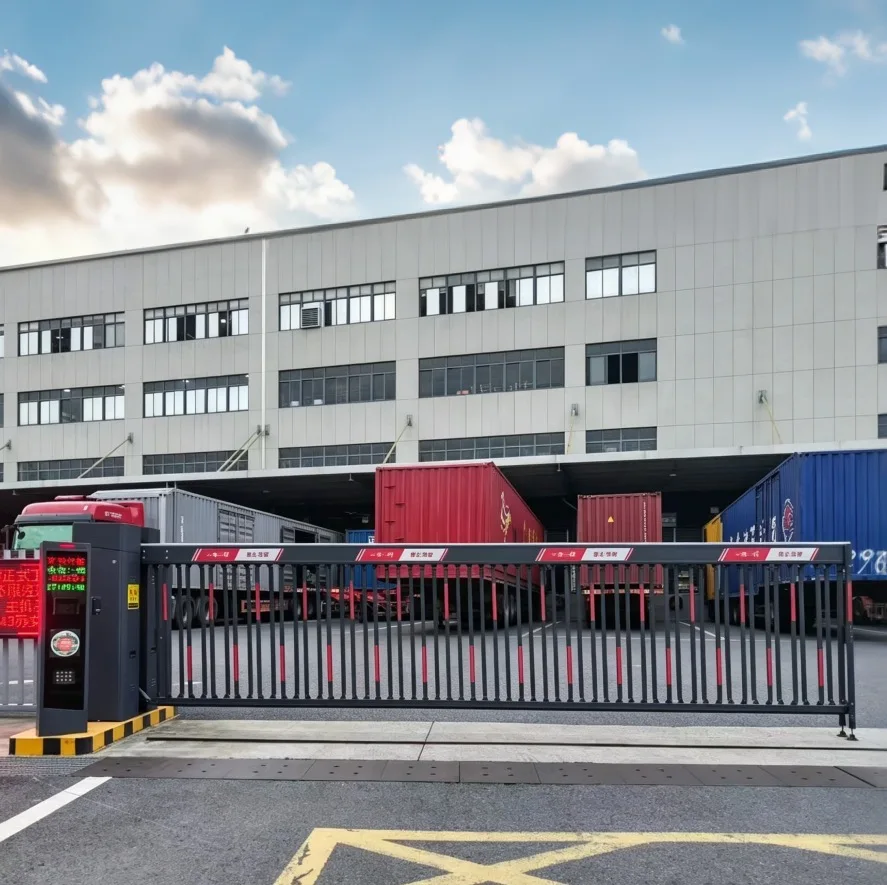
1. Start by Measuring Lane Width and Entrance Height
The first step is to measure the actual lane width that the arm will close, while identifying the barrier cabinet location, median island, sidewalks, and any nearby obstructions. Relying on the nominal gate width alone is insufficient; you must ensure the arm covers the required lane without obstructing adjacent vehicle or pedestrian movement.
If the entrance is wide or requires controlling more than one lane, discuss with the system supplier whether a single long-arm barrier or separate barriers for each lane is more appropriate. The final arm length should be based on the site plan and model specifications, not visual estimation alone.
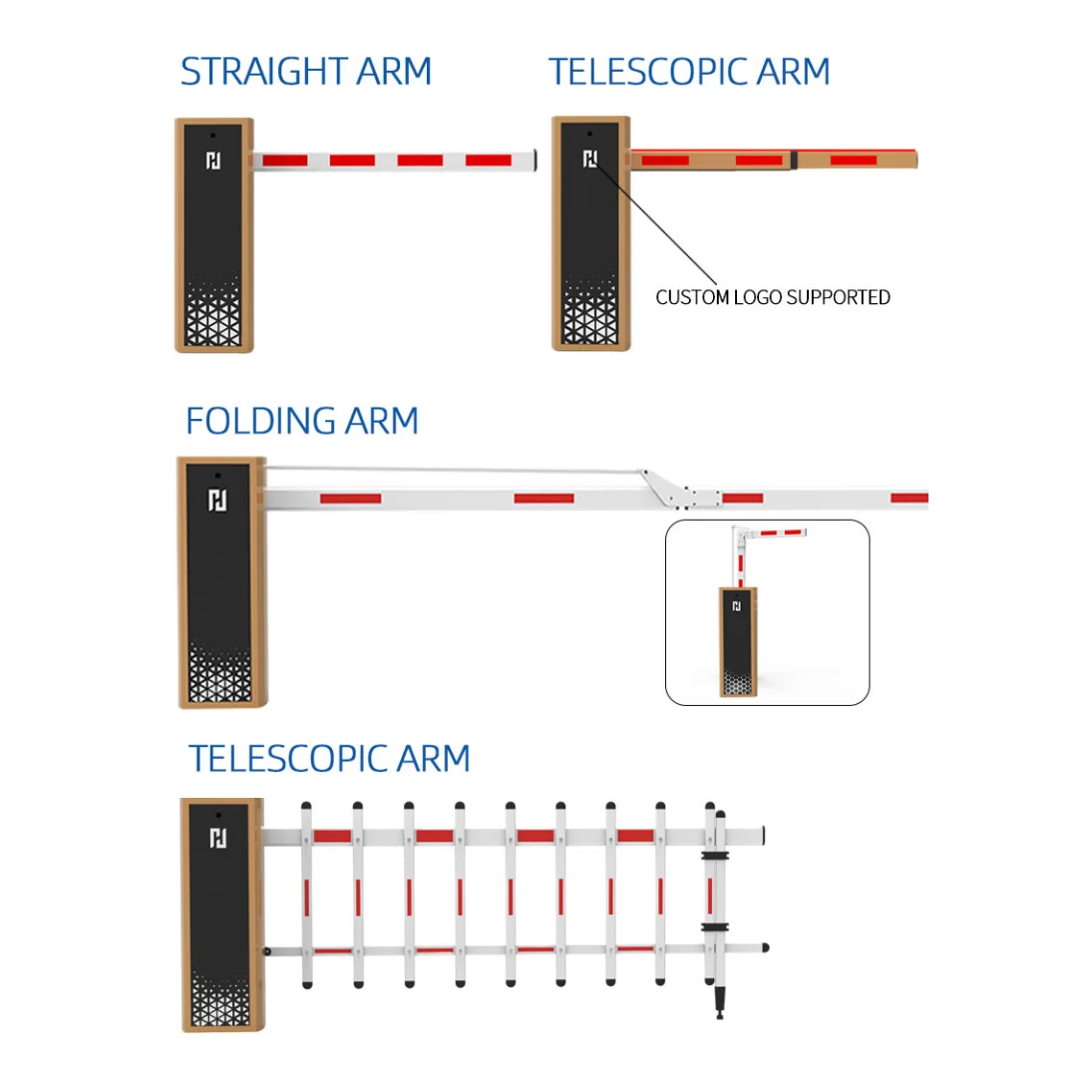
Next, measure the available vertical clearance and arm movement space. For entrances with low ceilings, pipes, or overhead utility conduits, a folding arm may be more suitable than a straight arm. For open entrances with sufficient height, a straight arm can typically be considered.
2. Choose the Arm Type Based on Entrance Design
Straight Arm
The straight arm barrier is used in many parking lot entrances and commercial and residential buildings when sufficient height space is available. Its design is simple and easy to integrate into a standard lane layout. The arm length and balance should be determined based on the lane width and operating unit specifications.
Folding Arm
The folding arm helps with entrances that limit the vertical movement of the arm, such as some multi-level parking entrances or entrances located beneath buildings. Before adopting it, verify the folding direction, required side space, and that the movement does not conflict with vehicles or signage.
High-Speed or Heavy-Duty Barrier
For sites with frequent traffic, such as commercial centers, transit hubs, and logistics facilities, evaluate the opening and closing speed and expected operating cycles. BAROXON offers high-speed solutions and brushless DC motor solutions; the site mentions operating ranges for some configurations from 1.5 to 6 seconds depending on the model and setup. Do not apply this figure to all products; request the specific model datasheet.
For factories, warehouses, and weighbridge areas that receive heavy vehicles or continuous traffic, evaluate the service class, motor torque, arm length, structural durability, and ease of maintenance. Do not select a heavy-duty barrier based on marketing description alone; request written confirmation of cycle counts and permitted operating conditions.
3. Calculate Traffic Density and Peak Hours
Record the expected number of vehicles per hour during peak times, the number of daily opening and closing cycles, the percentage of heavy vehicles, and continuous operating periods. This data helps determine whether the site needs a standard, high-speed, or heavy-traffic configuration.
Higher opening speed does not always mean better performance. If vehicles move slowly or there is nearby pedestrian traffic, adjusted speed with appropriate detection devices may be more suitable. For fast-traffic lanes, balance the cycle speed with stopping distance, signal clarity, and safe control logic.
4. Determine the Vehicle Verification Method
Remote Control or Push Button
A remote control or push button may be suitable for small entrances or sites where a security guard manages access. However, it may require continuous human intervention, so the number of lanes, visitor volume, and operating hours should be evaluated before adopting it as the primary method.
RFID Cards
The barrier can be linked to an RFID reader to read a vehicle-specific card or tag. This is suitable for residential communities, employee parking, and sites using authorized vehicle lists. Verify the reader type, actual read range, installation location, and the management process for lost or cancelled cards.
ANPR/LPR License Plate Recognition
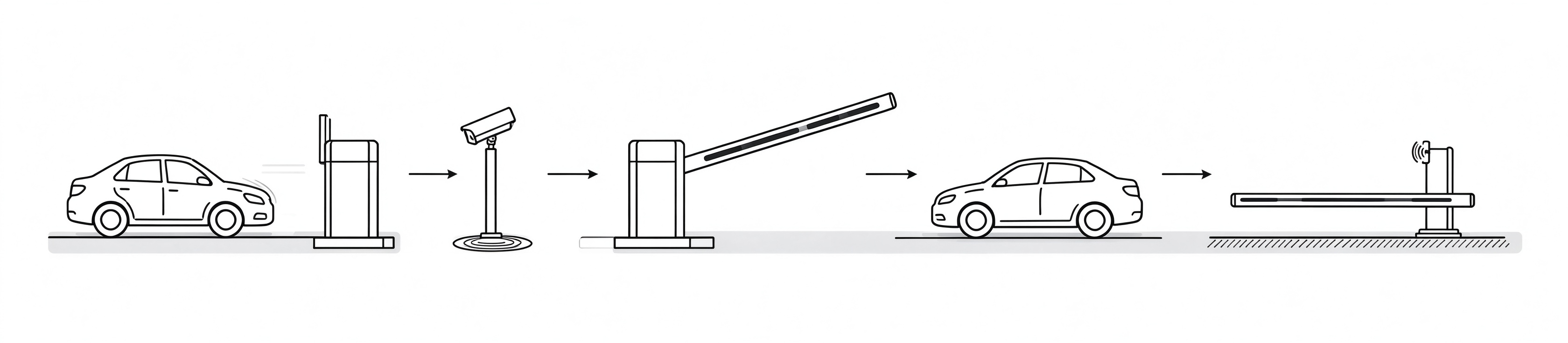
If the project requires contactless entry or vehicle movement logging, consider integrating the barrier with an ANPR/LPR camera and parking management platform. Verify camera compatibility with the control unit and software, lighting conditions, camera angle, vehicle speed, and plate reading quality in the actual lane.
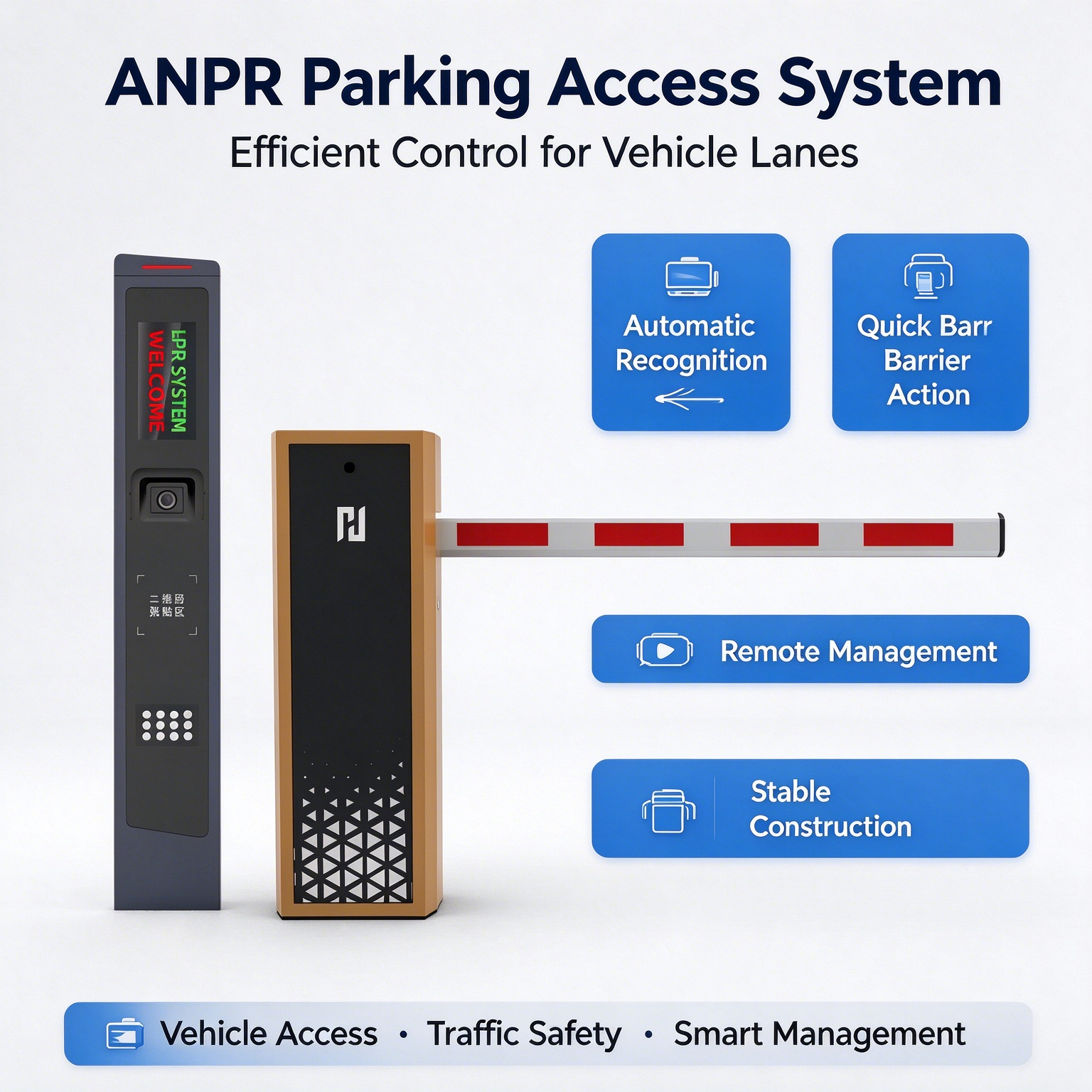
5. Do Not Neglect Sensors and Safety
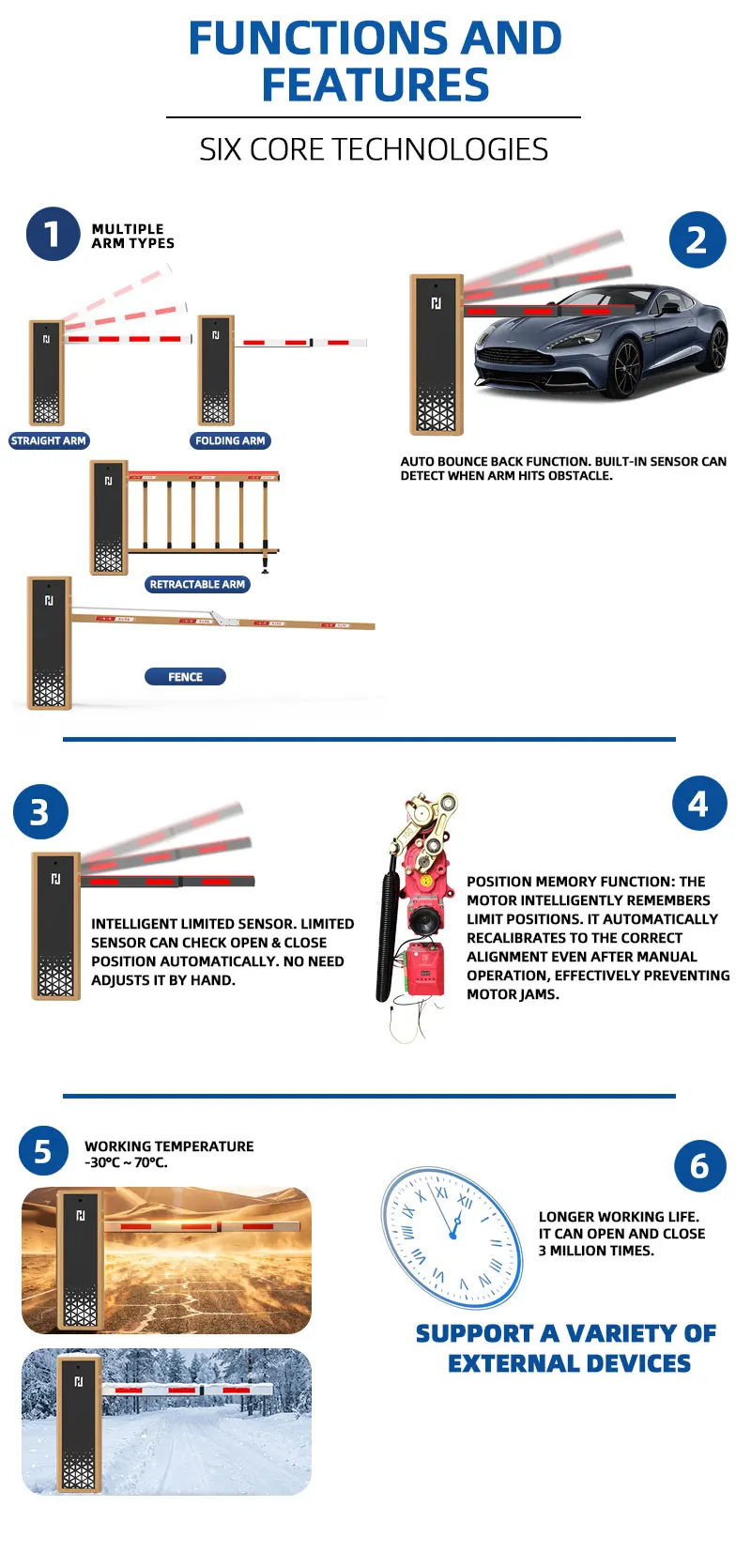
The barrier mechanism must be compatible with the lane design and site risk assessment. Ground loop sensors, radar sensors, or other detection methods can be used to detect vehicle presence, and anti-collision or arm retraction features can be integrated if the model supports them.
Request specification of sensor types, quantities, installation locations, and whether they work with the selected control unit. Also clarify the arm behavior on signal loss, communication failure, or obstacle detection, and do not assume all barriers provide the same features.
6. Consider Outdoor Installation Conditions in the UAE
Outdoor entrances in the UAE may be exposed to dust, humidity, high temperatures, and direct sunlight. Therefore, review the IP protection rating, permitted operating temperature, cabinet materials, coating, and corrosion resistance, and request the specific values from the product datasheet. Also ensure the installation location allows maintenance and safe access to the operating unit.
For indoor or underground parking, the priority may be cabinet size, movement space, noise, and maintenance accessibility. For exposed sites, environmental protection, base mounting, and electrical connection protection become more important.
7. Check Power, Emergency Options, and Maintenance
Before finalizing the barrier, verify the supply voltage, wiring requirements, and electrical protection, and ask about manual release or backup battery in the proposed configuration. These options vary by model, so they should be explicitly included in the quote and technical specifications if required for the project.
Also request a periodic maintenance plan, consumable spare parts list, warranty period, and technical support process. For multi-lane sites, it is useful to know whether the supplier provides wiring diagrams, operating instructions, training, and integration support with the parking management system.
8. Match the Solution to the Facility Type
- Residential communities and towers: Priority may be quiet operation, resident lists, visitor permits, and remote control or ANPR/LPR.
- Shopping malls and hotels: Evaluate peak traffic, visitor management, and integration with ticketing or parking platforms.
- Offices and business complexes: Separate employee and visitor lanes as needed, and link access to permit records.
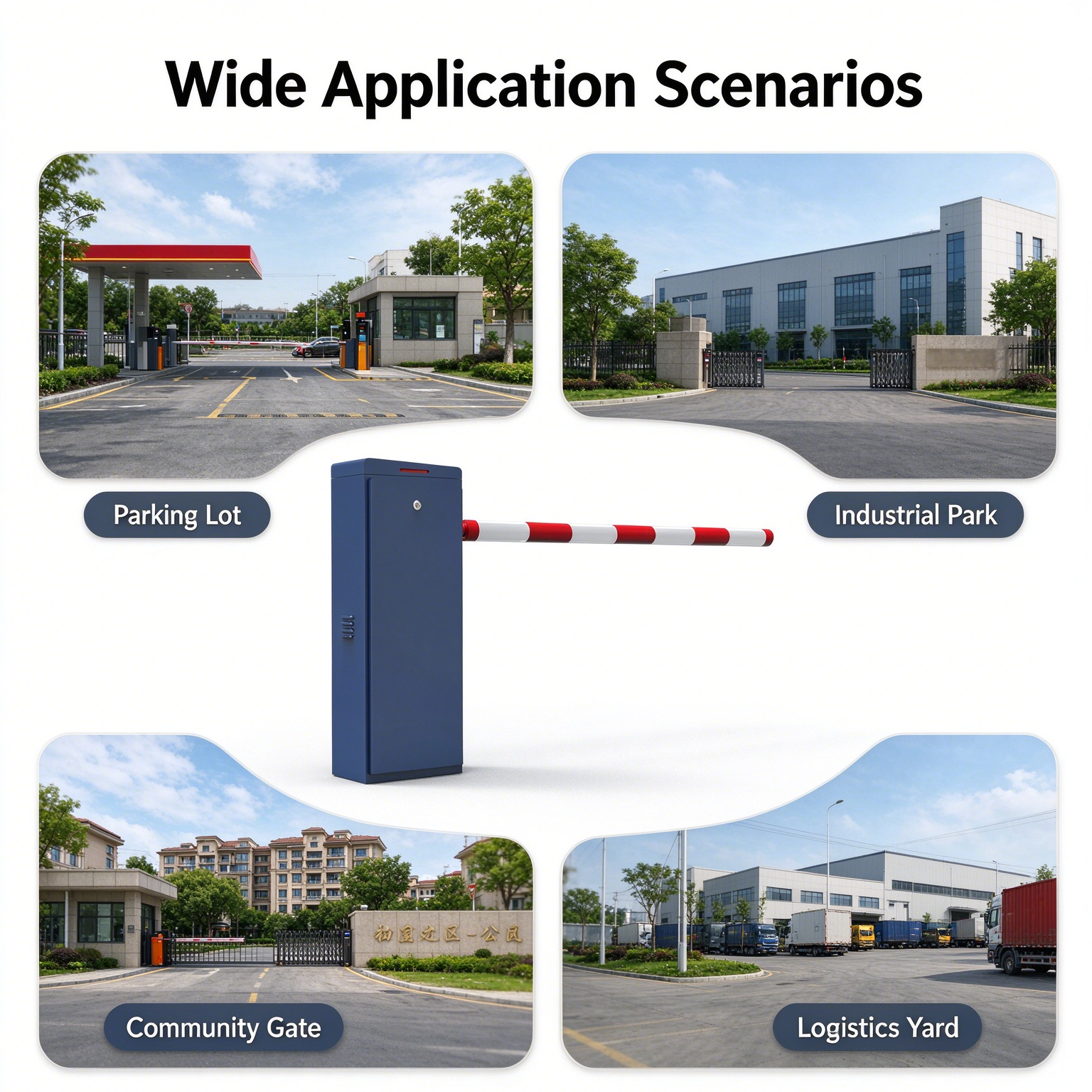
- Factories and industrial areas: Review barrier suitability for heavy traffic, large vehicles, and RFID or radar integration.
- Warehouses and logistics centers: Evaluate truck and fleet traffic, loading areas, and entry/exit logs.
- Airports, transit centers, and public facilities: Prioritize lane design, signal clarity, operational continuity, and separation of vehicle and pedestrian traffic.
9. Why Choose BAROXON for Parking Barrier Solutions?
The BAROXON website for the UAE and Gulf region presents a range of automatic boom barrier solutions, high-speed barriers, brushless DC motor barriers, RFID systems, ANPR/LPR license plate recognition systems, radar sensors, and pedestrian access control systems. Applications cover residential communities, offices, commercial centers, factories, warehouses, and transit facilities.
The site notes that some configurations support adjustable opening speeds from 1.5 to 6 seconds, brushless DC motors, obstacle detection, LED arm lighting, 79 GHz radar sensors, and integration with ANPR/LPR cameras. Each feature should be confirmed with the specific model and its datasheet before adoption in project specifications.
For a suitable recommendation, prepare the entrance width, required arm length, peak-hour vehicle count, vehicle types, entry verification method, and sensor and backup power requirements. Then share this information with the BAROXON team to review the appropriate configuration.
Checklist Before Requesting a Quote
- Lane width, ceiling height, and barrier unit site plan.
- Arm length and type: straight or folding.
- Vehicles per hour and daily operating cycles.
- Vehicle types: passenger cars, trucks, or mixed fleet.
- Control method: remote, RFID, QR, tickets, or ANPR/LPR.
- Required sensors and anti-collision features.
- Installation conditions, protection rating, and operating temperature.
- Power source and manual release or backup battery option.
- Integration and software requirements, entry/exit logs.
- Warranty, spare parts, maintenance, and technical support.
Frequently Asked Questions
What Is the Most Important Factor When Choosing an Automatic Parking Barrier?
No single factor suits all sites. Start with lane width, entrance height, and traffic density, then determine the arm type, vehicle verification method, and safety devices based on the site design.
Should I Choose a Straight or Folding Arm?
Choose a straight arm when sufficient vertical space is available and there are no obstructions above the movement path. Consider a folding arm when entrance height is limited, verifying the folding space and direction.
Is a High-Speed Barrier Suitable for All Parking Lots?
Not necessarily. The operating speed should match traffic density, vehicle speed, lane design, and safety devices. Balanced adjustment may be better than choosing the fastest available cycle.
Can the Parking Barrier Be Integrated with RFID and ANPR/LPR?
The barrier can be integrated with an RFID reader or ANPR/LPR camera if the control interfaces and software are compatible. The integration should be tested practically, and access rules and movement logs should be defined before operation.
What Should Be Verified for Outdoor Installation in the UAE?
Review the IP rating, permitted operating temperature, dust and humidity and corrosion resistance, and verify the mounting base and connection protection. Values should be confirmed from the specific model datasheet.
Do I Need a Radar Sensor?
It depends on the lane layout, risk assessment, and required detection system. Radar, loop sensors, or other detection methods may be suitable, provided they are compatible with the control unit and properly installed and calibrated.
Conclusion
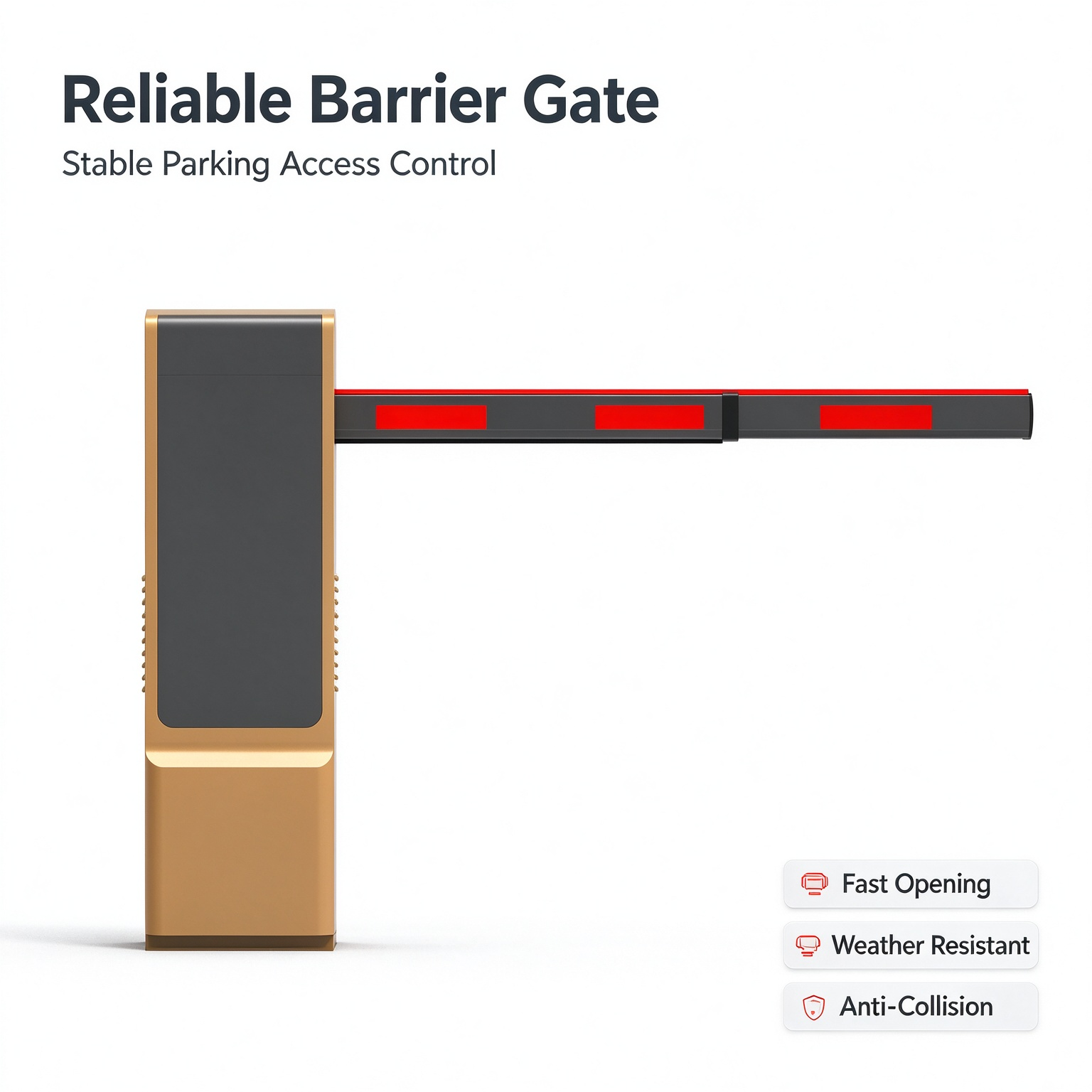
Choosing the right automatic parking barrier starts with understanding the site, not selecting the fastest motor or lowest price. Measure the lane and height, calculate vehicle traffic, choose the appropriate arm, determine the verification method and safety devices, then review environmental protection, power, maintenance, and integration. This way, a practical solution can be identified that meets the parking and facility requirements in the UAE, with final specifications confirmed with the approved model datasheet. For more solutions, visit BAROXON boom barrier gates.
Latest News
Baroxon® | Leading Boom Barrier Manufacturer
Advanced Security Access Control and Intelligent Parking Solutions.
Company Strength
Adequate Inventory
Fast Shipping
Our Products
CONTACT US
Address: No. 2 Wanshou Road, International Innovation Industrial Park, Jinan, Shandong, China


© COPYRIGHT 2025 Baroxon® | Leading Boom Barrier Manufacturer

Contact Us
Our passion is to bring your ideas to life. Work with our design team to create a one-of-a-kind custom finish or cladding system to create a truly unique space. Together we can make your story stand out. If you need something to request a sample, request pricing, or request a demo, please fill out the contact form below. Explain your request in as much detail as you can and a representative will contact you within 1 business day.