
How Does an Automatic Parking Barrier System Work?
Release time:
2026-11-02
AI Summary
Bottom line: the Baroxon® pedestrian turnstile gate handles office towers, stadiums and metro stations at a 0.5 s cycle, IP54 rated.
How Does an Automatic Parking Barrier System Work?
An automatic parking barrier system works by coordinating several components: the barrier arm, motor, controller, vehicle verification devices and safety sensors. When a vehicle arrives at the entrance, the system first checks access permission using a method such as an RFID card, ANPR/LPR licence plate recognition, a ticket or a QR code. If the vehicle meets the release conditions, the controller sends a command to the motor to raise the arm; the sensors then monitor the vehicle's passage and allow the arm to close once the movement zone is clear, in line with the safety settings.
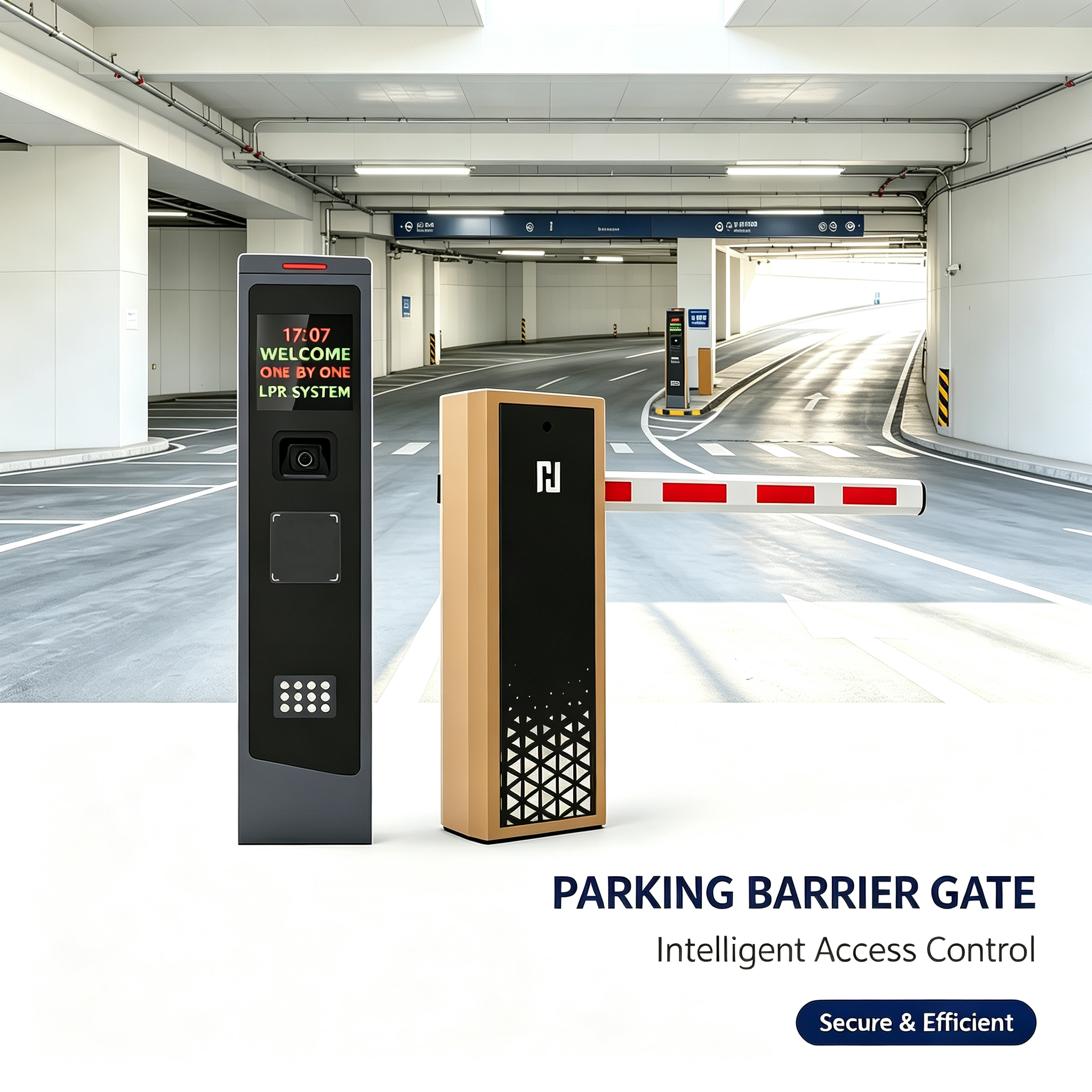
1. What Is an Automatic Parking Barrier System?
An automatic parking barrier system is a solution for controlling vehicles entering and leaving a defined lane. It usually consists of a barrier with a moving arm, an electric drive unit, a controller, a means of issuing the open command, and detection or protection devices depending on the project design. It can run independently with a remote control, or connect to an integrated parking management and vehicle identity verification system.
In modern facilities, the barrier is not limited to raising and lowering an arm; it can be part of a system for managing permits, recording entry and exit times, and organising visitor and registered vehicle traffic. The available functions depend on the hardware, software and communication interfaces adopted by the project.
2. What Are the Main Components of the System?
2.1 Barrier Arm and Mechanical Cabinet
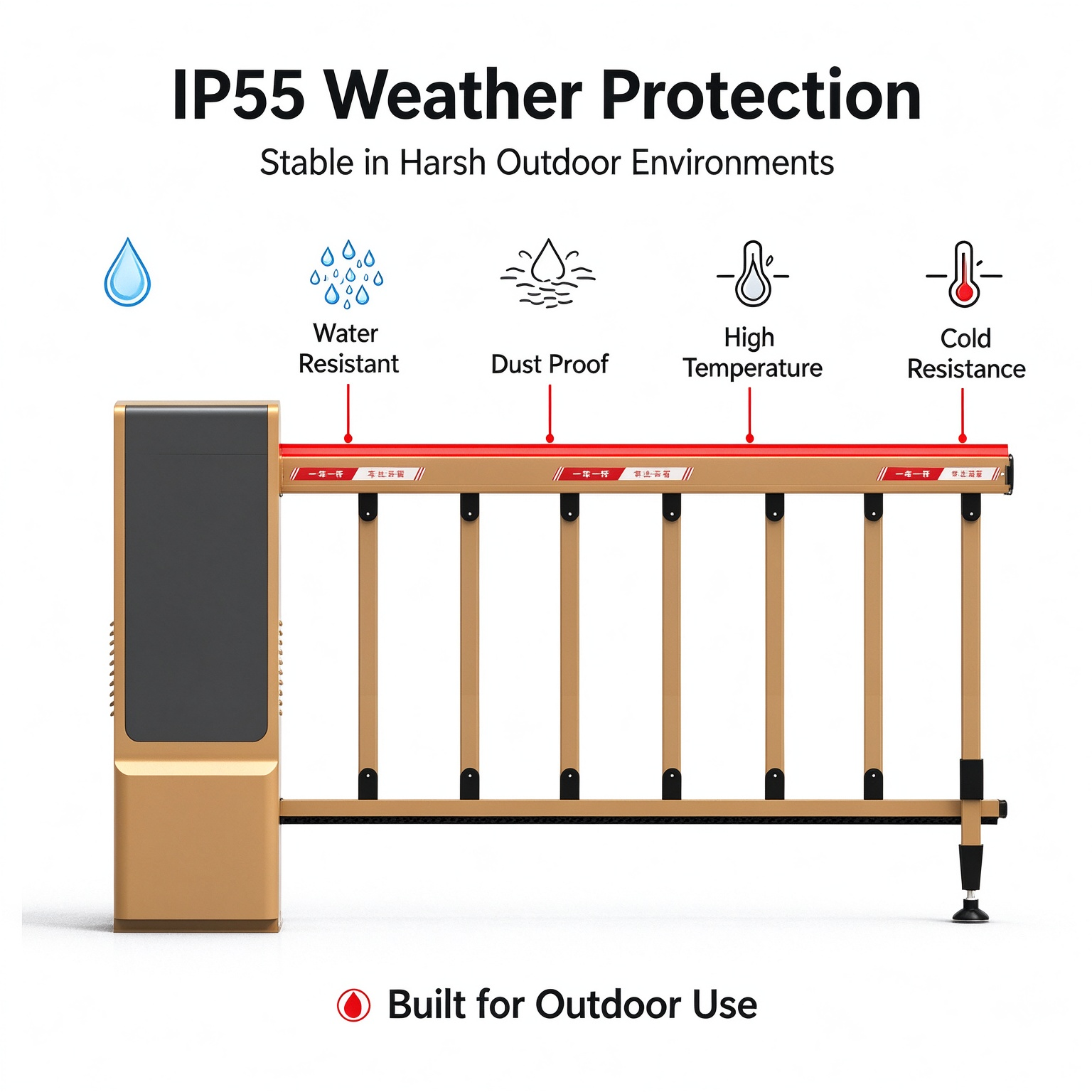
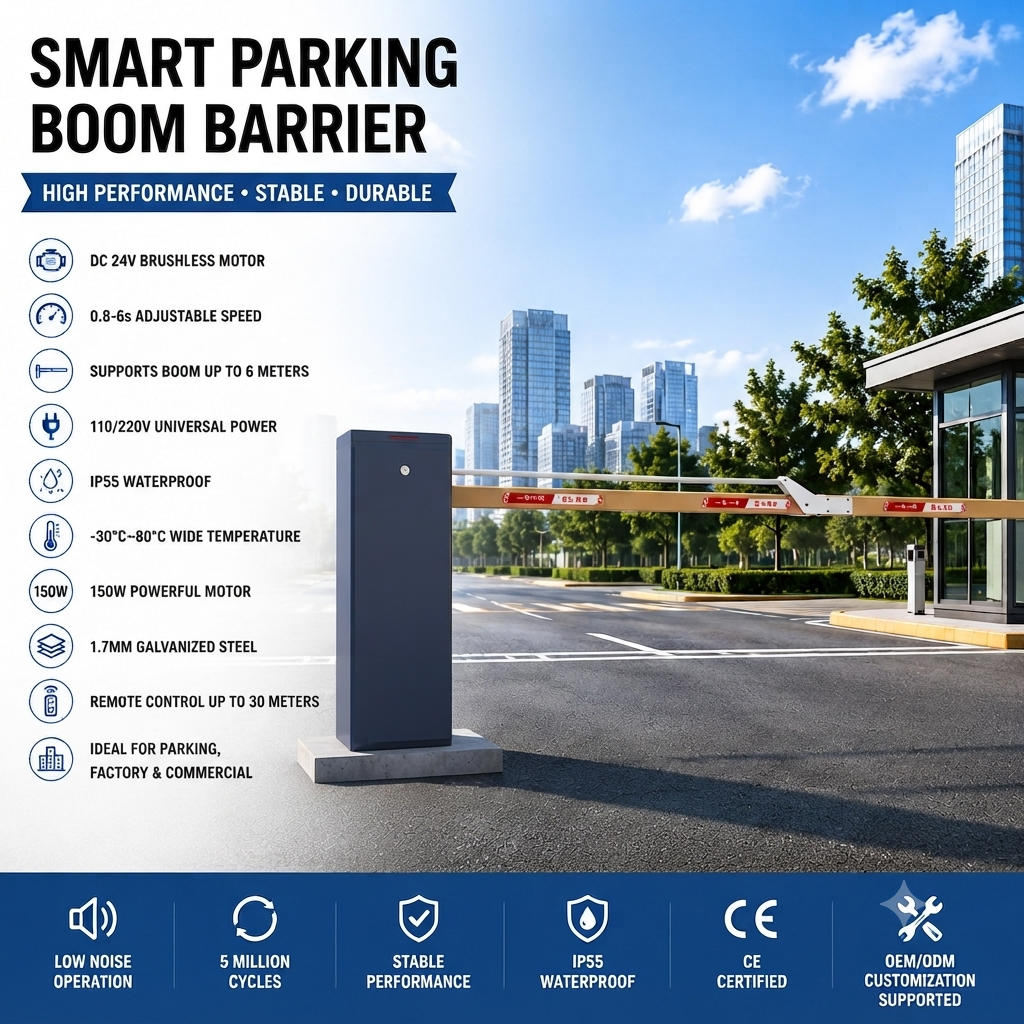
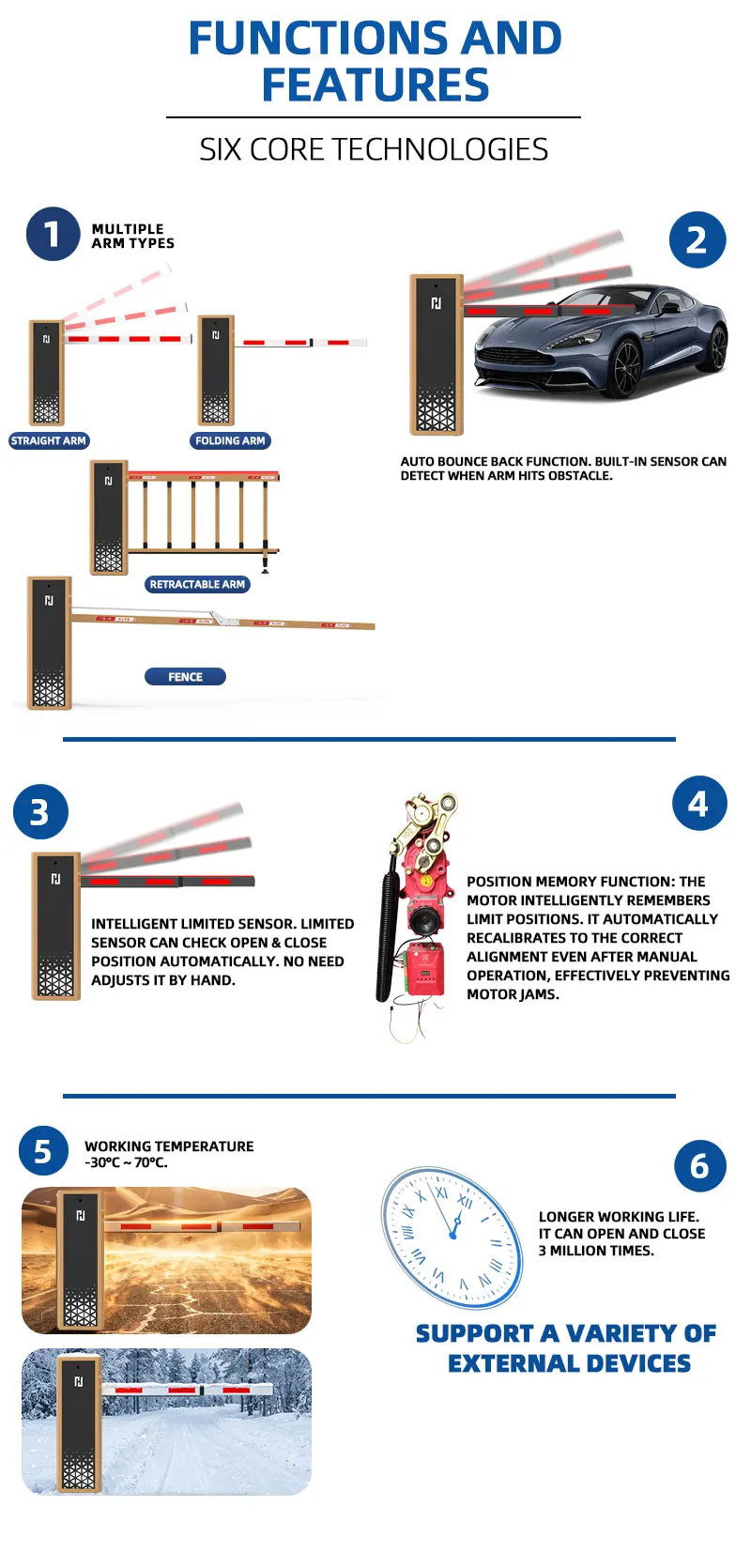
The barrier arm extends across the vehicle lane to prevent or allow passage. The arm may be straight or folding depending on entrance height and available space. The cabinet contains the movement mechanism, motor and transmission parts, and the base must be fixed to a suitable surface to ensure stability and correct alignment.
2.2 Motor and Drive Unit
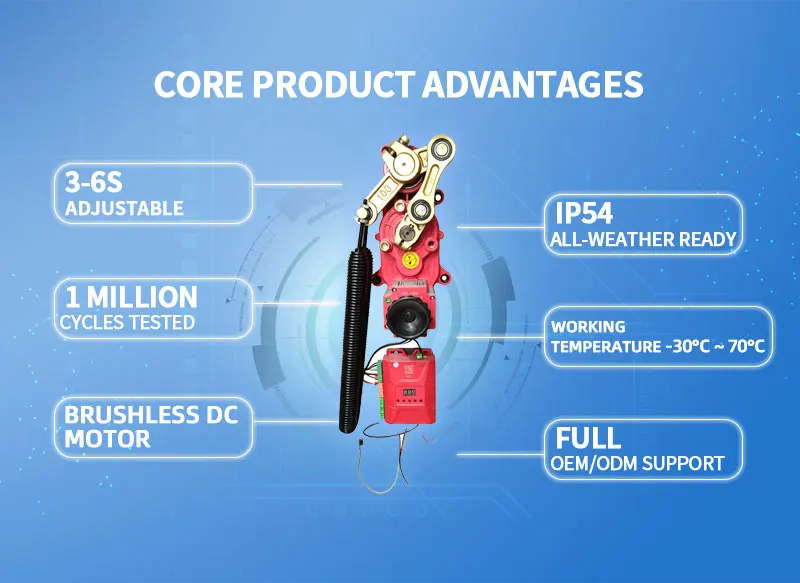
The motor moves the arm, while the drive unit regulates start, stop, speed and direction of movement. BAROXON offers configurations using brushless DC motors, along with solutions for frequent traffic and high-speed gates. Refer to the specific model data for motor type, opening speed and suitable operating cycle.
2.3 Control Unit
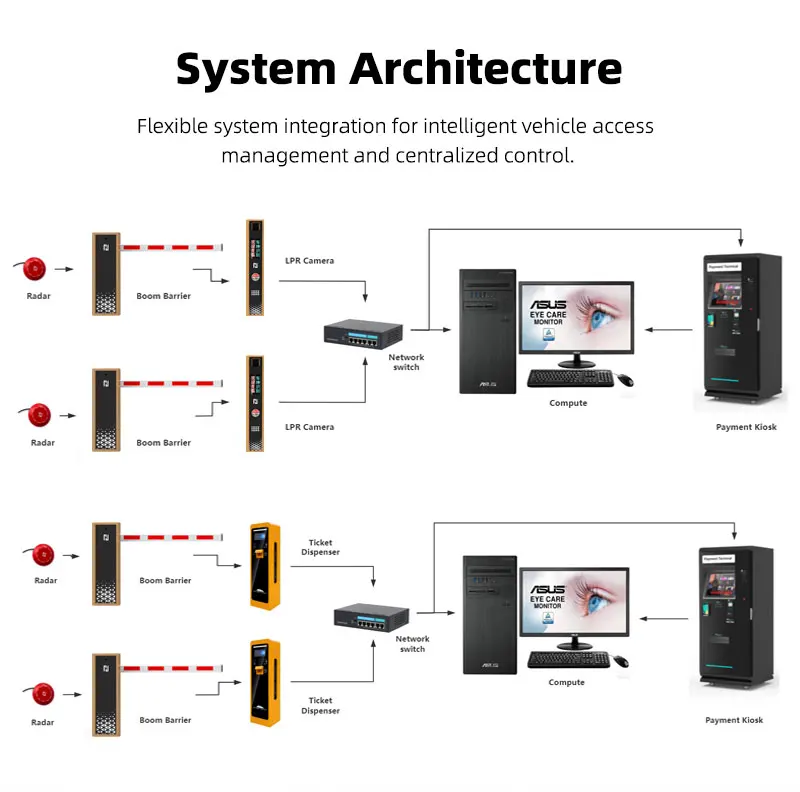
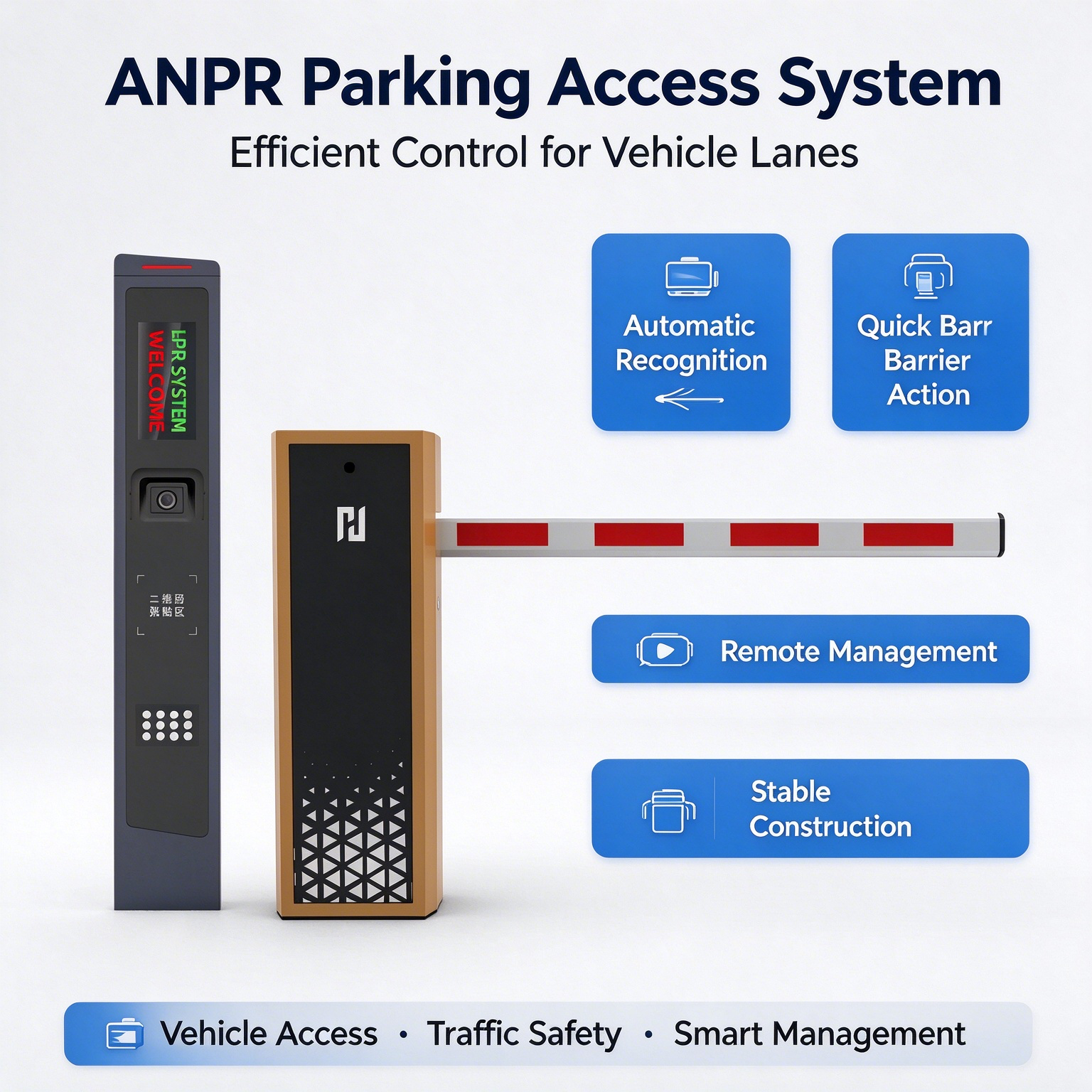
The controller receives signals from verification devices and sensors, then executes the defined operating logic. It determines when the arm may open, how movement is monitored, and when a close command may be issued. The method of connecting to an RFID reader, ANPR/LPR camera or ticketing system depends on the communication ports and relays available in the chosen configuration.
2.4 Vehicle Verification Devices
The system can use one or more methods to verify a vehicle, such as an RFID card, identification tag, ANPR/LPR camera, ticket, QR code or remote control. Site management defines the permission rules, such as allowing only registered vehicles or issuing temporary visitor permits.
2.5 Detection and Safety Sensors
Sensors help detect vehicle or obstacle presence in a defined area and support coordination of arm movement timing. Options include a ground loop buried in the road or a radar sensor, including the 79 GHz radar solutions offered by BAROXON. A single sensor should not be treated as an automatic substitute for all protection measures; the configuration must be designed and tested according to the site risk assessment.
3. How Does the System Work Step by Step?
Step 1: Vehicle Arrives at the Entry Point
The vehicle reaches the entry lane and stops at the designated verification point. Road markings, signal lights or lane design can help guide the driver to the correct reading position, especially at multi-lane or high-traffic entrances.
Step 2: Vehicle Data or Permit Is Read
If the site uses RFID, the device reads the card or tag assigned to the vehicle. If it uses ANPR/LPR, the camera captures the licence plate and attempts to read its characters and numbers. Ticketing or QR systems verify the code or ticket against system rules. Reading accuracy and speed vary with the device, lighting, installation angle, plate quality and surrounding environment.
Step 3: Access Permission Is Checked
Identity data is sent to the controller or parking management software, where it is compared against the authorised vehicle list or permit and payment rules. If the data is valid and entry conditions are met, the system issues a release signal. If the vehicle is not recognised or not authorised, the barrier remains closed until the case is handled according to site procedures.
Step 4: Open Command Is Issued
Once the entry request is accepted, the controller sends a command to the drive unit to start the motor. The movement mechanism begins raising the arm to the open position. Some systems may include signal lights or status indicators to show that the lane is available, depending on the project configuration.
Step 5: Vehicle Passes and Lane Is Monitored
The vehicle passes through the lane after the arm opens. Suitable detection devices help determine whether the vehicle is in or past the barrier zone, according to sensor position and wiring. It is important to configure the system so that a close command is not issued while a vehicle or obstacle is still in the arm movement zone.
Step 6: Arm Closes and System Prepares for the Next Vehicle
After confirming that the movement zone is clear and closing conditions are met, the controller sends a command to return the arm to the closed position. The system then returns to standby to receive another vehicle. Entry or exit data can be recorded in parking management software if the system is connected to it.
4. What Is the Difference Between RFID, ANPR/LPR and QR in Barrier Operation?
| Verification method | How it works | Suitable use |
|---|---|---|
| RFID | Reads a card or tag over a radio frequency | Residents, staff and registered fleets |
| ANPR/LPR | Captures the vehicle plate and recognises its data | Contactless entry and plate list management |
| QR | Reads a code issued to a visitor or user | Visitor permits and temporary access |
| Tickets | Issues or reads a ticket linked to the entry | Visitor car parks and shopping malls |
| Remote control | Sends an open command from an authorised device | Small entrances or supervised manual operation |
More than one method can be combined at the same site, such as RFID for staff vehicles, ANPR/LPR licence plate recognition systems for registered vehicles and QR for visitors. However, the compatibility of readers, software, controller and communication interfaces must be confirmed in advance, and the priority of each method defined when signals conflict.
5. How Do Radar and Ground Loop Sensors Help with Safety?
A ground loop is normally used to detect a vehicle over a specific area of the lane, while a radar sensor can monitor a detection area in front of or beneath the barrier depending on device type and installation. These signals help control closing timing or prevent arm movement when a vehicle or obstacle is detected, provided the controller supports the required protection logic.
Protection effectiveness depends on selecting the right sensor, its installation position, detection range settings and system testing under real operating conditions. The presence of a radar or ground loop sensor should not be assumed to guarantee safety in all cases; installation instructions and project safety requirements must be followed.
6. How Does the Barrier Integrate with Parking Management Software?
When the barrier is connected to parking management software, the system can record entry and exit times, vehicle data and verification results, according to the approved hardware and software. Site administrators can manage vehicle lists and visitor permits and review records through a local or cloud platform if these functions are available in the chosen configuration.
In residential communities, a list of residents' vehicle plates can be set up and visitor permits issued. In shopping malls, the barrier can be linked to ticketing or licence plate recognition and parking fee management. In warehouses and industrial areas, RFID can be used to manage fleet vehicles and link access records to operating or loading procedures where the required integration is available.
7. Where Are Automatic Parking Barrier Systems Used in the UAE?
- Residential communities and towers: managing resident and visitor access and linking permits to vehicle lists.
- Shopping malls and hotels: organising visitor traffic and linking entry to ticketing or ANPR/LPR.
- Offices and business parks: managing staff and visitor parking and recording entry events.
- Factories and industrial areas: organising vehicle and truck access, with RFID or radar integration where needed.
- Warehouses and logistics centres: managing fleets, delivery vehicles and loading areas.
- Airports, ports and transport hubs: organising high-traffic lanes and linking barriers to suitable control systems.
- Hospitals, schools and government facilities: managing staff and visitor parking and defining procedures for priority vehicles.
8. What Does BAROXON Offer for Automatic Barrier Systems?
BAROXON's UAE and GCC-focused website presents a range of automatic boom barrier solutions, parking systems and licence plate recognition systems. Product categories include boom barriers, high-speed barriers, RFID barriers, ANPR/LPR systems, radar sensors and pedestrian access control systems.
The company describes configurations including brushless DC motors, obstacle detection features, LED arm lighting, 79 GHz radar sensors and integration with ANPR/LPR cameras. It also presents solutions for residential tower, office, shopping mall, factory, warehouse and transport facility parking. The availability of each feature in the required model must be verified before it is included in technical specifications.
Website information indicates that some configurations offer adjustable opening speeds within a range of about 1.5 to 6 seconds. This value is not a uniform speed for all products; it varies with model, arm length and operating settings. Therefore, request the specific model datasheet and review the operating cycle, voltage and protection features before purchase.
9. How Should the System Be Tested Before Handover?
- Test barrier opening and closing through the approved control method.
- Test the validity of RFID cards, ANPR/LPR data, tickets or QR codes.
- Confirm that an unauthorised vehicle does not receive an open command.
- Test sensors at the defined detection positions and confirm controller response.
- Confirm that the arm does not close on a vehicle or obstacle within the movement zone.
- Test status and alarm signals if included in the configuration.
- Review power wiring, earthing and electrical protection according to product instructions.
- Test repeated operation within the model's specified duty cycle.
- Verify emergency procedures, manual release or backup battery where available.
- Hand over wiring diagrams, operating and maintenance instructions, and train the responsible staff.
10. Frequently Asked Questions About How an Automatic Parking Barrier Works
Does a parking barrier need an operator?
An operator is not required to issue every open command if the system is connected to an automatic verification method such as RFID, ANPR/LPR, tickets or QR. However, the site may need supervisory staff to handle unregistered vehicles, exceptions and emergencies.
Can the barrier be operated using only the vehicle plate number?
Yes, when the barrier is connected to an ANPR/LPR camera and software that verifies plate permission, with compatible communication interfaces between the system and the barrier. The camera alone is not enough; a vehicle database must be configured, access rules defined and the open command transmission tested.
What happens if an RFID card or vehicle plate is not read?
The procedure depends on site policy. The driver can retry, use an alternative verification method, or request assistance from security staff. A manual assistance lane should be defined so that read failures do not disrupt vehicle flow.
Can the parking barrier be linked to surveillance cameras?
The barrier may be integrated with surveillance cameras or a video management system within a complete project, but this requires compatible hardware, software and interfaces. It should be clear whether the requirement is video viewing only or linking images to entry and exit records.
Do all parking barriers operate at the same speed?
No. Opening and closing speed varies with model, arm length, motor and controller settings. Actual model data should be compared rather than relying on a single figure for all barriers.
Can the system be used at outdoor entrances in the UAE?
Yes, when a model suited to the installation environment is selected. The IP protection rating, permitted operating temperature, cabinet material, wiring protection and environmental resistance should be reviewed against the specific product datasheet.
What happens during a power failure?
The response depends on model design and optional equipment. Some configurations may provide a manual release mechanism or backup battery, but these should not be assumed on every barrier. The operating method during a power failure must be specified in the technical documentation and emergency plan.
Conclusion
An automatic parking barrier system works through an integrated sequence: it first identifies the vehicle and verifies its access permission, then sends the open command to the drive unit and motor, monitors vehicle passage with sensors, and finally closes the arm when the movement zone is safe. When the barrier is integrated with RFID, ANPR/LPR, radar and parking management software, a more organised solution can be built for managing the entrances of residential communities, commercial centres, industrial facilities and transport facilities in the UAE. Component and specification selection remains tied to site conditions, the approved model and safety requirements.
Latest News
Baroxon® | Leading Boom Barrier Manufacturer
Advanced Security Access Control and Intelligent Parking Solutions.
Company Strength
Adequate Inventory
Fast Shipping
Our Products
CONTACT US
Address: No. 2 Wanshou Road, International Innovation Industrial Park, Jinan, Shandong, China


© COPYRIGHT 2025 Baroxon® | Leading Boom Barrier Manufacturer

Contact Us
Our passion is to bring your ideas to life. Work with our design team to create a one-of-a-kind custom finish or cladding system to create a truly unique space. Together we can make your story stand out. If you need something to request a sample, request pricing, or request a demo, please fill out the contact form below. Explain your request in as much detail as you can and a representative will contact you within 1 business day.