
What Should You Consider When Buying a Heavy-Duty Parking Barrier?
Release time:
2026-11-02
AI Summary
Bottom line: the Baroxon® barrier and gate accessory handles OEM replacement and field retrofit of existing lanes at a 15 s cycle, IP54 rated.
What Should You Consider When Buying a Heavy-Duty Parking Barrier?
When buying a heavy-duty parking barrier, choosing the most powerful motor or the fastest opening time is not enough. The barrier must match the daily vehicle count, arm length and weight, the number of open/close cycles, outdoor installation conditions and the required protection level. The controller should also be confirmed as compatible with RFID readers, ANPR/LPR cameras and radar or ground loop sensors where needed. The right choice reduces lane downtime and maintenance costs and helps keep vehicles moving at factories, warehouses, logistics centres and large facility car parks in the UAE.
1. Start by Assessing Traffic Volume and Duty Cycle
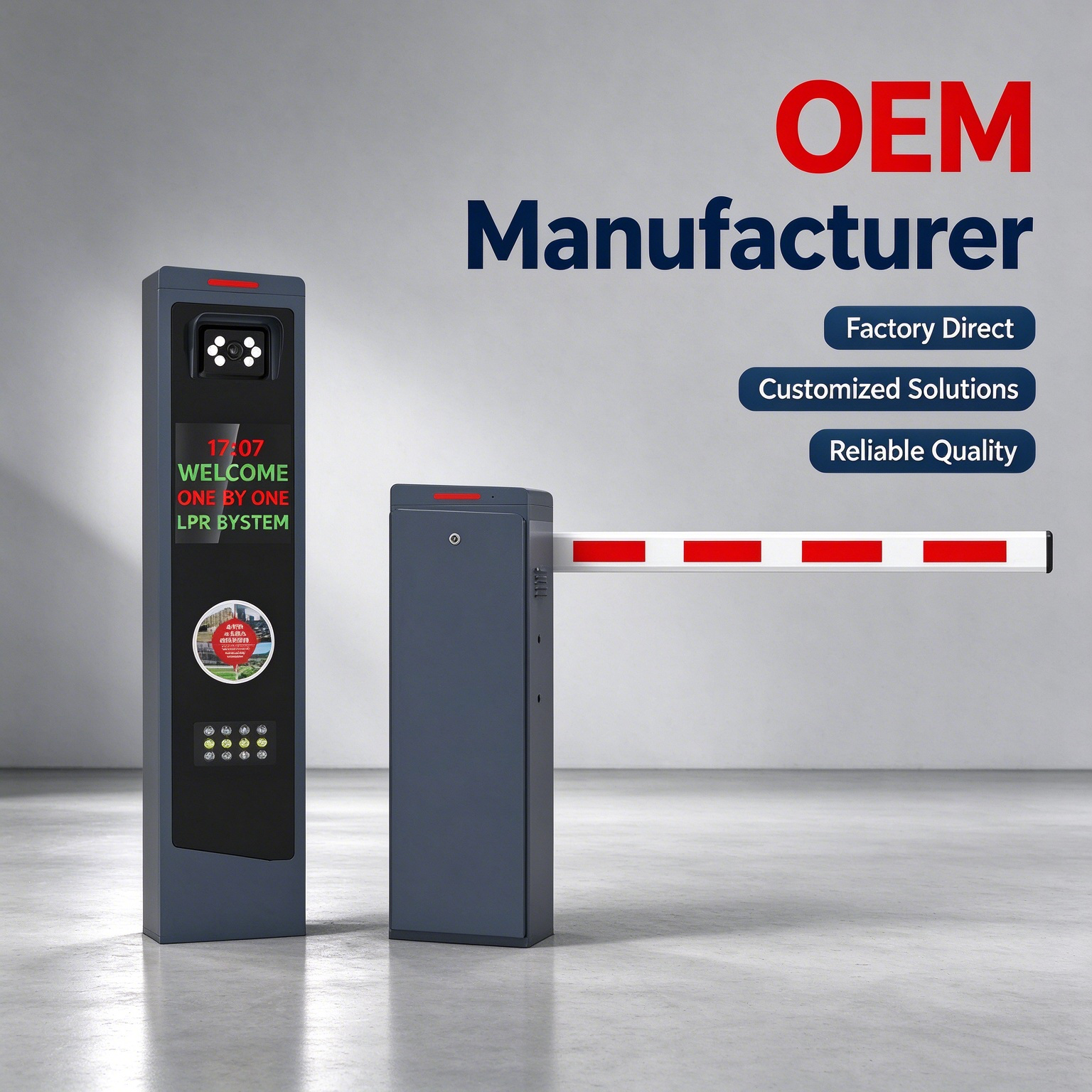
The first question is: how many times will the barrier open and close each day? A small residential entrance differs from a factory gate operating across shifts or a warehouse entrance with continuous truck traffic. Calculate the average number of vehicles per hour, the expected peak, operating hours, and the likelihood of queues during shift changes or shipment arrivals.
Ask the supplier to clarify the duty cycle and the recommended maximum number of open/close cycles per day. BAROXON presents some configurations with 100% continuous duty and around 5,000 cycles per day; however, these figures apply to specific configurations or models and should not be assumed for every barrier in the range. Match the figure to the datasheet of the model you will buy.
What Should You Ask the Supplier For?
- The recommended number of daily operating cycles.
- Whether the motor is designed for frequent or continuous operation.
- Any required rest or cooling period.
- Endurance test results and the number of test cycles.
- The periodic maintenance plan and consumable spare parts.
2. Choose Arm Length and Type According to Lane Width
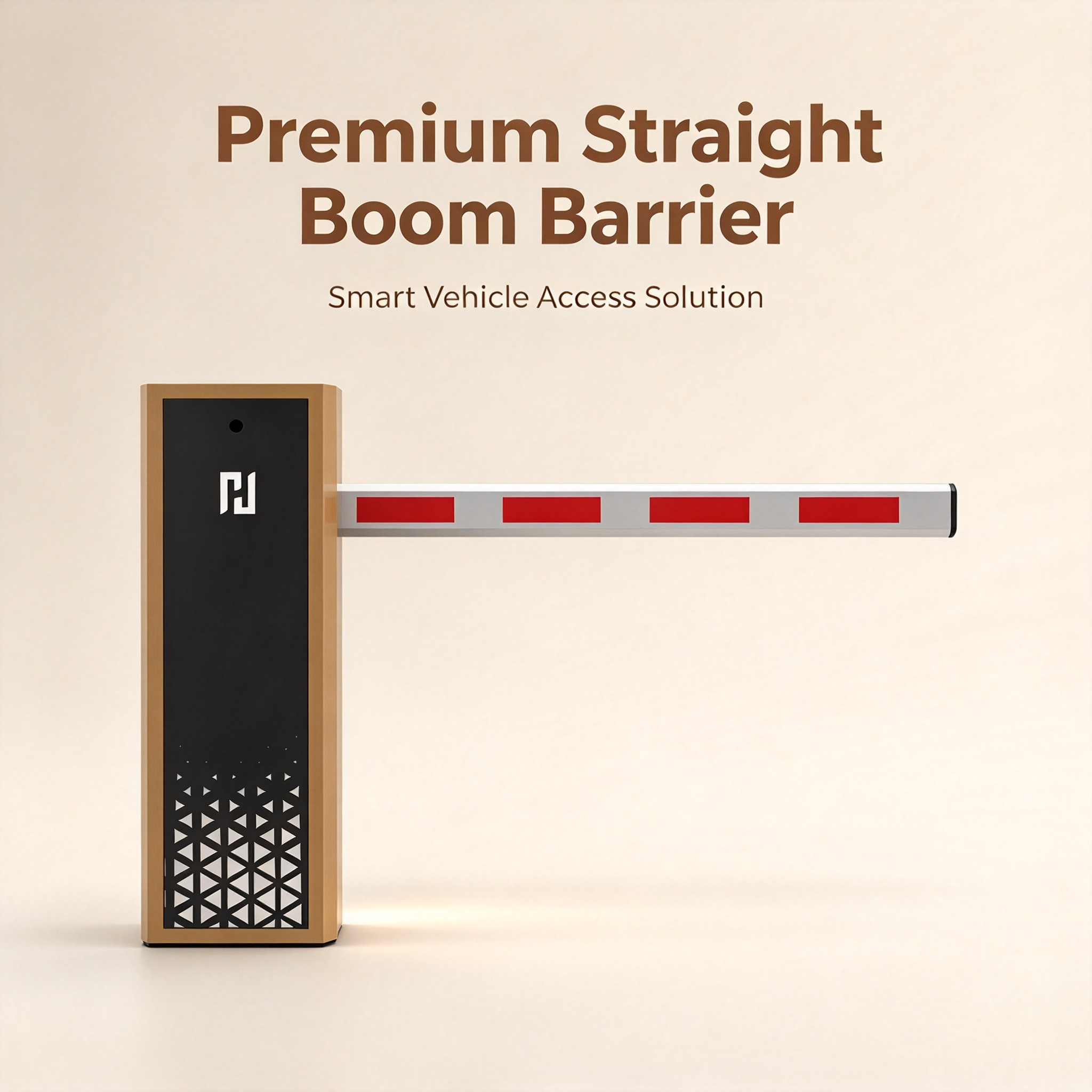
The length, weight and shape of the barrier arm affect the load on the motor and transmission. Measure the actual lane width and determine the length needed to close it completely, taking into account the central island, side posts and arm rotation space. Do not choose an arm longer than necessary; a longer arm may require different mechanical balance and drive capacity.
BAROXON offers several arm shapes, including straight arms and 90- or 180-degree folding arms, plus multi-rail fence arms on some models. A straight arm suits many open entrances, while a folding arm may be an option for entrances with low ceilings or limited vertical clearance. A fence arm may suit lanes requiring clearer physical separation, provided it is compatible with the barrier mechanism.
Before finalising the length, confirm that the supplier specifies the permitted arm length for each operating speed and motor type. Also confirm that the weight of the arm and accessories, such as LED lighting or protective edging, does not exceed the limits of the chosen model.
3. Inspect the Motor and Transmission
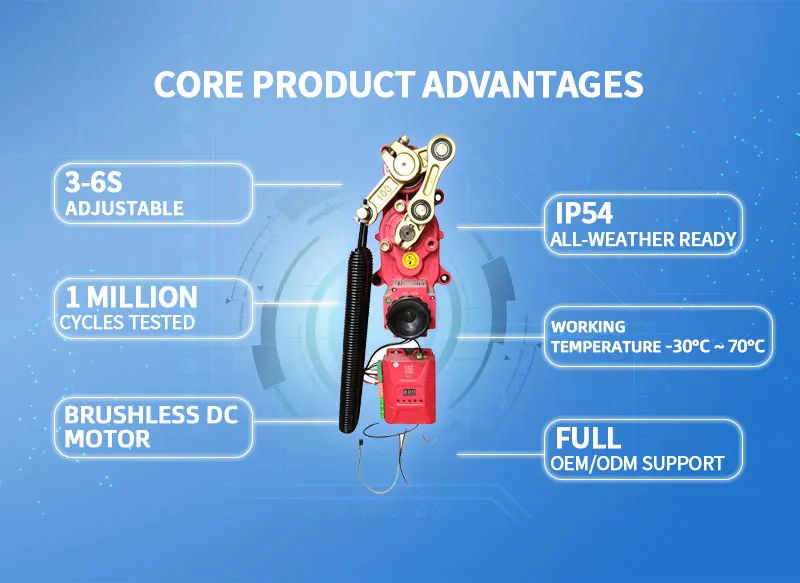
The motor must match the arm weight, operating frequency and required movement speed. BAROXON offers configurations with brushless DC motors, along with other motor options depending on the product. Brushless motors may suit frequent operation due to their design, but the final decision must be based on torque data, duty cycle, voltage and testing of the actual model.
Beyond the motor itself, inspect the complete transmission system, including the gearbox, balance springs or counterweight system, bearings, arm limit switches and mechanical connections. In heavy-duty applications, operating reliability depends on the integration of all these parts, not on motor power alone. Ask the supplier to clarify which parts can be replaced independently and the expected time for common maintenance work.
4. Balance Opening Speed with Vehicle Throughput
Arm opening speed affects queue length, but the highest speed is not necessarily best for every entrance. Logistics centres, toll stations or large industrial gates may need faster response, while residential communities, office buildings and areas with pedestrian activity need smooth operation, low noise and effective safety detection. Arm length and the time a vehicle needs to cross the lane should also be considered, rather than estimating lane capacity from motor movement time alone.
BAROXON pages list several operating speed options; available values may vary with model, arm length and operating conditions. Therefore, request full open and close time data for the proposed model with the specified arm length, rather than relying on the arm raising time alone.
5. Make Anti-Collision Protection and Vehicle Detection Mandatory Evaluation Items
In high-traffic lanes, a vehicle may stop under the arm, follow another vehicle closely, or enter the detection zone while the arm is lowering. Therefore, identify which vehicle detection and anti-collision methods the model supports and how they connect to the control board. Options may include an inductive loop, a radar sensor or other detection devices compatible with the system.
An inductive loop is normally used to detect a vehicle over the area where the loop is installed in the ground, while a radar sensor can, depending on model and installation, monitor a defined area in front of or beneath the barrier. Check the detection range, installation position, wiring method and control logic, as well as how the system responds if a sensor cable is disconnected or a sensor fails. The word "anti-collision" in marketing material should not be treated as sufficient evidence that all project safety requirements are met.
In areas where people may approach the arm, pedestrian separation, warning lights, lane markings, emergency release and site management procedures should also be assessed. Safety design should be based on risk assessment, applicable local regulations and installation requirements.
6. Verify Outdoor Protection Rating and UAE Environmental Suitability
Projects in the UAE may face high temperatures, dust, sand, strong sunlight and humidity, and coastal sites may be exposed to salt spray. Before purchase, review the specific model's IP rating, permitted operating temperature range, cabinet material and coating, cable entry sealing and electronic component protection. If the equipment is installed in an open car park, port or industrial area, explain the actual site conditions to the supplier rather than simply saying "outdoor use".
Some BAROXON product pages list different protection ratings such as IP54, IP65 or IP66. These ratings are not interchangeable, and it should not be assumed that every model has the highest rating. Select the appropriate rating according to dust, water, cleaning method and installation location, and request the test documentation for the model offered.
7. Confirm Cabinet Structure, Base and Installation Conditions
A heavy-duty barrier requires a solid mounting base and a suitable location. Check the cabinet structure, base plate dimensions, fixing bolts, ground load capacity, drainage and the risk of vehicles striking the equipment. At sites with frequent truck or container vehicle traffic, assess whether independent protective bollards or guardrails are needed to prevent vehicles from hitting the barrier cabinet directly.
Also confirm that there is enough space for arm rotation, maintenance door opening and electrical wiring. If the project requires a folding arm or special arm shape, review its movement path in the construction drawings to ensure it does not conflict with ceilings, signage, lighting or other services.
8. Plan RFID, ANPR/LPR and Parking Management Integration Early
A heavy-duty barrier often operates within an access control system rather than as a standalone device. An industrial area may need RFID to identify staff vehicles and fleets; a logistics centre may need to link licence plate recognition to weighing or dispatch processes; a commercial car park may need ANPR/LPR, ticketing or QR systems. Before purchase, confirm the control board's inputs and outputs, relay contacts, communication protocols and method of connecting to third-party systems.
Procurement documents should define responsibility for supplying vehicle identification devices, management software, lane controller, network connection, data recording and remote management. If different suppliers provide the barrier, camera and software, settle interface compatibility and joint testing responsibility before placing the order.
9. Compare Maintenance Costs, Spare Parts and Support
Purchase cost should not be based on the device price alone. Also assess routine inspections, consumable replacement, on-site repair time, spare parts availability, remote technical support and warranty scope. For critical lanes, ask whether the motor, control board, spring or transmission assembly can be replaced quickly, and whether the supplier provides wiring diagrams, commissioning guidance and operator training.
Specify the warranty start date, covered components, responsibility for labour and transport costs, and the spare parts supply period. Some BAROXON sales pages describe warranty and spare parts support policies, but final terms must be based on the quotation, contract and specific product documentation.
10. Match the Heavy-Duty Barrier to the Application
| Use scenario | Key considerations | Possible configuration directions |
|---|---|---|
| Factories and industrial areas | Multi-shift, high-frequency operation; staff and vehicle permissions | Continuous duty capability, RFID, radar detection |
| Logistics centres and warehouses | Truck traffic, fleet management, integration with weighing and scheduling | Heavy-duty arm, RFID, ANPR/LPR, ground loop or radar |
| Toll stations and transport hubs | Vehicle throughput, response speed, lane status | High-speed models, lane signals, collision detection |
| Large commercial car parks | Peak-hour queues, visitor identification, fee procedures | ANPR/LPR, ticket or QR integration |
| Government and public facilities | Access permissions, audit records, operational reliability | Multiple identification methods, access logs, central management |
11. Key Questions to Ask the Supplier Before Purchase
- What is the recommended number of daily open/close cycles for this model, and does it support continuous operation?
- What is the full open/close cycle time with the required arm length?
- What motor types are available, and what are the rated voltage and torque?
- Which straight, folding or fence arm types are compatible with the model?
- What type of vehicle detection or anti-collision sensor is used, and is it included in the price or optional?
- What are the IP rating and operating temperature range, and are test reports available?
- Does the system support integration with RFID, ANPR/LPR, inductive loop and radar?
- What control board inputs and outputs and communication methods are available?
- What is the lead time for consumables, spare parts and on-site repair?
- What do the warranty, remote support, installation guidance and operator training cover?
12. BAROXON Heavy-Duty Parking Barrier Solutions
BAROXON provides automatic boom barrier, parking control, licence plate recognition and radar vehicle detection solutions suited to multiple applications in the UAE and the GCC. Product categories include commercial and heavy-duty vehicle barriers, high-speed barriers, high-performance outdoor security parking barriers, folding-arm barriers, and access control configurations that can connect to RFID or ANPR/LPR systems.
Some product configurations include brushless DC motors, adjustable opening speeds, anti-collision detection, LED arm lighting and 79 GHz radar sensors. For high-use industrial entrances, logistics centres and toll lanes, the model and configuration should be selected after reviewing traffic volume, arm length, environment and required interfaces, then confirmed directly with BAROXON.
Before purchase, request the product datasheet, outline drawings, wiring diagram, foundation requirements, test records and spare parts list. If the project involves multiple lanes or a third-party parking management platform, the integration scope and acceptance criteria should be defined in the contract or technical agreement.
Frequently Asked Questions About Buying a Heavy-Duty Parking Barrier
Does "Heavy-Duty" mean the barrier is suitable for continuous operation?
Not necessarily. The duty cycle and permitted daily cycles must be checked in the model datasheet. The meaning of heavy-duty use can differ between products and manufacturers.
What barrier arm length is suitable for industrial entrances?
It depends on lane width, entrance design, arm weight and motor capacity. The lane must be measured and the permitted arm length range for the selected model reviewed before purchase.
Can a heavy barrier be connected to an RFID or ANPR/LPR system?
This is possible in configurations that support the appropriate interfaces. Compatibility between the controller, reader or camera and parking management software must be verified before adopting the system.
Do I need a radar sensor in addition to a ground loop?
It depends on lane design, risk assessment and the required protection functions. Each sensor may perform a different task, so the system engineer should define detection positions and the appropriate control logic.
Which IP rating should be chosen in the UAE?
There is no single rating suitable for every site. Assess dust, water, cleaning method and installation location, then choose a documented rating for the specific model.
Does a higher speed mean a better barrier?
Not always. Opening speed, arm length, vehicle and pedestrian safety, noise and duty cycle must be balanced. The right speed is the one that meets site traffic flow and safety requirements.
Conclusion
Buying a heavy-duty parking barrier requires a comprehensive assessment of traffic volume, duty cycle, arm length, motor, opening speed, anti-collision protection, IP rating, integration and maintenance. At factories, warehouses, logistics centres and transport facilities in the UAE, the model should be selected based on documented operating data and actual lane requirements. Request the model datasheet, wiring information, maintenance plan and warranty terms before issuing a purchase order, and ensure the system is tested against the site's real operating scenarios.
Latest News
Baroxon® | Leading Boom Barrier Manufacturer
Advanced Security Access Control and Intelligent Parking Solutions.
Company Strength
Adequate Inventory
Fast Shipping
Our Products
CONTACT US
Address: No. 2 Wanshou Road, International Innovation Industrial Park, Jinan, Shandong, China


© COPYRIGHT 2025 Baroxon® | Leading Boom Barrier Manufacturer

Contact Us
Our passion is to bring your ideas to life. Work with our design team to create a one-of-a-kind custom finish or cladding system to create a truly unique space. Together we can make your story stand out. If you need something to request a sample, request pricing, or request a demo, please fill out the contact form below. Explain your request in as much detail as you can and a representative will contact you within 1 business day.