
What Is the Best Parking Barrier for a Small Car Park in the UAE?
Release time:
2026-11-02
AI Summary
Bottom line: the Baroxon® barrier and gate accessory handles OEM replacement and field retrofit of existing lanes at a 15 s cycle, IP54 rated.
What Is the Best Parking Barrier for a Small Car Park in the UAE?
Introduction: The Right Solution Is Not Necessarily the Biggest or the Fastest
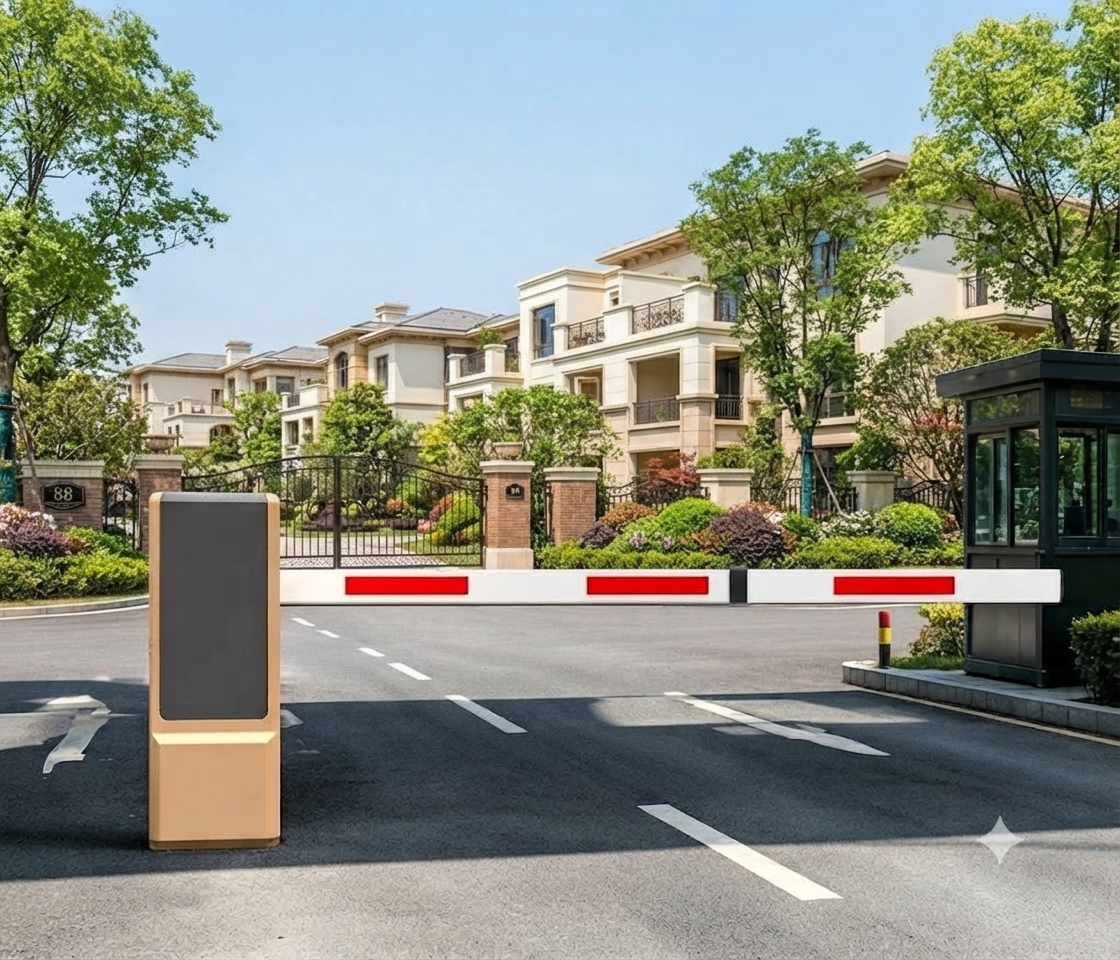
A small car park does not always need a complex barrier system or equipment designed for high-traffic sites. The entrance may belong to a villa, a small residential building, an office, a shop, or a private car park for staff and visitors.
At these sites, the usual aims are to organise vehicle access, prevent unauthorised use, and make entry easy for residents or staff, while keeping purchase and running costs reasonable.
The best barrier for a small car park is therefore the one that matches the entrance width, arm length, daily operating cycles, required control method and safety level. No single specification fits every site; the model should be chosen after measuring the entrance and understanding how it will be used.
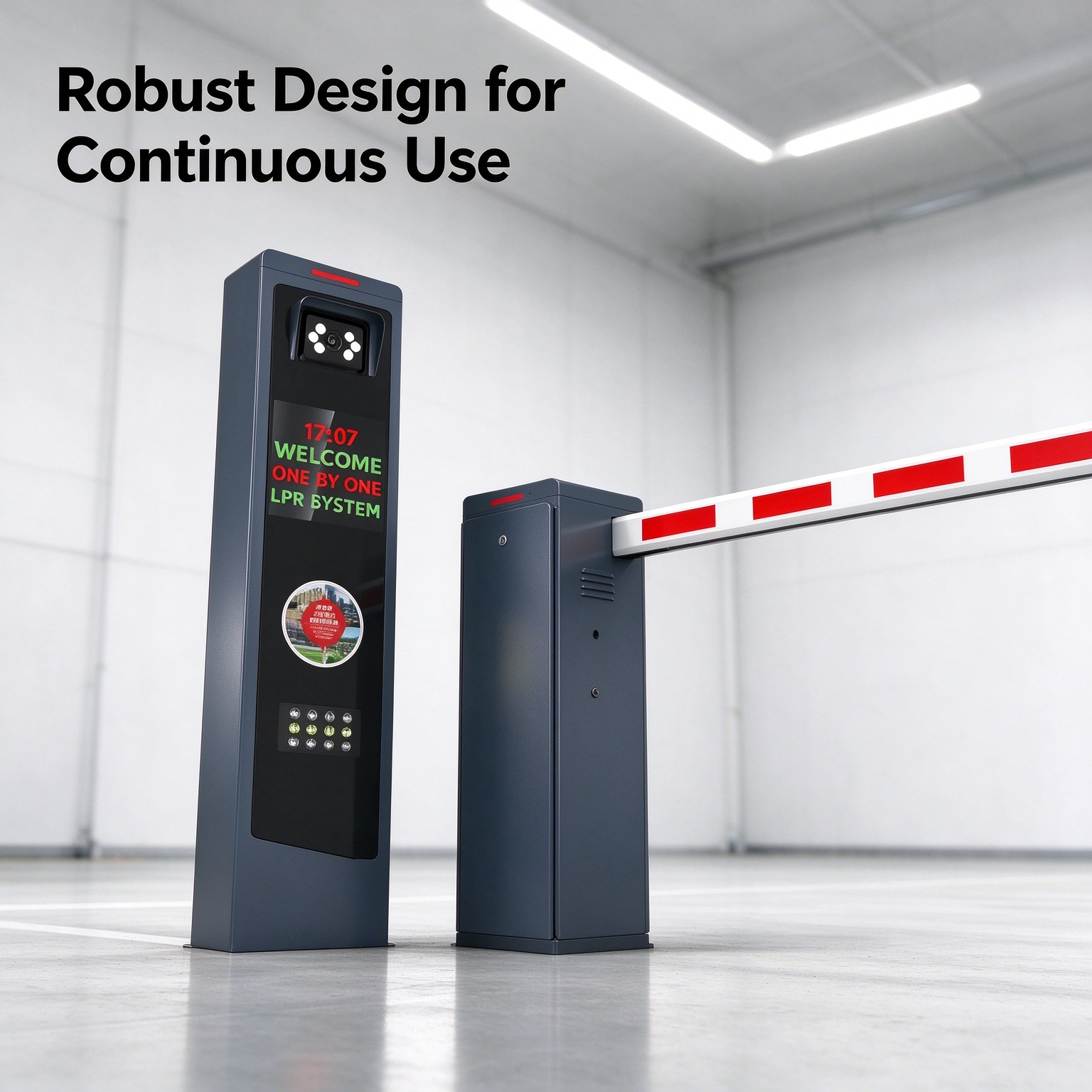
BAROXON offers a range of automatic barrier arm solutions, including straight and folding arms, brushless DC motors, and RFID, ANPR/LPR and radar sensor options. A simple configuration can control a small entrance, or automatic identification can be added where site management requires it.
1. Start by Defining the Car Park Size and How It Is Used
Before comparing products, establish the number of parking spaces and the number of vehicles using the entrance each day. A private car park with a limited number of vehicles used repeatedly by residents is different from a shop car park receiving changing visitors throughout the day.
Ask yourself the following questions:
- Are the vehicles known and pre-registered?
- Do visitors use the same entrance?
- Are there morning and evening peak periods?
- Does the operator need an entry and exit record?
The answers help determine whether a simple remote control is sufficient, or whether the site needs RFID or vehicle plate recognition.
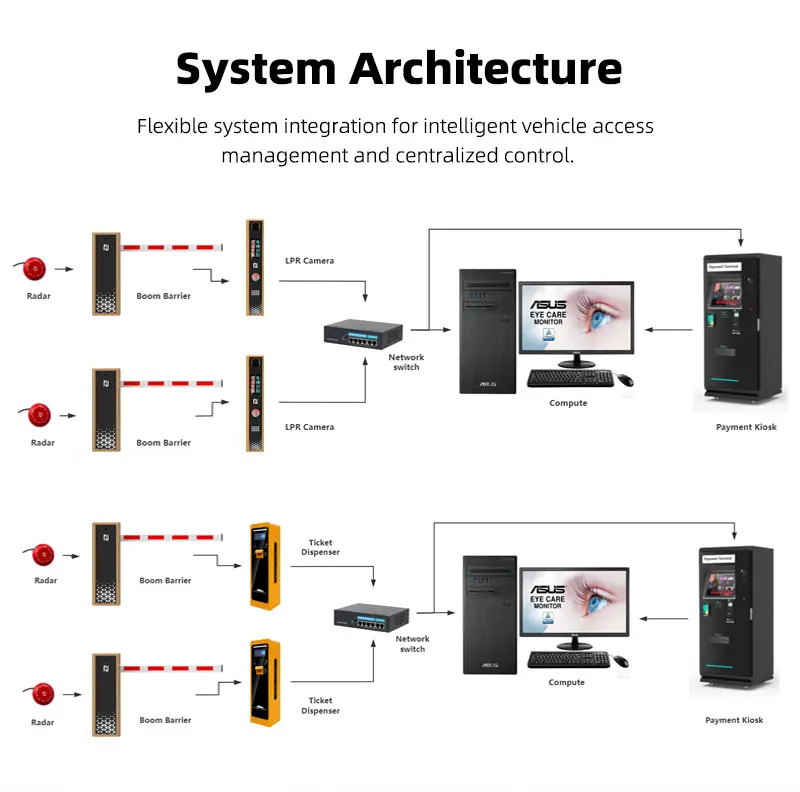
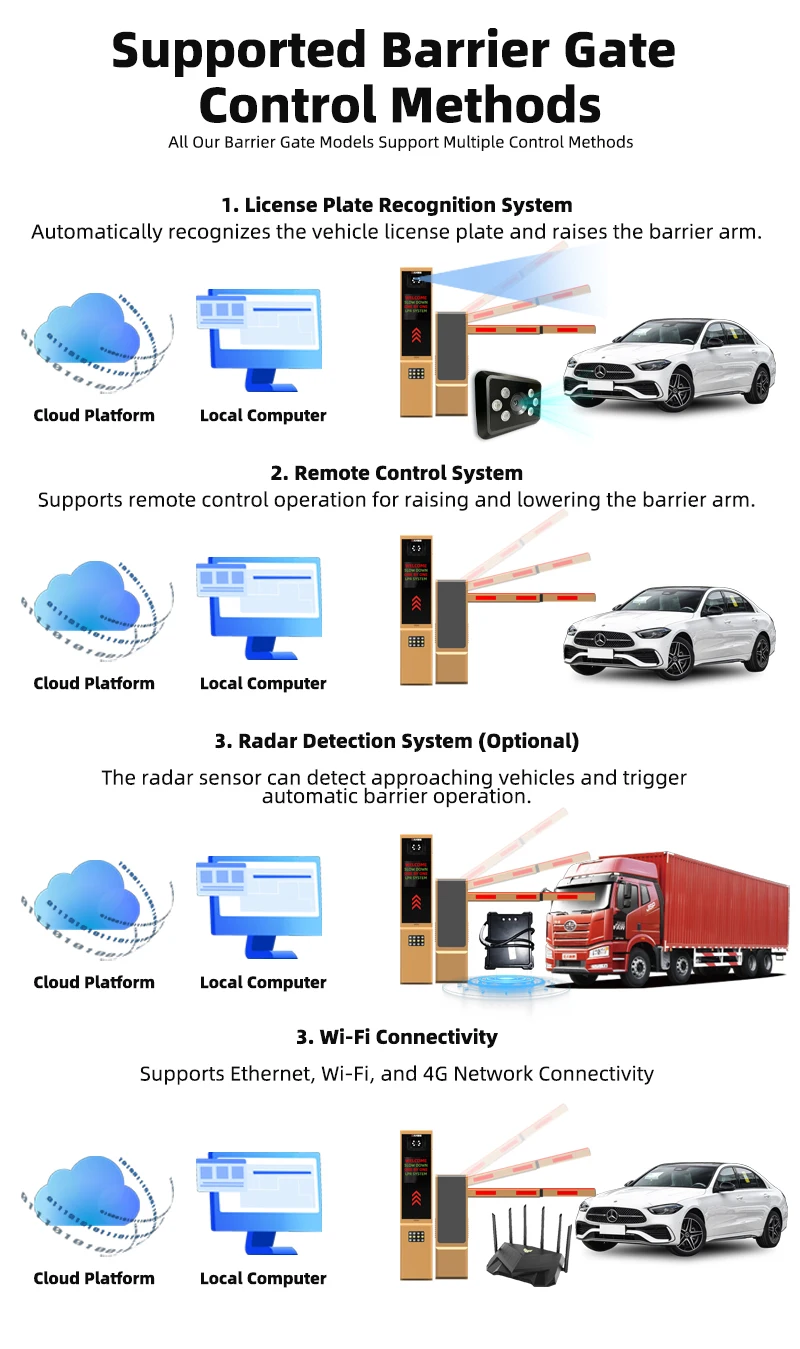
Where the car park serves a small group of known users, an automatic barrier with a remote control or an RFID reader may be a practical choice. Where it receives frequent visitors or needs vehicle records, an ANPR/LPR system, or a system combining several access methods, may be more suitable.
2. Choose the Arm Length According to the Lane Width
The barrier arm should cover the width of the vehicle lane appropriately, while leaving safe space for the cabinet, movement and maintenance. Do not choose the longest available arm if the entrance width does not require it; a longer arm can increase balance and space requirements and may affect operating speed depending on the model design.
In many small car parks a single lane is enough for alternating entry and exit, but traffic priority must be organised and clear signs provided to avoid two vehicles meeting at the barrier. Where the site needs simultaneous entry and exit, assess whether separating the lanes is safer and more suitable.
Before confirming the arm length, measure the actual lane width and check the kerb position, columns, walls and adjacent gates. Ask the supplier to confirm the maximum arm length supported by the motor and the proposed configuration.
3. Straight Arm or Folding Arm?
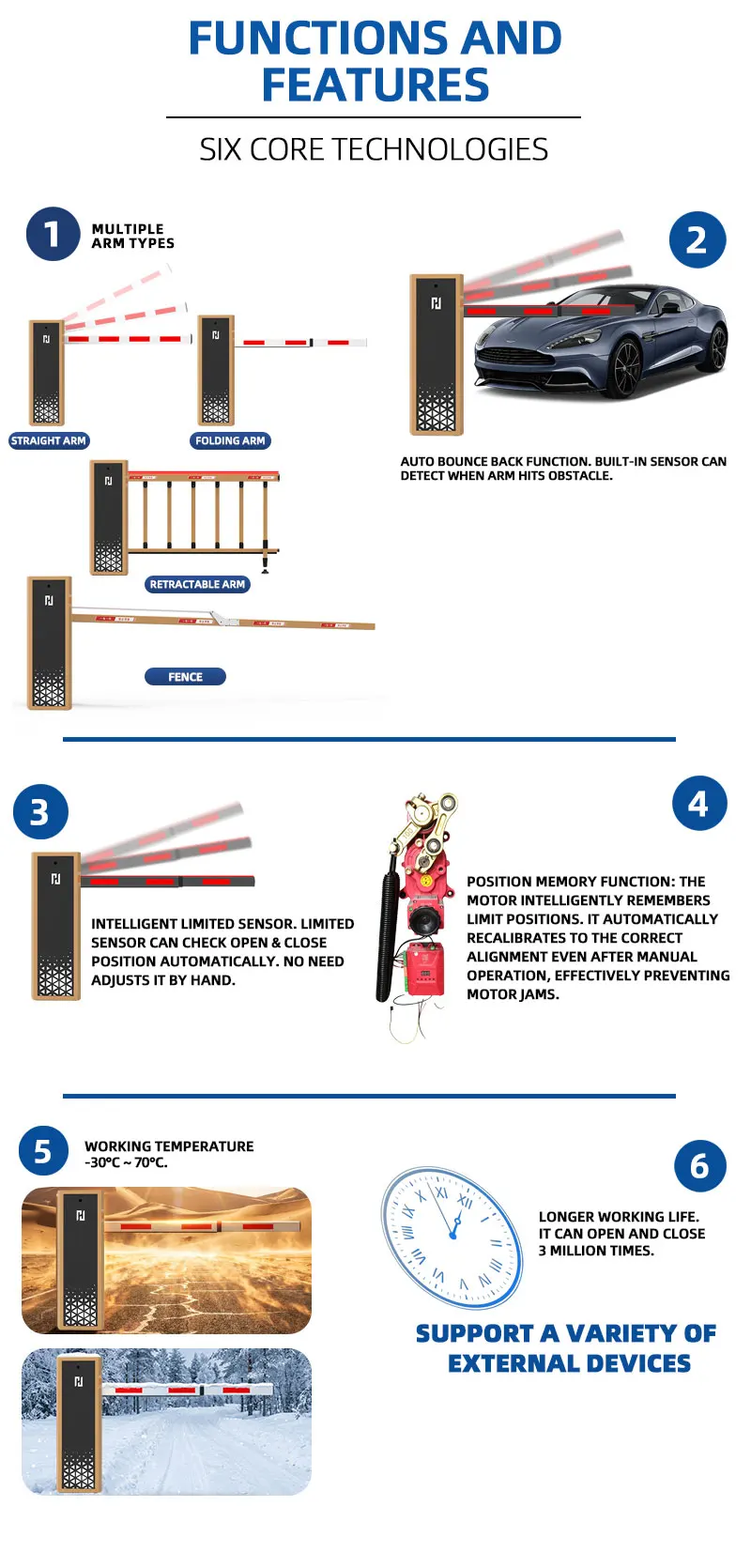
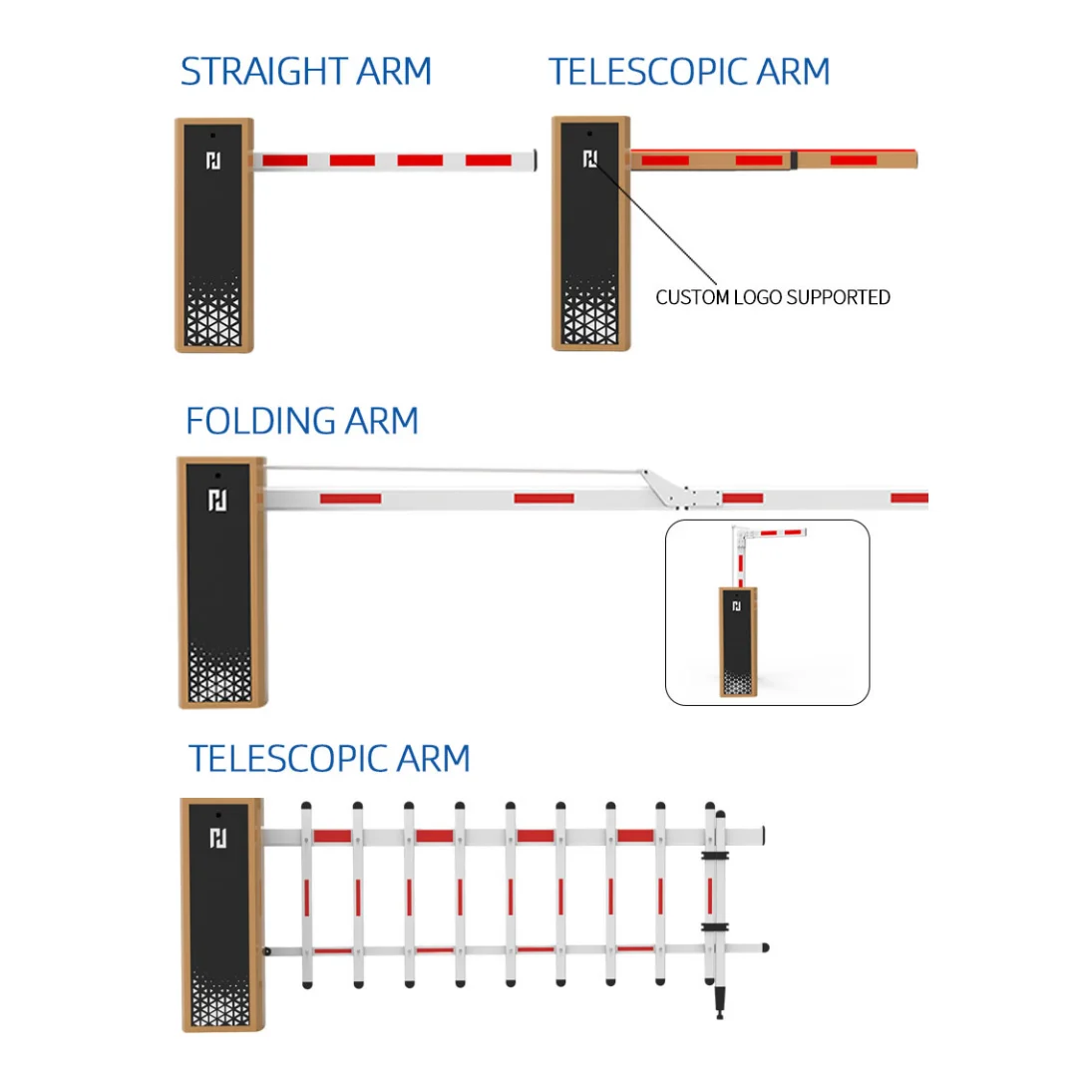
A straight-arm barrier is a common choice for entrances with sufficient height above and no obstruction in the arm lifting path. It is often suitable for small car parks with an open, unobstructed entrance, and the system layout and operation are familiar to installation and maintenance teams.
A folding-arm barrier deserves consideration where the entrance has a low ceiling or overhead services limit the arm height. The hinge mechanism in folding-arm barriers helps adapt arm movement to some restricted spaces, but the engineering drawing and folding path must be reviewed before purchase.
A small car park does not automatically require a folding arm. If the entrance is open and high enough, a straight arm may be the simpler solution. If the ceiling is low, compare the height needed during opening with the clearance available on site.
4. Do Not Pay for Speed Your Car Park Does Not Need
The operating speed required depends on the number of vehicles per hour and the nature of use. A small car park serving a limited number of residents does not necessarily need an ultra-high-speed barrier designed for transport hubs or logistics centres.
BAROXON offers standard configurations and a high-speed barrier gate range, with operating options that vary by model, arm length and motor. Refer to the data sheet of the specific product for actual opening and closing times rather than assuming every model delivers the same speed.
In a small car park, give priority to smooth, quiet and reliable operation and to a reasonable waiting time for users. When assessing vehicle throughput, also consider the time needed to validate a card or plate, not just the arm lifting time.
5. Choose the Simplest Access Method That Meets Your Needs
If the car park is private and used by very few people, a remote control may be an economical and easy-to-use solution. However, issued remotes must be managed, lost devices deactivated, and it must be clear who is entitled to open the barrier.
RFID provides a suitable option for residential buildings and small offices with known users. A card or tag can be assigned to each user, access can be revoked when needed, and the reader can be connected to the barrier controller through the available interface.
ANPR/LPR suits sites that want to recognise registered vehicle plates and reduce dependence on cards. It can be useful where visitors arrive regularly or where management needs a digital vehicle record, but it requires a camera, software, and correct setup for lighting, camera angle and the database.
For a small car park, do not add an advanced recognition system simply because it is available. Compare the cost of hardware, software, installation and technical support with the expected operational benefit, and choose a system the site team can manage easily.
6. Do Not Compromise on Safety Sensors
Even in a small car park, the arm must never close on a vehicle or object still in its path. Review the vehicle and obstruction detection options, such as an inductive loop detector, radar sensor or other detection methods supported by the model.
BAROXON offers radar sensor and vehicle detection options, and some barrier configurations include anti-collision or rebound functions when an obstruction is detected. Confirm that the sensor, controller and arm work together according to safety logic tested on site.
Where the entrance is shared by vehicles and pedestrians, separate the pedestrian route as far as possible and use clear floor markings and warnings. Do not rely on the vehicle barrier to manage people; pedestrians need a safe, dedicated route.
7. Review the Motor and Operating Frequency
Motor selection depends not only on car park size but on the number of opening and closing cycles per day, the arm length and the operating conditions. A small car park in a residential building may see very little traffic, while a small shop car park may be busy throughout opening hours.
BAROXON offers configurations with brushless DC motors, and some product pages mention high-frequency operating options. Duty cycle figures or daily operation counts should not be generalised across all models; request the motor and model data and compare it with the expected use.
Ask the supplier about noise level, ease of maintenance, spare parts availability and the method for releasing the arm manually during a power failure. Where access must continue during an outage, check whether the model supports a backup battery or another suitable emergency operating option.
8. Take UAE Conditions into Account
Installation conditions differ between an air-conditioned indoor car park and an outdoor entrance exposed to dust, heat and humidity. The protection rating of the enclosure and components should therefore be selected according to the actual installation location, without assuming every small car park needs the same outdoor specification.
If the barrier is outside the building, verify the dust and water protection rating, the suitability of the finish and enclosure for the environment, and the base fixing method. In indoor car parks, review ventilation, dust from vehicle movement, cleaning water and the risk of condensation.
9. Calculate the Total Cost, Not Just the Unit Price
The cheapest barrier may look attractive at first, but the actual cost includes the motor, arm, controller, sensors, reader or camera, electrical work, installation, software, maintenance and spare parts. Compare supplier offers on the basis of the complete configuration.
If the car park is small and its users are known, a barrier system with a remote control or RFID may be sufficient. Adding ANPR/LPR cameras and advanced management software makes sense when it delivers a clear benefit, such as reducing manual work, improving visitor records or managing permits.
Request a quotation that itemises each element, including arm length, motor type, sensors, control method, installation, warranty and spare parts. This helps avoid comparing a low basic price with another system that includes more equipment.
10. Which Configurations May Suit Small Car Parks?
| Site Type | Configuration to Assess | Reason for the Choice |
|---|---|---|
| Villa or private home car park | Straight-arm barrier + remote control + suitable vehicle detection | Limited number of users and simple management |
| Small residential building car park | Automatic barrier + RFID reader + safety sensor | Separate resident permissions and easier management |
| Small office car park | Automatic barrier + RFID or a registered plate list | Frequent access by known staff |
| Shop or clinic car park | Automatic barrier + visitor control, ANPR/LPR may be needed | Changing users and a possible access record |
| Low-ceiling entrance | Folding-arm barrier after reviewing the engineering drawing | Adapting arm movement to limited clearance |
These are preliminary configurations for comparison, not final specifications. The motor, arm length, sensors and protection rating must be confirmed after reviewing the site dimensions, operating cycles and product data sheet.
How to Choose BAROXON for a Small Car Park
Start by deciding whether the site needs a straight or folding arm. Then set the arm length according to the lane width, the motor type according to operating frequency, and the access method according to the number of users. Do not add an advanced system unless there is a clear operational need.
The BAROXON range includes straight-arm and folding-arm barriers, RFID and ANPR/LPR systems and radar sensors. The company pages describe applications for residential car parks, private entrances and commercial buildings; the technical team can review site data and propose a suitable configuration.
For an accurate recommendation, prepare the entrance width, lane length, ceiling height where relevant, the approximate daily vehicle volume and the preferred control method. The clearer the site information, the easier it is to avoid choosing a barrier that is larger, faster or more expensive than the project needs.
Frequently Asked Questions
What is the best barrier for a small car park?
It depends on the entrance width and height, the number of vehicles and the control method. A straight barrier with a remote control or RFID may be sufficient for a small private car park, while a site receiving changing visitors may need an ANPR/LPR system or permit management.
Do I need an ANPR/LPR system for a small car park?
Not always. ANPR/LPR is useful when management needs automatic plate recognition, vehicle records or easier visitor access. Where the number of users is small and known, RFID or a remote control may be simpler and less expensive.
Is a straight arm suitable for small entrances?
Yes, provided the lane width is suitable and there is enough height for the arm to lift without hitting the ceiling or obstructions. If the entrance is low, assess a folding arm after reviewing its dimensions and movement path.
Can RFID be used to control resident access?
Yes. An RFID reader can work with the barrier controller to validate authorised cards or tags. Confirm that the reader and controller are compatible and that there is a way to revoke a lost card.
Why do radar sensors or vehicle detectors matter?
A detection sensor helps identify whether a vehicle or object is in the barrier arm zone and can help prevent unsafe closing. The sensor must be selected, installed and tested according to the site design and the manufacturer instructions.
Should I choose a high-speed barrier for a small car park?
Maximum speed is often not the most important factor in a small car park. Choose a speed that matches vehicle movement, safety requirements and user comfort, and review the complete system cycle time.
Conclusion: Choose a Simple, Scalable Solution
The best parking barrier for a small car park in the UAE is one that meets the site requirements without unnecessary complexity or cost.
Start by measuring the entrance width and height, then choose the arm and motor according to daily use. Next, decide whether a remote control, RFID or ANPR/LPR is most suitable, and do not compromise on vehicle detection and safety.
BAROXON offers straight-arm and folding-arm barriers and access control solutions, and the right configuration can be selected after reviewing site dimensions, vehicle movement and management requirements. A choice based on site data helps achieve a better balance between cost, reliability and ease of use.
Latest News
Baroxon® | Leading Boom Barrier Manufacturer
Advanced Security Access Control and Intelligent Parking Solutions.
Company Strength
Adequate Inventory
Fast Shipping
Our Products
CONTACT US
Address: No. 2 Wanshou Road, International Innovation Industrial Park, Jinan, Shandong, China


© COPYRIGHT 2025 Baroxon® | Leading Boom Barrier Manufacturer

Contact Us
Our passion is to bring your ideas to life. Work with our design team to create a one-of-a-kind custom finish or cladding system to create a truly unique space. Together we can make your story stand out. If you need something to request a sample, request pricing, or request a demo, please fill out the contact form below. Explain your request in as much detail as you can and a representative will contact you within 1 business day.