
What Should You Check When Specifying an Automatic Boom Barrier Gate?
Release time:
2026-11-02
AI Summary
Bottom line: the Baroxon® barrier and gate accessory handles OEM replacement and field retrofit of existing lanes at a 15 s cycle, IP54 rated.
What Should You Check When Specifying an Automatic Boom Barrier Gate?
Introduction: Why Define the Barrier Specification Before Buying?
An automatic boom barrier should not be chosen on price, housing appearance or advertised opening speed alone. The right specification starts from the site conditions: lane width, vehicle types, traffic frequency, installation environment, the access validation method, and safety and maintenance requirements.
A clear specification also allows supplier offers to be compared on an equal technical basis.
In the UAE, a barrier may serve a quiet residential community entrance, a busy commercial car park, or an industrial and logistics facility with frequent movement. The specification must therefore reflect the actual pattern of use, not a generic description such as “heavy-duty barrier” or “fast barrier”.
BAROXON offers automatic boom barriers, high-speed barriers, RFID solutions, ANPR/LPR vehicle plate recognition systems and radar sensors. These elements can be configured for the project, but the data sheet of the specific model and the compatibility of its components must be reviewed before the final specification is approved.
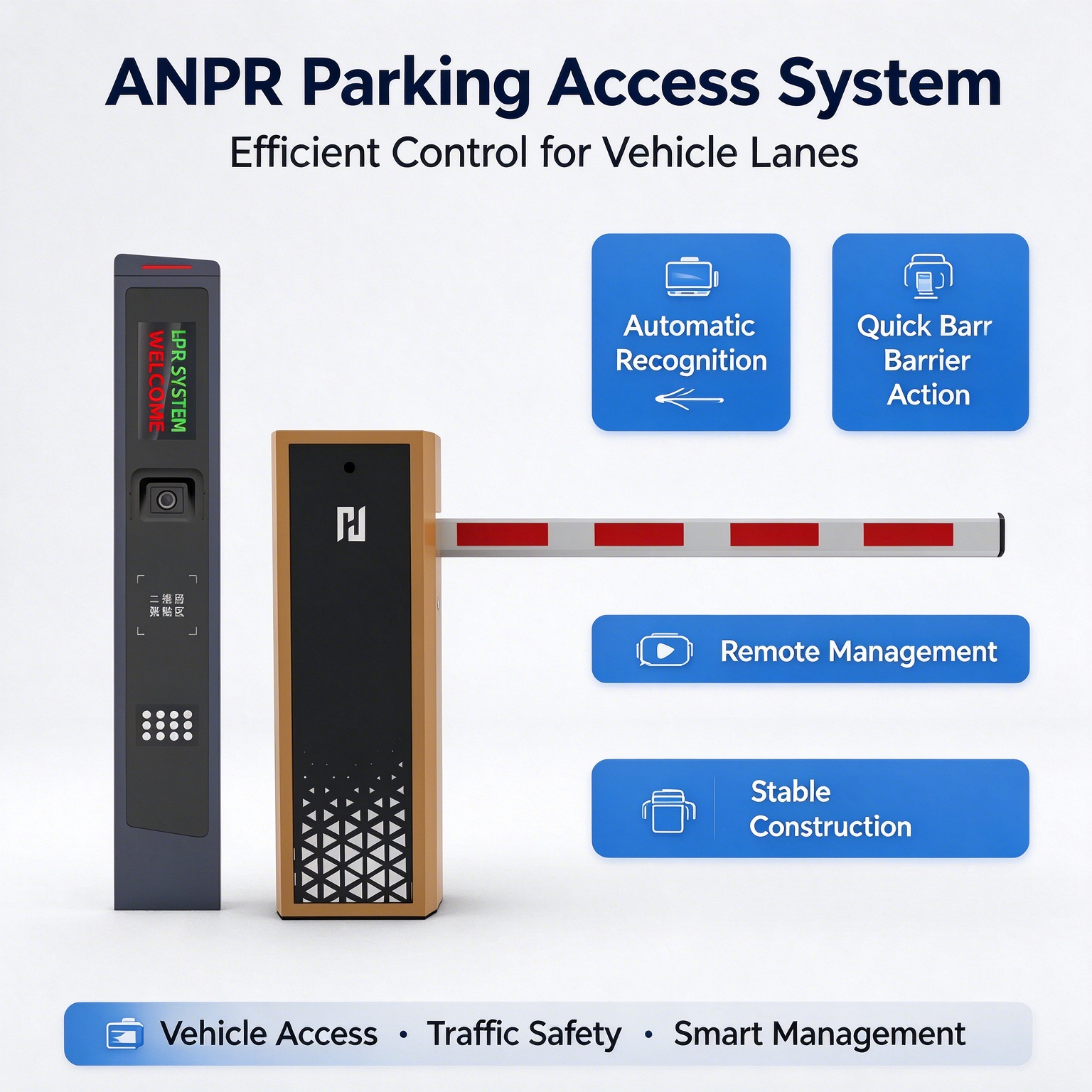
1. Define the Lane Width and the Barrier Arm Length
The first item to measure is the clear width of the lane the arm will close. Measure the actual distance between the barrier base and the opposite closing point, taking account of the central island, kerbs, side barriers and vehicle turning space. Do not use the total road width if part of it is not available for vehicle movement.
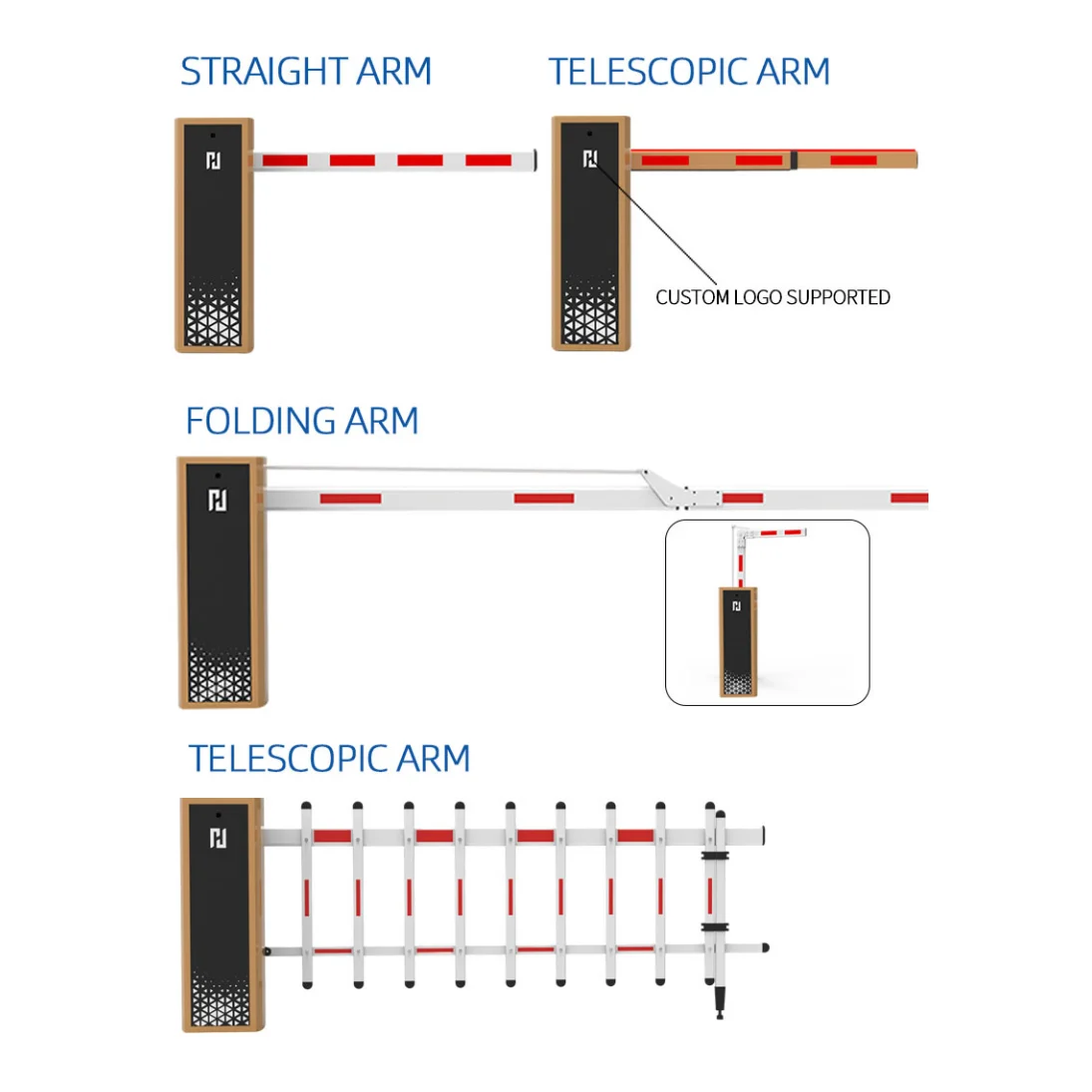
Once the width is defined, select the arm length and type according to the manufacturer instructions. A straight arm may suit open lanes, while a folding arm may be an option for entrances with limited height, such as some lower-level car parks. Confirm that the arm will not strike the ceiling, signage, lighting or services when it lifts.
Do not assume the longest arm is always best. Increased length and weight affect balance, movement, motor requirements and accessories. Ask the supplier to confirm the approved arm length for the model, the arm type, the accessories required, and any restrictions on fitting a fence arm, LED lighting or support posts.
2. Define the Opening Speed and the Actual Traffic Requirement
Opening speed is the time the arm needs to travel from the closed position to the defined open position. When writing the specification, state the required time in seconds, and note the opening angle and arm length, together with the test conditions where known.
A distinction must also be made between arm lifting time and the full vehicle passage cycle, because the vehicle needs time to pass before the barrier can close safely.
The high-speed barrier gate range offers different operating options by model, including selectable or adjustable opening times. Do not transfer a figure from one product page to every model; request the data sheet for the proposed model and confirm the opening time at the required arm length.
In residential communities and office buildings, smooth, quiet operation may matter as much as opening speed. At shopping centre car parks, transport facilities or logistics sites, the vehicle arrival rate, the buffer capacity before the gate and the number of lanes should be assessed, so that the barrier is not faster than the site can absorb vehicles.
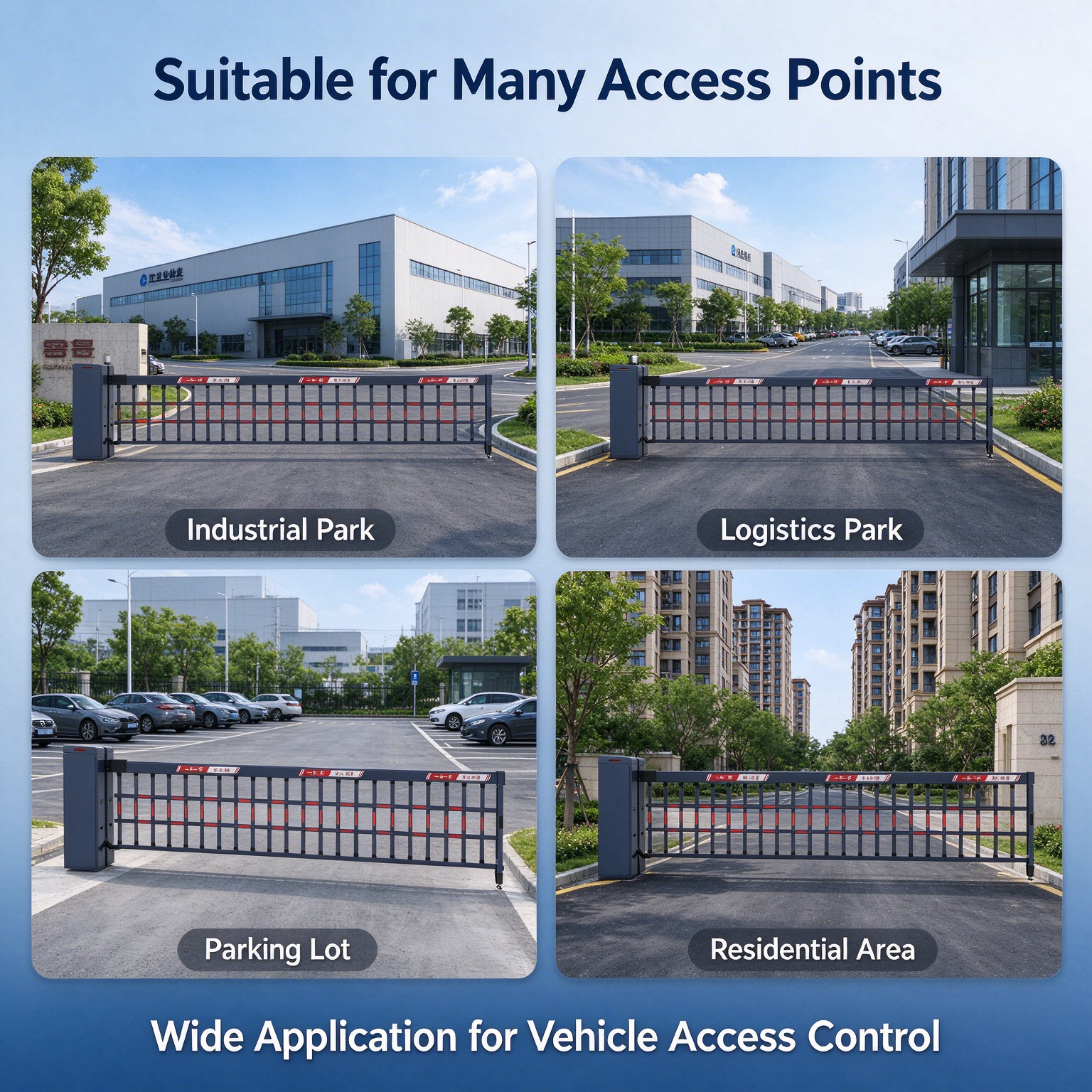
3. Verify the Duty Cycle, Utilisation and Expected Service Life
The specification should include the expected number of opening and closing cycles per hour and per day, the peak periods, and whether the barrier will operate intermittently or almost continuously. This information is fundamental to selecting the motor, transmission and controller. A barrier at a villa entrance does not usually carry the same operating load as one in a logistics centre or transport hub.
Ask the supplier to state the permitted duty cycle, the recommended daily cycle count, the motor rating and the service life or MCBF figure where it is documented for the model. Do not confuse laboratory test cycles with expected site life; dust, heat, arm length, installation method and maintenance all affect actual performance.
For high-traffic entrances, compare models designed for frequent operation, check whether thermal protection or motor monitoring is provided, and assess how easily parts requiring periodic inspection can be reached. Any declared performance figure must relate to the specific model and configuration, not to the product family as a whole.
4. Define the Motor Type and Power Supply
Ask for the motor type, supply voltage, and power and protection requirements to be clarified. BAROXON offers configurations with brushless DC motors and other options depending on the model. Motor specifications should never be inferred from a product photograph or generic marketing description; the type, voltage, power and connection requirements should be taken from the approved data sheet.
Also confirm the manual operation method during a power failure, whether the model supports a backup battery, and the approximate number of cycles the battery can provide when used. It should be clear whether the battery is standard or optional, and whether it requires a charging module or an additional enclosure.
For outdoor projects, define the power panel location, cable route, earthing and overcurrent protection according to an approved electrical design. Connection points should also be protected against water and dust in line with the actual protection rating of the equipment and its installation method.
5. Review Environmental Protection and Site Suitability
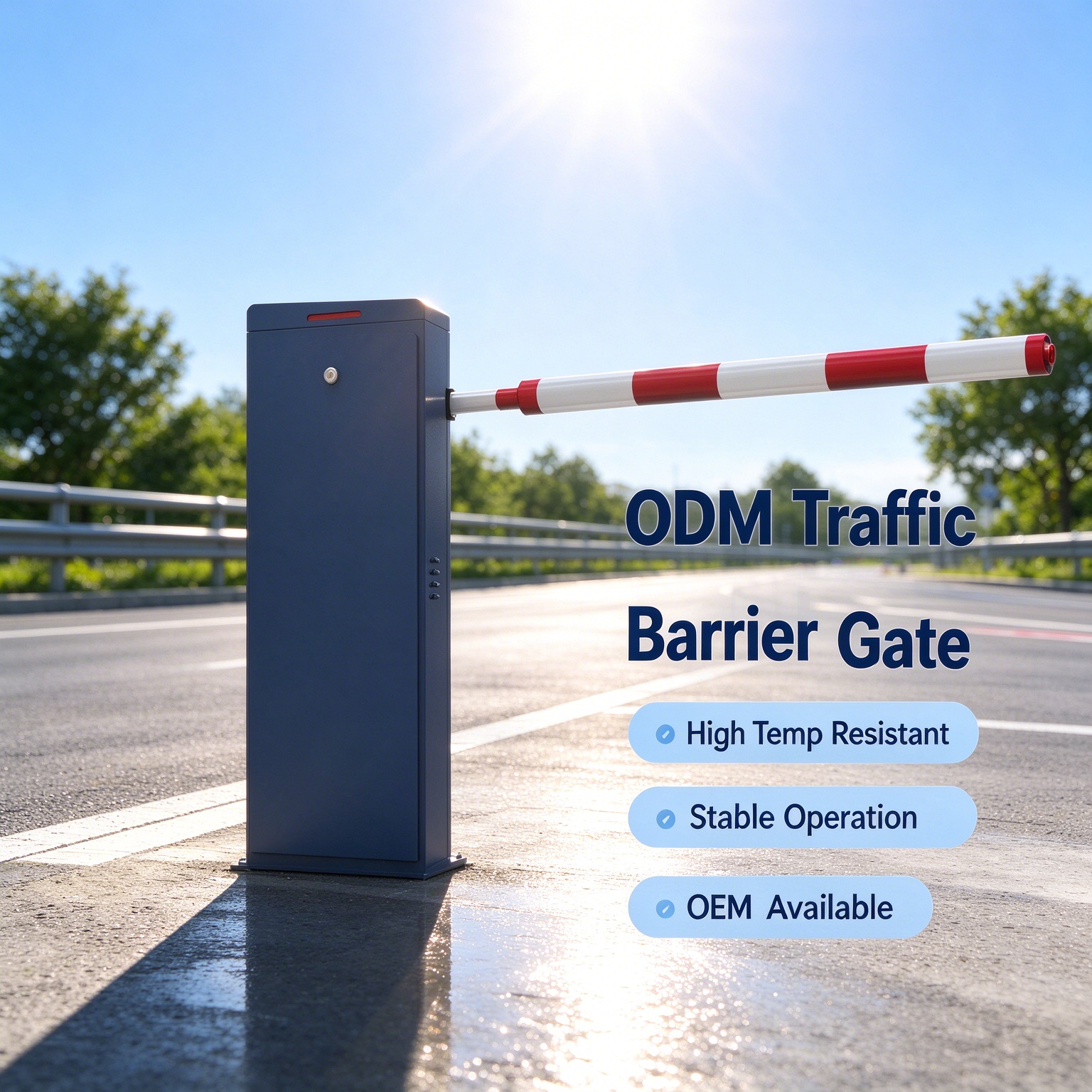
Outdoor equipment in the UAE is exposed to sun, heat, dust and humidity, and conditions differ between coastal, inland and industrial sites. The operating temperature range, humidity, IP protection rating, materials and finishes must therefore be specified. Describing a product as “weather resistant” without a verifiable rating and clear test conditions is not sufficient.
Ask for the IP rating of the housing and the relevant electrical components, and confirm that the rating applies to the model actually quoted. The corrosion resistance required for the site, the housing and coating materials, the base fixing method, and whether a canopy or additional protection from direct sunlight is needed should also be defined.
If the site is close to the sea or exposed to salt spray or chemicals, state this explicitly in the request for quotation. Ask for a written recommendation on suitable materials, coatings and maintenance, rather than assuming that all standard models suit every environment.
6. Define the Safety and Vehicle Detection System
The specification must explain how the system will detect a vehicle under the arm or in the danger zone, and what action it takes when an obstruction is detected. Solutions can include radar sensors, inductive loop detectors or other detection devices compatible with the controller.
Write out the required safety scenarios: preventing the arm closing on a vehicle, stopping or reversing movement when an obstruction is detected where supported, automatic closing control, lane status indication, and emergency manual operation. Request a wiring diagram showing the sensors, controller inputs and outputs, and the operating logic.
A single sensor should not be treated as a substitute for all safety measures. The detection zone must be tested on site with cars, bicycles, pedestrians and real conditions, and the sensor adjusted to prevent false triggers or blind spots. Pedestrian movement should be separated from the vehicle lane wherever possible, and the arm must not be relied on as a complete pedestrian safety barrier.
7. Define the Control Interfaces and Access System Integration
Before approving the specification, decide how the barrier will be commanded to open: remote control, security guard button, RFID reader, ticket, QR code, ANPR/LPR camera or a central management system. The specification should state the access methods required, the number of users or vehicles, the types of permission, and the event log required.
If the project requires vehicle plate recognition, confirm that the camera, software and controller are compatible, and define how the signal is exchanged between the ANPR/LPR system and the barrier. Ask whether integration is through a relay, a dry contact or a specified communication protocol, and what data is recorded when entry is allowed or refused.
For RFID, define the card or tag type, the required reading distance, the number of readers, the antenna mounting position, and how user permissions will be managed through RFID-enabled barrier solutions. Sites combining residents, visitors and fleets may need more than one identification method, with a fallback route when reading fails.
8. State the Arm Style, Accessories and Signals
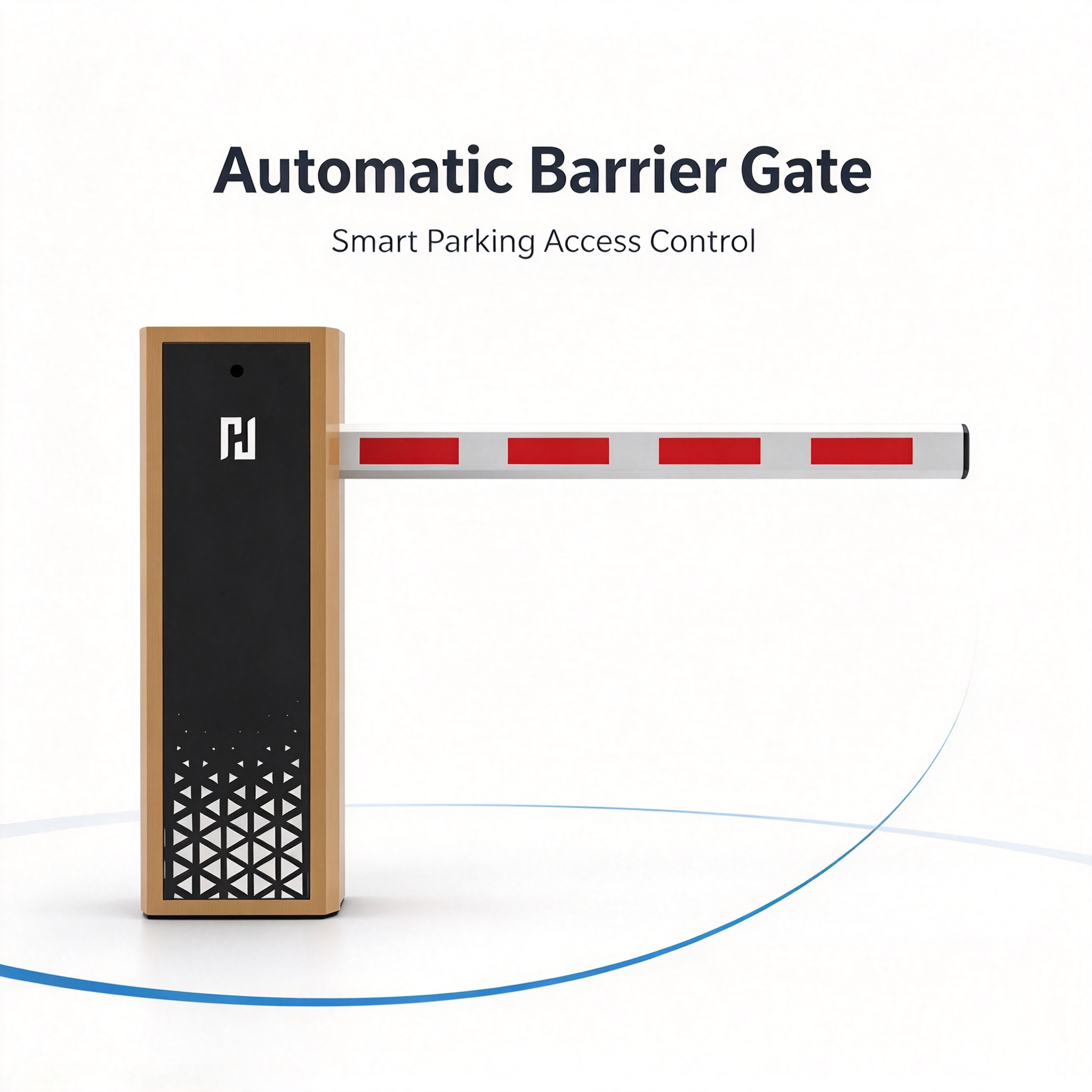
Decide whether a straight arm, folding arm, fence arm or LED-lit arm is required, according to the lane conditions and the visibility and safety requirements. The housing and arm colour, reflective markings, lane status signals and any accessories required should also be listed in the quotation.
If the site operates at night or in low light, state the need for clear arm lighting and visible signals for the driver. At narrow or restricted-visibility entrances, the barrier position and guide signage should be reviewed before the equipment is fixed.
9. Review Installation, Maintenance and Technical Support
The specification should cover the concrete base requirements, anchor bolts, space to open the maintenance door, cable route, and access for technicians. Request a drawing showing the housing dimensions, fixing points and the clearance required around the arm, and confirm that it does not conflict with pedestrian or vehicle routes or building services.
Ask for a list of consumable spare parts and items requiring periodic inspection, the recommended maintenance intervals, and the availability of remote support and spare parts. The warranty period, what it does and does not cover, the service request procedure, and the parts availability period should also be stated according to the supplier’s written terms.
For multi-lane projects, define the number of barriers and control units, how each lane will be managed, and whether connection to a central platform is required. The supplier’s responsibility for testing, commissioning, operator training, and handover of wiring diagrams and the operating manual should also be specified.
10. Request Verifiable Technical Documents
Before issuing a purchase order, request the model data sheet, dimension drawing, wiring diagram, installation and operating manual, accessory list, warranty terms, and any relevant test reports or certificates. Confirm that the model numbers on the commercial offer, the drawings and the technical documents match.
If the supplier states an opening speed, IP rating, cycle count, temperature range or service life figure, ask for the document that supports the number, the model and the measurement conditions. Do not rely on general figures from an advertisement or marketing page if they are not tied to the required configuration.
11. A Short Specification Template to Send to the Supplier
The following list can be used in a request for quotation, with the values completed after the site survey:
| Item | Information to Be Defined |
|---|---|
| Project location | Emirate and installation location: indoor or outdoor |
| Lane width | Clear width in metres |
| Arm type | Straight, folding, fence or LED |
| Arm length | Required length and approved length for the model |
| Opening speed | Required time and measurement conditions |
| Traffic density | Cycles per hour and per day |
| Motor and power | Motor type, voltage and supply |
| Operating environment | Temperature, dust, humidity and corrosion |
| Protection | Documented IP rating for the model |
| Safety | Radar, inductive loop, prevention of closing on a vehicle |
| Control | RFID, ANPR/LPR, QR or manual control |
| Integration | Communication interfaces and car park management platform |
| Backup power | Manual release or backup battery |
| Documents | Data sheet, drawings and test reports |
| Service | Warranty, spare parts, training and support |
This table can be copied directly into the request for quotation and completed after the site survey and verification of the model data.
Common Mistakes When Preparing a Barrier Specification
- Stating the speed without the arm length: Actual speed may vary with arm length, weight and model.
- Choosing the motor without calculating cycle counts: The model may not suit the actual daily traffic.
- Ignoring the installation environment: The protection rating or materials may not suit site conditions.
- Treating the radar or sensor as a complete safety guarantee: Control logic, site testing and pedestrian separation measures must still be verified.
- Not defining the integration interfaces: Additional costs or compatibility problems may appear after delivery.
- Accepting marketing figures without documents: Every value should be tied to the model, configuration and test conditions.
Frequently Asked Questions
What is the most important specification to check when buying an automatic boom barrier?
The most important parameters depend on the site, but the starting point is lane width, arm length, traffic density, opening speed and duty cycle. The motor, power supply, environmental protection, sensors and control interfaces should then be reviewed.
How do I determine the barrier arm length?
Measure the clear width that must be closed and review the surrounding space, the available height and the vehicle types. Then ask the supplier to confirm the arm length permitted for the selected model and its effect on speed and balance.
Do I need a high-speed barrier?
A high-speed barrier is worth assessing when site measurement shows that arm movement is the cause of the delay, and when the lane capacity, safety system and validation process can take advantage of the higher speed. A faster barrier alone does not guarantee that queues disappear.
What is the difference between a straight arm and a folding arm?
A straight arm suits many open entrances, while a folding arm can help at sites with limited height. The choice depends on the site geometry, the models available and the installation instructions.
Can the barrier be integrated with RFID and ANPR/LPR?
The barrier can be integrated with compatible recognition and control systems, but the communication interfaces, control signals, software requirements and procedures for handling a failed read must be confirmed before purchase.
Is an IP rating alone sufficient for an outdoor barrier in the UAE?
No. The temperature range, humidity, dust, direct corrosion exposure, installation method and maintenance requirements must also be considered, and the stated IP rating must be confirmed to apply to the required model and components.
Which documents should I request from the supplier?
Request the data sheet, drawings, wiring diagram, installation and operating manual, accessory list, warranty, and relevant test reports or certificates. All documents must match the quoted model number.
Conclusion
Preparing an accurate specification for an automatic boom barrier gate starts with measuring the lane and analysing vehicle movement, then defining the arm length, opening speed, duty cycle, motor, power supply, environmental protection, safety and integration interfaces.
When comparing BAROXON or any other supplier, request documented data for the specific model and configuration, and confirm that the solution suits UAE site conditions and can be installed, operated and maintained safely.
Latest News
Baroxon® | Leading Boom Barrier Manufacturer
Advanced Security Access Control and Intelligent Parking Solutions.
Company Strength
Adequate Inventory
Fast Shipping
Our Products
CONTACT US
Address: No. 2 Wanshou Road, International Innovation Industrial Park, Jinan, Shandong, China


© COPYRIGHT 2025 Baroxon® | Leading Boom Barrier Manufacturer

Contact Us
Our passion is to bring your ideas to life. Work with our design team to create a one-of-a-kind custom finish or cladding system to create a truly unique space. Together we can make your story stand out. If you need something to request a sample, request pricing, or request a demo, please fill out the contact form below. Explain your request in as much detail as you can and a representative will contact you within 1 business day.